LLM seeding: what the practice is, and where Anthropic's and Google's rules draw the line
LLM seeding is a marketing term with no settled meaning; most of the guides we read use it for placing material about a brand on the sites AI assistants read, so that their answers name the brand. Anthropic published a new version of its Usage Policy on 8 October 2026, and it takes effect on 12 November. The new version names the deceptive form of the practice: seeding the sources "from which search engines or AI systems draw answers" with content that "misrepresents its origin, authorship, or independence". The line the policy draws is misrepresentation. Putting a page where an assistant will find it is not, on its own, what the rule describes.
Google draws a wider line in its own documents. Its spam policies count "attempting to manipulate generative AI responses in Google Search" as spam, whether or not the material hides who wrote it, and its advice on AI features calls the pursuit of inauthentic mentions a tactic site owners can ignore. Neither company says the practice works.
A note on where we stand: we make a tool that logs the sources AI answers cite, which puts the question of how brands get into those answers close to our own business. We have no data of our own on the practice; every figure below belongs to the document or study it comes from. We read the nine results Google showed in the United States for "llm seeding" on 12 October 2026 (listed at the end), both versions of Anthropic's policy, the other rule-makers' documents and the published tests we found.
What is LLM seeding?
In the marketing pages that use the term, LLM seeding means getting a brand named in AI answers by publishing on the sites that tools such as ChatGPT read. Their definitions run close to each other. Semrush, in a piece by Leigh McKenzie, calls it "the practice of publishing and distributing content so that large language models ... can easily find, understand, and reference your brand when answering questions". LeadTap has "the practice of publishing content in formats and places that AI tools like ChatGPT, Claude and Perplexity are most likely to read, summarise and reference". iMark Infotech writes that it "means deliberately placing your brand and content where AI models learn from, so they cite you in their answers". All three set the practice beside traditional SEO rather than in place of it. Ecodrive, another of the ranking pages, uses the word the same way: "publishing high-quality content that's likely to be used as a source for AI models".
The word is not settled, though. Team4 Agency's glossary describes "the strategic placement of content within Language Learning Models (LLMs)", and Hive Creatives uses the term for model training: "providing initial data to a language model". None of the five ranking pages we could open on 12 October 2026 cites a platform's rules, a spam policy or a published test of the practice. The nearest thing is iMark's warning that a hard sell dropped into a Reddit thread "will get removed".
Those senses point at two targets: what an assistant retrieves from the web when it answers, and what a future model absorbs from its training data. GEO Toolbox, a company that sells AI visibility software, published a guide by its founder, Samy Ben Sadok, on 30 September 2026. The guide separates the two: "Seeding for retrieval is something you can test within weeks." Training, it adds, is a bet on a future model, with no public evidence that a model can be shaped that way on demand. A proposal that uses the phrase should say which it means.
In marketing, "seeding" usually means getting a product or a message to the people and places that will pass it on. The AI version aims at the pages an assistant reads rather than at the people who read them; GEO Toolbox lists those surfaces as "community threads, review profiles, comparison articles, Wikipedia, YouTube and trade press". AI SEO is the wider work of being found and cited in AI answers; iMark gives GEO and AEO as the broad terms for it and calls the practice "a specific tactic within that". Our page on generative engine optimization strategies covers that wider field.
What does Anthropic's new rule say?
Anthropic's Usage Policy bars the use of Claude, from 12 November 2026, to fill the sources AI answers draw on with material that hides who made it or misstates its independence. In full, users may not "Manipulate the sources from which search engines or AI systems draw answers by seeding them with content that misrepresents its origin, authorship, or independence (e.g., networks of sites posing as unaffiliated sources corroborating the same claims)". Anthropic announced the new section in a post on 8 October 2026. Its title is "Do Not Engage in Deceptive Campaigns or Artificial Activity". The same section covers distributing material "through networks of fake or ostensibly independent outlets, websites, or accounts to hide that it comes from a common source", and ends with an item that reaches anyone offering this work to others: "Market, sell, or solicit funding for any of the above as a product or service".
This line is new. The previous version of the policy took effect on 15 September 2025 and had no line about the sources AI answers draw on. It already prohibited creating "fake personas to falsely attribute content or mislead others about its origin", and generating "fake reviews, comments, or media", in separate sections. Anthropic gathered those scattered rules into one section after seeing "state media outlets, government propaganda offices, and commercial firms using Claude to run networks of fake accounts and fabricated news sites".
What does the rule govern, and what does it leave alone?
Anthropic's rule covers how people use Claude and the company's other products, not how any search engine or assistant chooses its sources. The policy applies to every user of the company's products: in its words, "anyone who submits inputs to Anthropic's products or services", from people on the Claude apps to businesses building on its API. A suspected breach can lead Anthropic to "warn you or throttle, limit, suspend, or terminate your access". It says nothing about how Claude's answers pick the pages they cite, or whether any engine would detect seeded pages.
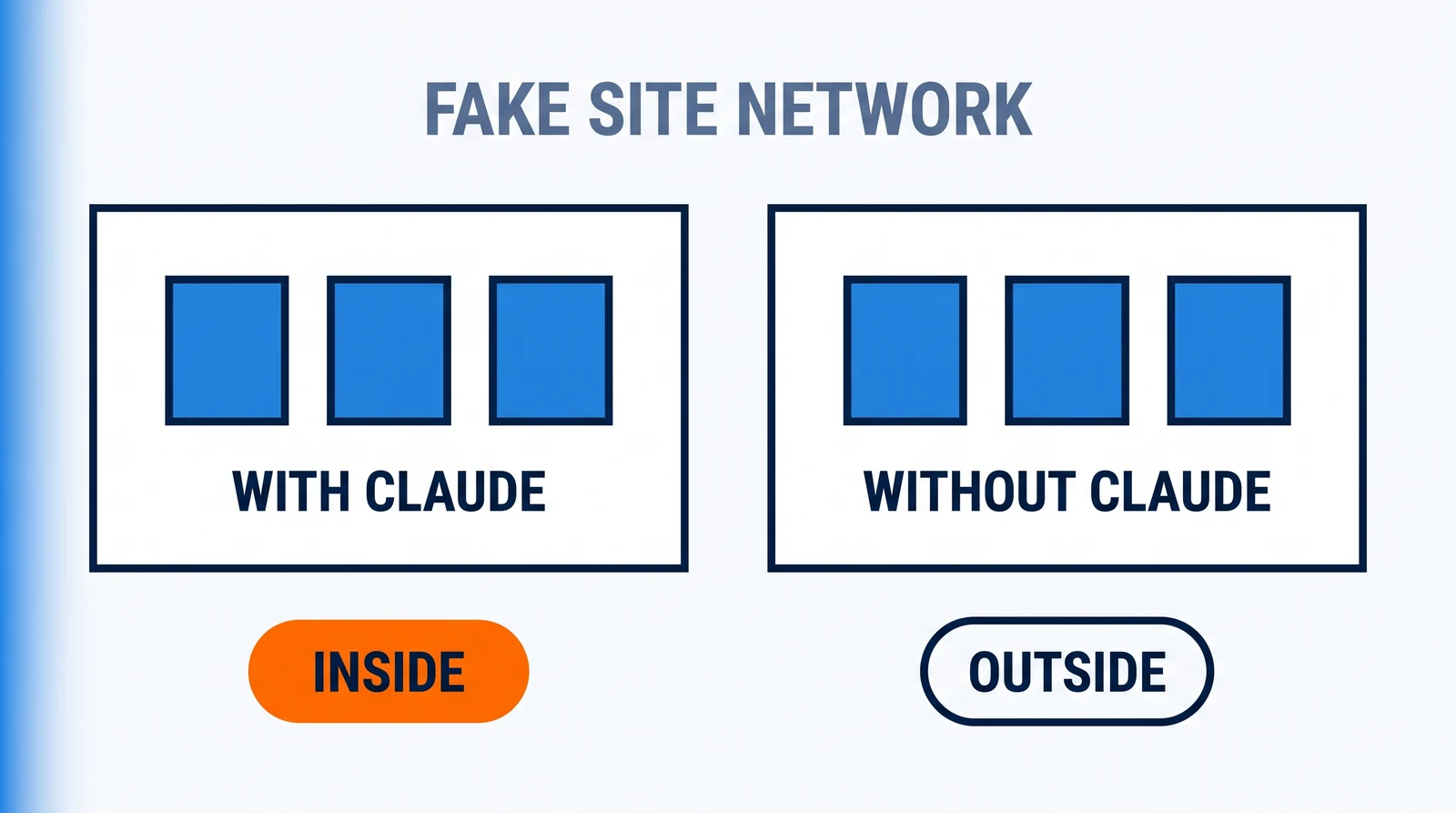
So a brand that seeds deceptively without Claude is outside this policy. A team that uses Claude, from 12 November, to write for a network of sites posing as unaffiliated is inside it, and so is an agency that uses Claude to sell that work.
The same update changed one other line. Using Anthropic's products "to automatically generate content and publish it for external consumption" was a high-risk use in the earlier version, with extra human-review and disclosure requirements; the new version drops it from that list. We confirmed the change against both versions after Search Engine Journal, an SEO trade publication, reported it on 9 October 2026. Publishing is not exempt from the rest of the policy, this line included.
Where does Google draw its line?
Google draws its line at manipulation and inauthentic mentions rather than at placement. Its spam policies define spam as techniques used "to deceive users or manipulate our Search systems", including "attempting to manipulate generative AI responses in Google Search". Manipulation qualifies on its own; nothing in that definition requires anyone to be misled. The company logged that clarification on 15 May 2026. Its stated reason: "To make it clear that the spam policies apply to all of Google Search, including generative AI responses." The existing rules therefore reach the answers in Search's AI features, which its documentation for site owners names as AI Overviews and AI Mode.
Several rules sit close to what the marketing pages describe. Under scaled content abuse they list "Creating multiple sites with the intent of hiding the scaled nature of the content". Under link spam they list "Sending someone a product in exchange for them writing about it and including a link", and paid advertorials carrying links that pass ranking credit, or links with optimized anchor text in guest posts and press releases "distributed on other sites". Publishing on someone else's site is not the problem in itself: "Having third-party content alone isn't inconsistent with the site reputation policy".
Whether the material is AI generated is not the test either. The same rule names "Using generative AI tools or other similar tools to generate many pages without adding value for users", and defines the abuse as unoriginal pages made to manipulate rankings "no matter how it's created". The purpose and the value decide, not the tool.
The company's guide to optimizing for generative AI features was last updated on 10 July 2026. It comes closest to naming the practice: "seeking inauthentic 'mentions' across the web", it says, "isn't as helpful as it might seem", because, while its core ranking systems favour high-quality pages, "other systems block spam". That is advice, set beside rules with consequences: sites that break the spam policies "may rank lower in results or not appear in results at all."
We cover a related line on fabricated creator profiles, added on 1 October 2026, in our page on whether E-E-A-T matters for AI search. OpenAI's usage policies have been in effect since 29 October 2025 and do not mention the sources AI answers draw on. They forbid using its services for "deceit, fraud, scams, spam, or impersonation". Among the documents we read, Anthropic's is the only one that names seeding.
Does either rule forbid placing material on other sites?
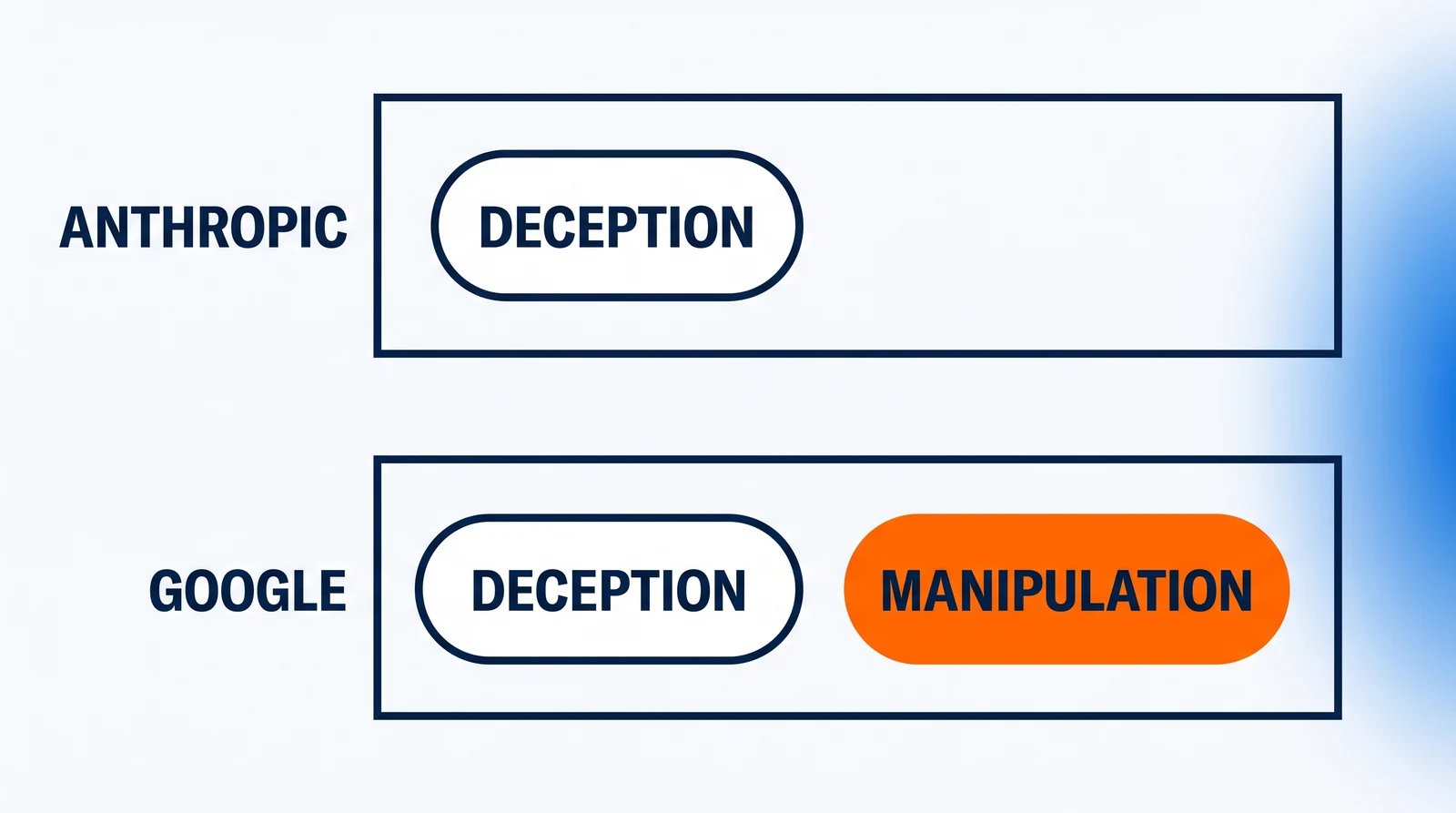
Neither Anthropic's policy nor Google's spam rules forbid placing material on other sites as such, but the two lines sit in different places. Anthropic's is deception: material that misrepresents its origin, authorship or independence. Google's is wider: an attempt to manipulate its AI answers is spam even when the byline is honest, so disclosure settles Anthropic's test but not, on its own, the spam test.
Read against those words, the line falls in a few recognisable places. A review, forum thread or social media post written by a brand but presented as a customer's misrepresents its authorship. A set of sites presented as unrelated that all come from one source misrepresents their independence, which is the example Anthropic gives. Paid articles carrying links that pass ranking credit fall under the link spam rules whoever wrote them. GEO Toolbox puts the line in one sentence: "It becomes spam when the placements are fake or hide who wrote them."
The counter-case deserves its full weight. Being genuinely mentioned on independent sites, because a reviewer, a journalist or a community member chose to, is not what either rule targets, and GEO Toolbox's own version of the practice "keeps your affiliation visible". Anthropic's rule also binds only people using its products; it is not a ranking rule. A flat "it is allowed" or "it is forbidden" survives neither document.
Has anyone tested whether the practice works?
No controlled test of whether placing material on other sites changes AI answers appears in the pages and papers we read. Nobody we read has shown, against a comparison that rules out other causes, that the practice works or that it fails. GEO Toolbox, which reads the evidence more closely than any ranking page we opened, says the practice "has correlational support, no independent causal test that we found".
The nearest thing we found is a field account. In Search Engine Land on 14 September 2026, Zeeshan Yaseen, an SEO consultant who runs a marketing agency, described two experiments in which his team placed listicles on sites that AI answers already cited, alongside PR and guest posts, and logged the citations by hand for 15 keywords across four AI platforms, then six. The second was a 30-day test for a SaaS link building agency with no measurable presence in AI answers when it began. He reports that listicles drew most of the citations he logged, and that some placements had not been cited by the time the test ended. The second test had a month's baseline before the work began, but neither experiment describes a comparable brand or set of prompts left untouched, several tactics ran at once, and of his way of choosing where to place, he writes that it "appeared to improve the hit rate". It records the practice being tried and tracked; it does not separate the placements from everything else that changed.
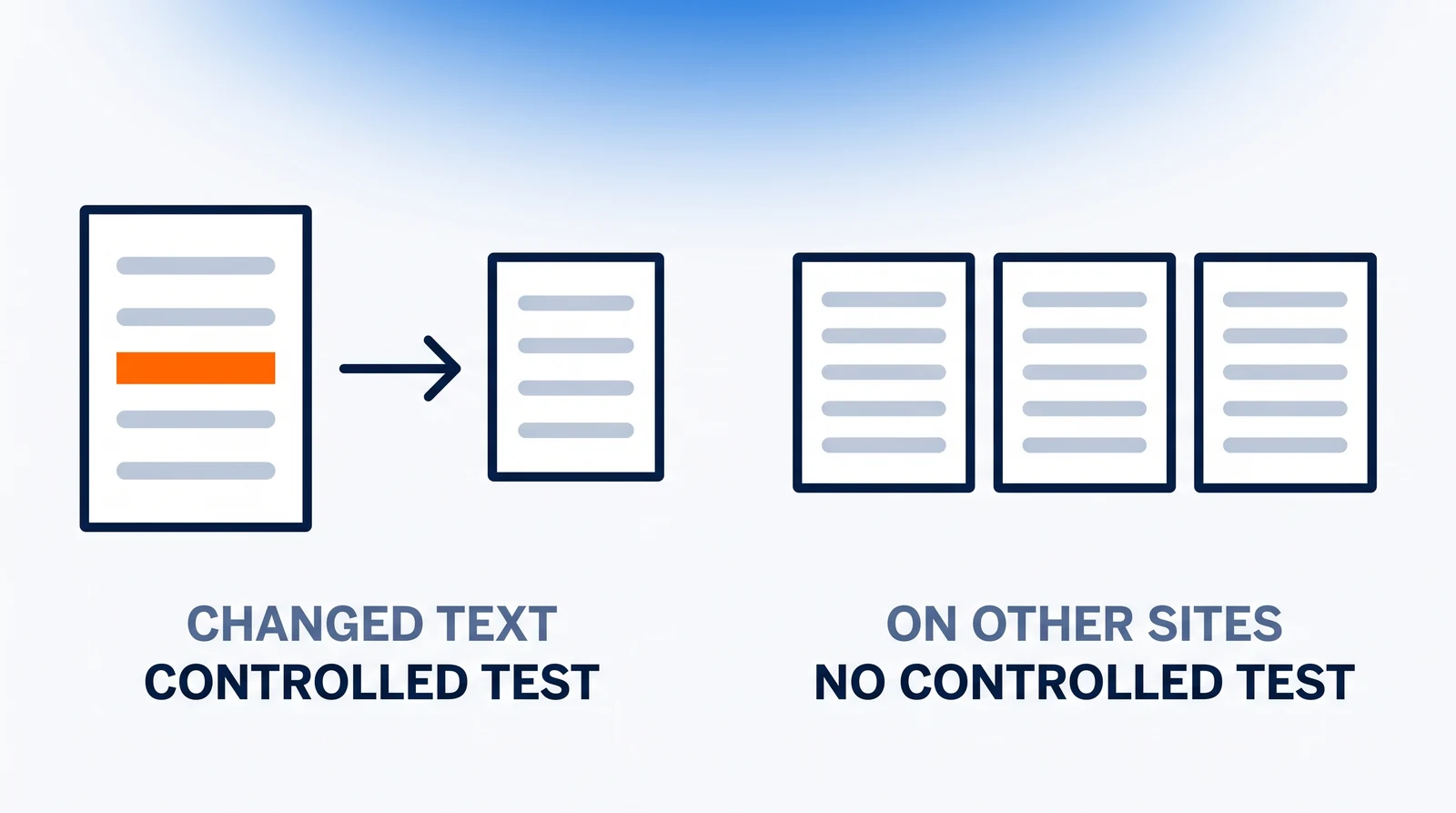
The controlled studies we found test something narrower: an AI model handed changed text. The GEO paper by Pranjal Aggarwal and colleagues, accepted to the KDD 2024 conference, tested changes to source pages on a benchmark of queries its authors built. Aounon Kumar and Himabindu Lakkaraju added a crafted text sequence to product pages in a catalogue of fictitious coffee machines and raised a product's chance of being the top recommendation. Fredrik Nestaas, Edoardo Debenedetti and Florian Tramèr showed that crafted web pages could lead AI search on Bing and Perplexity to promote a product. Each shows that the text an engine reads can move its answer; none tests whether placing material across other sites changes what an assistant says about a brand.
The third-party studies we have covered elsewhere on this blog measure shares, not causes: see our pages on whether earned media drives AI citations and on content syndication, where answers sometimes credited a republished copy instead of the original. We have not tested it ourselves. We think a test that could tell would need every placement logged, matched brands or prompts left untouched, and repeated runs, because the same question asked twice can return different sources.
What to check before you place anything
Three checks drawn from the words of Anthropic's and Google's rules show which side of Anthropic's line a placement falls on, and whether it matches one of Google's named examples. First, would a reader know who wrote it? Anthropic's line names authorship, and a post written by a brand but signed as a customer fails that test. Second, would a reader know who is affiliated, or who paid? The link spam rules in Search turn largely on payment or exchange for ranking credit, and Anthropic's section separately covers concealed sponsorship of messages meant to influence public opinion. Third, are the "independent" sources really independent of each other? That is the network in Anthropic's example, and the multiple sites in the rule on scaled pages. Passing all three does not settle the test in Search, which also turns on purpose: a disclosed placement made only to move its AI answers can still fall within the words of its spam definition.
After that, the decision is yours. Whether to place material on other sites depends on your category and where your buyers ask their questions, and nothing in either rule, or in the studies, says a placement will get a brand named in an answer. Anthropic's policy takes effect on 12 November; we will keep reading these documents as they change, and report what changes.
Sources
- Anthropic — Usage Policy, effective 12 November 2026 — https://www.anthropic.com/legal/aup — checked 12 October 2026
- Anthropic — Usage Policy, the archived previous version, effective 15 September 2025 — https://www.anthropic.com/legal/archive/22742366-2ef0-4c7a-a833-6523f10d3944 — checked 12 October 2026
- Anthropic — 2026 Usage Policy update, 8 October 2026 — https://www.anthropic.com/news/2026-usage-policy-update — checked 12 October 2026
- Search Engine Journal — Matt G. Southern, report on Anthropic's updated usage policy, 9 October 2026 — https://www.searchenginejournal.com/claude-rules-fake-sources-ai-answers/592456/ — checked 12 October 2026
- Google Search Central — Spam policies for Google web search, last updated 28 August 2026 — https://developers.google.com/search/docs/essentials/spam-policies — checked 12 October 2026
- Google Search Central — Documentation updates, entry of 15 May 2026 — https://developers.google.com/search/updates — checked 12 October 2026
- Google Search Central — guide to optimizing for generative AI features, last updated 10 July 2026 — https://developers.google.com/search/docs/fundamentals/ai-optimization-guide — checked 12 October 2026
- OpenAI — Usage policies, effective 29 October 2025 — https://openai.com/policies/usage-policies/ — checked 12 October 2026
- Semrush — Leigh McKenzie, LLM Seeding: An AI Search Strategy to Get Mentioned and Cited, 2 December 2025 — https://www.semrush.com/blog/llm-seeding/ — checked 12 October 2026
- GEO Toolbox — Samy Ben Sadok, LLM Seeding: What Works, What Backfires, How to Test It, 30 September 2026 — https://geotoolbox.ai/blog/llm-seeding — checked 12 October 2026
- Search Engine Land — Zeeshan Yaseen, Two GEO experiments challenge conventional AI visibility advice, 14 September 2026 — https://searchengineland.com/geo-experiments-challenge-conventional-ai-visibility-advice-488342 — read 13 October 2026 in the Internet Archive's copy saved 15 September 2026
- Pranjal Aggarwal, Vishvak Murahari, Tanmay Rajpurohit, Ashwin Kalyan, Karthik Narasimhan, Ameet Deshpande — GEO: Generative Engine Optimization, arXiv, 2023, revised 2024 — https://arxiv.org/abs/2311.09735 — checked 12 October 2026
- Aounon Kumar, Himabindu Lakkaraju — Manipulating Large Language Models to Increase Product Visibility, arXiv, 2024 — https://arxiv.org/abs/2404.07981 — checked 12 October 2026
- Fredrik Nestaas, Edoardo Debenedetti, Florian Tramèr — Adversarial Search Engine Optimization for Large Language Models, arXiv, 2024 — https://arxiv.org/abs/2406.18382 — checked 12 October 2026
The ranking set we read: the nine results Google showed for "llm seeding" in the United States on 12 October 2026, in order. We tried to open each one that day; four would not open, and the reason is given beside each.
- Team4 Agency — What is LLM Seedling?, 16 June 2026 — https://www.team4.agency/glossary/llm-seedling — opened
- Andrew Chornyy on Medium — https://medium.com/@andrew-chornyy/how-to-get-into-ai-answers-the-new-era-of-seo-geo-and-llm-seeding-e3b2491eafe6 — not opened (Medium would not show us the page that day)
- LLM SEEDING Network — https://llmseeding.io/ — not opened (the site did not respond that day)
- LeadTap — LLM Seeding: How To Rank Your Website In LLM in 2025, updated 9 April 2026 — https://www.leadtap.ai/blog/llm-seeding-the-future-of-seo-and-brand-visibility-in-2025/ — opened
- iMark Infotech — LLM Seeding: The SEO Hack for AI Mentions, 20 May 2026 — https://www.imarkinfotech.com/llm-seeding-the-seo-hack-for-ai-mentions/ — opened
- An Instagram post — https://www.instagram.com/p/DPnq4FzEiFm/ — not opened (a social post on Instagram, with no article text to read)
- Hive Creatives — Llm Seeding: Boost Your AI Model's Accuracy Fast, 19 January 2026 — https://hivecreatives.se/en/llm-seeding/ — opened
- Ecodrive — SEO in the Age of AI: How Brands Can Rank on LLMs, Write Smarter, and Win More Traffic, 5 October 2026 — https://www.ecodrive.community/updates/seo-in-the-age-of-ai-how-brands-can-rank-on-llms-write-smarter-and-win-more-traffic — opened
- James Padolsey on Medium — Simple LLM/GPT trick: "seeding" — https://padolsey.medium.com/simple-llm-gpt-trick-seeding-08fbcc1880c7 — not opened (Medium would not show us the page that day)