
Top generative engine optimization companies in AI in 2026: where the lists come from, and what to ask before hiring one
On 12 October 2026, both lists of agencies we could open on the results page for this search, captured in the United States, were written by a firm that put itself in the lead: SeoProfy opens its 13 with SeoProfy, and 20North opens its 6 with 20North. If you searched for generative engine optimization companies because you are about to hire one, that is worth knowing before you read any shortlist.
This page does not hand you a different ranking. It sets out where the lists come from, which names keep recurring across them, what those firms say about themselves on their own sites, and the questions to put to any of them before you sign. The decision about who fits your business stays with you.
Our own interest belongs here, before anything else. We build software that tracks which sources AI assistants cite — the measurement half of this market — and we sell no agency service. An earlier version of this page listed five companies and put our own platform among them, which is the same act this page counts in other publishers. That list is gone.
What follows is a read of published pages, not a test of anybody's work. There is no winner here. We have hired none of these agencies, and we have measured no agency's results.
What does a generative engine optimization company sell?
A generative engine optimization company sells either software that checks if your brand is named or linked in AI assistants' answers, or a service team's time spent changing your content, technical setup and outside coverage so that it is. Lists put the two side by side, and they solve different problems.
The name has an academic origin. GEO: Generative Engine Optimization, a paper by Aggarwal and co-authors posted to arXiv in November 2023 and accepted at KDD 2024, set out to raise what it called "content visibility in generative engine responses". The industry then sold the same work under a handful of labels — GEO, AEO (answer engine optimization), AI SEO, AI optimization — and the label on a service page tells you less than the work behind it.
The software half watches the answers. A platform runs a list of prompts through Perplexity, Gemini, ChatGPT and Google's AI Overviews, then reports where your brand shows up. A mention is your brand named in an answer; a citation is your page linked as a source inside that AI-generated answer, such as a link in an AI Overview. A careful platform reports both, assistant by assistant, and shows the page behind each citation.
The service half does the work. Much of it builds on traditional SEO practice: three of the four firms named on both results-page lists also list SEO services on their own sites, and the work they describe spans technical SEO, content strategy, structured pages and digital PR. A service firm changes things; it still needs a measurement to show what moved.
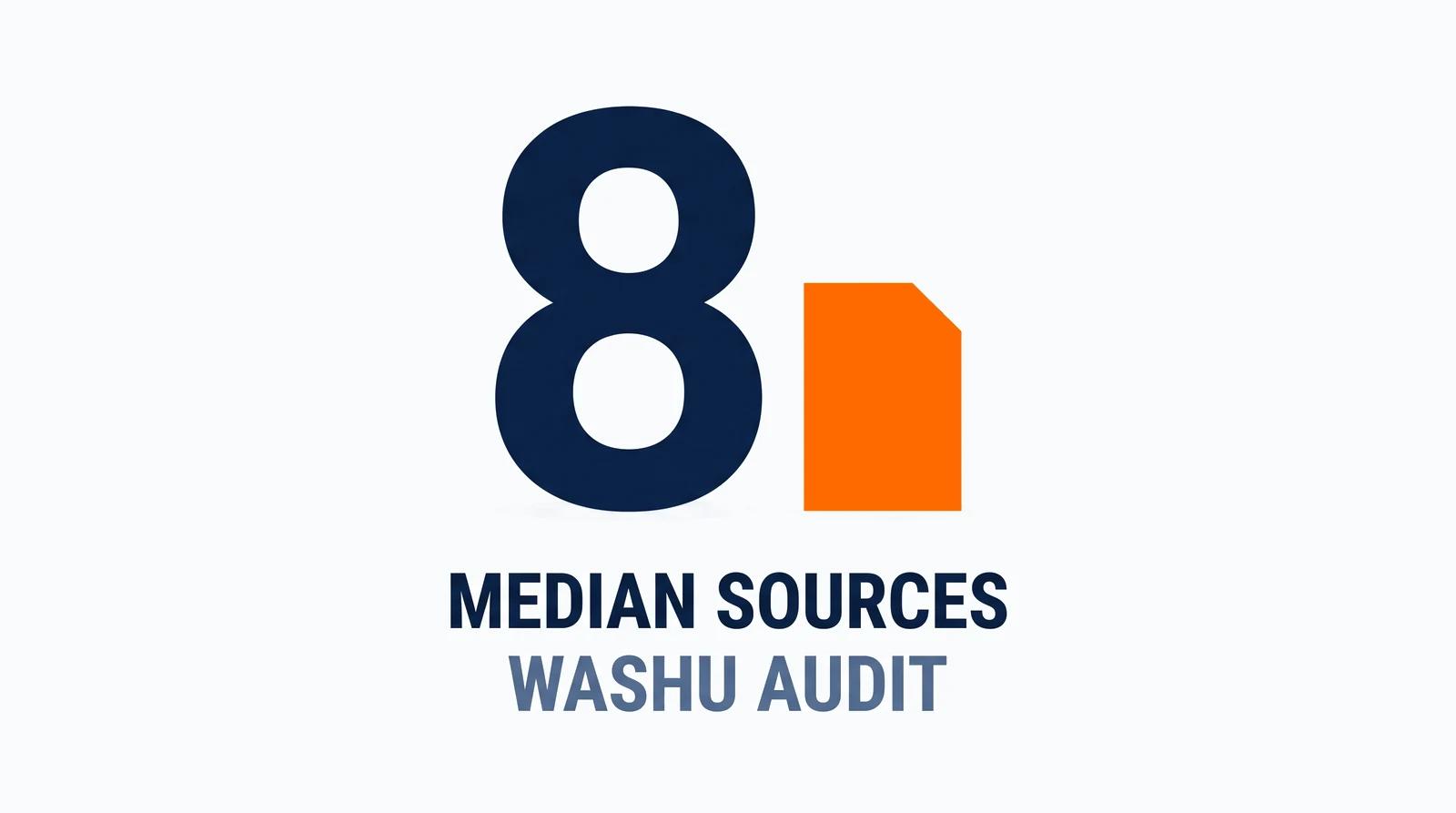
The lists you will meet blur the two. The list of 20 we read on mvpGrow's site mixes agencies with software products such as MarketMuse, Frase and Writesonic, and the same results page carries a list of eight software products from a writer who runs his own firm. If software is what you are buying, our page on what GEO software features actually do covers that half; this page is about the companies that sell the work as a service.
Who wrote the "top GEO companies" lists on this results page?
Each list of agencies we could open on this results page was written by an agency that put itself ahead of the rest. Google returned nine results for the keyword "top generative engine optimization companies in ai", captured from a United States location on 12 October 2026, and we opened every page that would load.
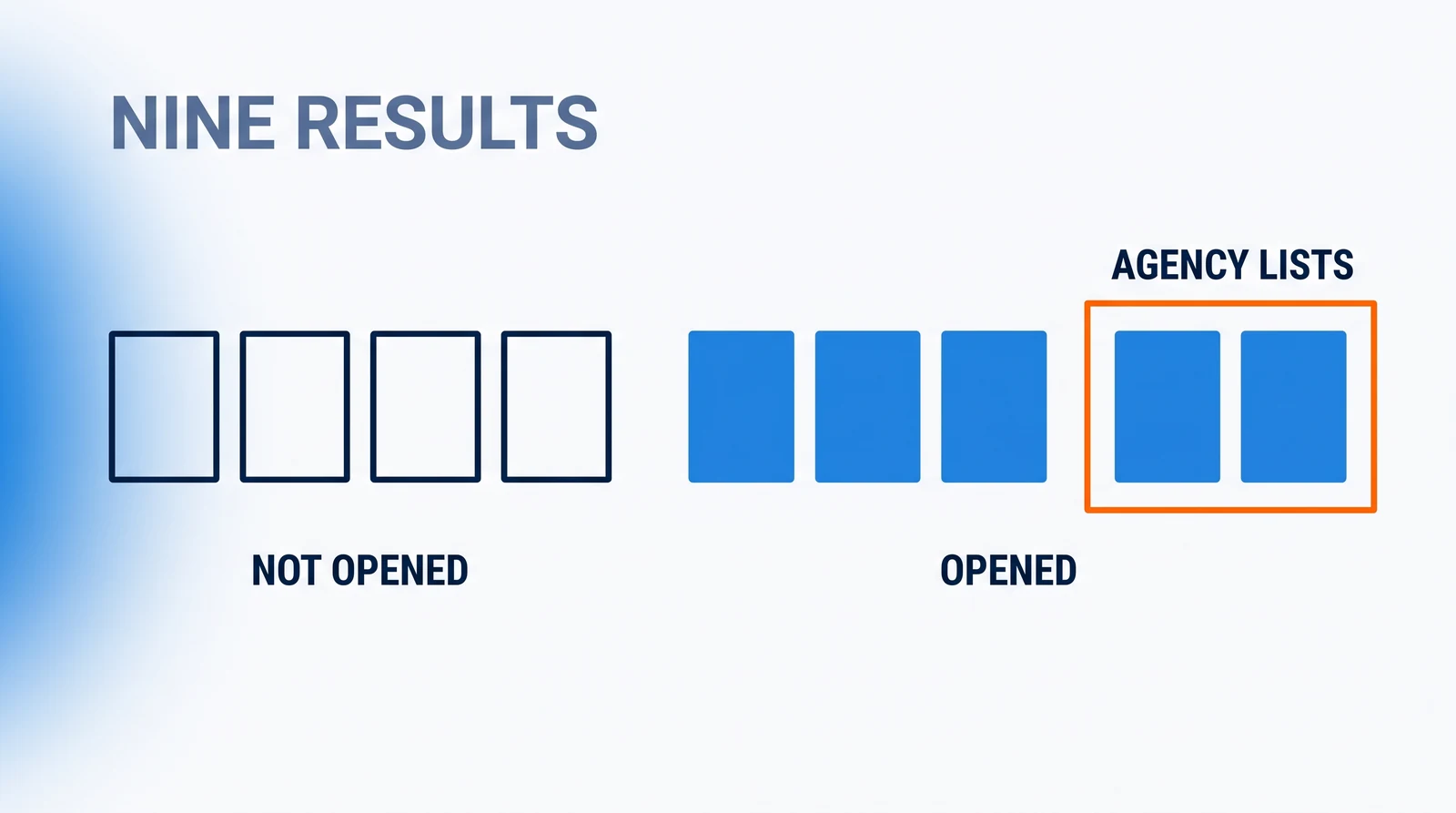
SeoProfy's list is the longer of the two. Last updated 30 June 2026, it numbers 13 agencies, with SeoProfy leading. It names its writer, Khrystyna Dzhumaryk, and its reviewer, Andrew Shum, its head of SEO, and it states four criteria for its choices. Its comparison table carries a "Core GEO focus" column and a "Best fit for" column beside every entry.
20North's list is the shorter. Dated 6 February 2026, signed "Abby K." and titled "Top AI Optimization Agencies", it sets six agencies under headings and opens with 20North, which describes itself there as "a digital marketing agency and fractional CFO firm". Its single selection sentence says the agencies are "widely recognized for their early adoption and experimentation" with these strategies.
The post at position five is a LinkedIn reshare of an mvpGrow post that links its own list of 20 service companies, published 15 January 2026 and updated 6 May 2026. mvpGrow, which describes itself as "a full-service growth agency", heads it.
The other two pages that opened are not lists of agencies. Alex Birkett's page ranks eight software products, and he tells the reader where he stands: "I've tried 'em all (I run an organic growth agency)." Intero Digital's page sells its own services.
Four of the nine results would not open to us. We read pages with software and do not work around access checks, and those four returned an access refusal, a challenge page and two bot checks. By their titles in the search results, three of those four are lists of ten, so the self-ranking read above rests on two of the five results titled as lists of agencies or companies. We have not counted the other three as agreeing or disagreeing with anything, and nothing on this page describes what they contain.
The pattern itself is not new. Lily Ray described it on 3 February 2026 as "one of the most common tactics for gaining visibility in AI search": companies ranking their niche on their own blogs and placing themselves in first place. What we add is a dated read of a single results page for a single search, made with the approach we used for a count of AI visibility software lists on a different results page in September.
A firm ranking itself ahead of its rivals on its own blog is not being dishonest. A firm that sells this work may know the field well, and a blog is its owner's own space. But the lead slot on the publisher's own page is a commercial choice as much as an editorial one, and nothing in the ranking tells you which part is which.
Do the lists agree on any company?
The two results-page lists agree on 4 of their 15 distinct names. They are First Page Sage, Intero Digital, iPullRank and Siege Media, and the other 11 appear on a single list.
Add mvpGrow's 20 (linked from the post at position five, not a result itself) and three names sit on all three lists: First Page Sage, Intero Digital and iPullRank.
A separate search that same day turned up two more lists of the same shape, which we keep apart from the results-page count. Elsner Technologies' list is the newer. Updated 20 March 2026, it numbers ten agencies and leads with Elsner. Single Grain's list is a 2025 page. Last updated 27 October 2025, it opens its 14 with Single Grain. Across all five lists (the two from the results themselves, mvpGrow's reached through a post among them, and the two from the separate search) we counted 46 distinct names, and 36 of them appear only once. First Page Sage appeared on all five lists of agencies we read on 12 October 2026; Intero Digital and iPullRank are on four. Each of the five put its own publisher in first place.
Part of the disagreement has a plain cause. A list built for enterprise buyers and a list written for a small business will not name the same firms, and neither is wrong to differ. Most of the lists we read label each entry with the buyer it suits: SeoProfy's "Best fit for" column runs from "B2B SaaS teams" to "Mid-market and enterprise brands", and Elsner's "Best For" lines run from "Enterprise brands and high-growth companies" to "Small businesses and solo practitioners". Read the label before the rank.
Here is what the recurring firms say about themselves, on their own sites:
- First Page Sage calls itself, on its home page, "an SEO + GEO agency".
- Intero Digital defines the work on its service page as making a brand easier for AI platforms to "cite, recommend, and mention", and its approach adds the line "GEO adds a fourth pillar: retrievability".
- iPullRank lists relevance engineering and generative engine optimization among the services on its site, and describes itself as an AI search agency for enterprise and mid-market companies.
- Siege Media titles its home page "Full-Service GEO Agency for Brands".
Appearing on many lists does not make a firm good at the work. A name that turns up on five lists may belong to the best firm in the field, the best known, or the best at being listed, and a count of lists cannot tell those apart. What a recurring name does tell you is that more than a single publisher put it forward. A name that appears once is a lone publisher's judgement, with no second opinion on the page.
Why do agencies publish these lists at all?
Agencies publish these lists partly because, in at least one listed firm's own words, list articles feed what chatbots recommend. The firm named on all five lists says so itself: its service page states that "appearing in highly-ranked list articles is the largest factor" in which companies chatbots recommend, and it offers list and database outreach as part of the service. That is the firm's claim; we have not measured it.
Part of the answer we have measured. In our pre-registered framing test — five topics, four framings of each, mostly on a single assistant — no definition-style framing of the "what is X" kind led the assistant to fetch a source, while each dated, comparison-shaped framing did. A traditional search results page appears whatever you type; the AI system answering a question decides, before anything else, if it will fetch sources at all. We think that is why "top companies in 2026" pages are worth publishing as a marketing strategy: the question is comparison-shaped, an assistant is more likely to go looking, and a list is something it can find. Our research page carries the method and the limit: results vary by assistant, and Perplexity, for example, cites much more readily than the assistant we tested most.
Two observations of ours fit that picture, and both are single checks rather than a study. On 3 August 2026 our tracking found three sites cited for a question about these companies: arXiv, hosting the paper above; The Digital Elevator, an SEO and AI-visibility firm; and miniloop, a custom-CRM software firm whose website said nothing about generative engine optimization. On 5 October 2026 our check of this exact keyword found two sites cited, clutch.co and gen-optima.com. We were not among them on either date, and neither check is on our research page yet.
The August mix — a preprint server beside two small firms — fits what our matched pairs found about domain size. In 21 matched pairs of pages on a shared keyword, the page on the stronger domain won 11 of the 21 and the page on the weaker domain won the other 10. No large authority effect appeared in those 21 pairs, but they are too few to rule a sizeable effect out: by the standard confidence interval for 11 wins in 21, a stronger-domain win rate anywhere from roughly a third to roughly seven in ten fits the result.
So a list of recommended agencies can be a sincere guide and a marketing strategy at the same time. The ranking cannot tell you which, but what the page discloses about how it decided can.
What does a list tell you about how it decided?
A list of agencies usually tells you its criteria and almost never its evidence. None of the five lists of agencies we read says its writer hired the agencies it ranks. That difference matters, because criteria tell you what a publisher thinks counts, while first-hand use is something you could hold it to.
SeoProfy states four criteria: hands-on experience with this work, SEO and content foundations, client results with reviews from Clutch, G2, GoodFirms and DesignRush, and an AI visibility score it says it built by analysing 50 agencies through Ahrefs. It also prints that score beside every entry, which lets you check the order against it. SeoProfy's own entry scores 7.0 of 10 at number one, and the highest score on the page, 9.0, belongs to WebFX at ninth. A list that prints its measure gives you the means to read it, and that is worth crediting.
Elsner's page sets out six ranking criteria under the heading "How We Ranked These GEO Agencies?", among them technical SEO and GEO integration, AI citation visibility and enterprise capability. Single Grain says it "evaluated publicly available case studies, client testimonials, and industry recognition". mvpGrow gives seven criteria as advice to the reader. 20North's AI optimization list gives its single selection sentence.
Google's own guidance for review writers is a useful yardstick here. Its page on writing reviews asks anyone recommending something as the best to "include why you consider it the best, with first-hand supporting evidence." That is advice for reviews, not a rule written for lists like these, but it is the question to ask of any number one.
Directories take a different approach, and Clutch — cited in our October check — prints how its order is set. Its help centre says a company with a sponsorship is displayed ahead of companies with a lower-tier sponsorship or none, and that Clutch's own rank orders companies within a tier. Its scoring rules add that a "top firms" recognition linking back to a company's own site "can't be independently confirmed". We could not open Clutch's directory for this work, so we say nothing about how it orders these firms.
What should you ask a GEO company before hiring one?
The questions to put to a GEO firm before hiring are the ones whose answers you can check on your own brand. These six reflect what we chose to build and measure, so they carry our angle; weigh them against your own needs rather than treating them as a neutral checklist.
- Are you a platform, a service firm, or both — and who owns the GEO strategy and does the content and technical work? Software without anyone to act on it changes nothing, and a service team with no outside measurement has no way to prove what changed.
- Can you show assistant-by-assistant evidence on our brand today? Ask to see your brand's mentions and citations assistant by assistant — Perplexity, Gemini, ChatGPT and a Google AI Overview — week by week, against named competitors, and ask for references from clients your size, enterprise or small.
- Do you check whether assistants search for our topics at all? Some questions are answered from memory with no source fetched, and while an assistant answers your topic that way there is no citation to win, whatever work goes in. That can differ between assistants and with how a question is worded, so ask to see it checked for your topics rather than assumed.
- Is your method published? A visibility number from a method nobody can see is a claim, not a measurement. That applies to us as well.
- What does your report show when we are not mentioned anywhere? The honest version of AI search work often returns nothing for a week. A report that cannot say so is measuring reassurance, not visibility.
- Do you promise a citation, a mention or a ranking? Treat that as the red flag. The assistants decide what to cite, their behaviour can change without notice, and no outside firm controls it.
Then do the check no list does for you: open the firm's own site and confirm it still offers what the list says it offers. A sensible approach is to focus the sales call on questions 2 and 5. For what a service firm can realistically change in your content and what it cannot, our page on what an AI search agency can and cannot change goes further.
What this count does not tell you
A count of who wrote the lists cannot show if any of these firms does good work. We have hired none of them, measured none of their results, and nothing here is a judgement of their service.
The count's focus is authorship, not quality, and it rests on a lone capture of the results page, taken on 12 October from a US location. Four of its nine results would not open to us and are not in it, three of them titled as lists. Two of the five lists came from a separate search, and mvpGrow's was reached through a post rather than sitting on the results page itself. Run the search next month, or from another country, and the pages may change.
Self-ranking is not evidence of anything bad, and a list with no self-interest is not automatically right. Our own tracking observations are single checks on single dates. When the results page turns over, or a directory changes how it orders firms, we will read this page again and publish what changes.
What people ask about GEO companies
Searches related to this keyword, as Google lists them, ask about lists of these agencies, about the software tools, about the Reddit thread and about strategy, and the answers below take them in turn.
Is there an independent list of GEO agencies? Not on this results page: every list of agencies we could open came from a publisher with its own services to sell. We did not survey the whole web, and a directory such as Clutch prints its own rules, including how sponsorship affects placement, which you can read before trusting its order.
Should I hire a GEO agency or buy GEO software? The answer depends on which gap you have. If you cannot find out whether AI answers name your brand, the gap is measurement. If you know you are absent and your team cannot fix it, the gap is execution. Some teams need both, and only you know your budget and capacity.
What about the Reddit thread on this results page? The thread would not open to us, so it is not counted here. A thread can offer what a vendor list cannot: watch who answers, and whether they say they work for a firm they recommend.
Is a GEO strategy different from an SEO strategy? Much of the work overlaps. A page an assistant cannot fetch cannot be cited, so the traditional SEO basics — technical fixes and clearly structured content — still matter. What is new is measuring the answers themselves and choosing topics where assistants actually go looking for sources.
Sources
- SeoProfy — its list of 13 agencies — last updated 30 June 2026; checked 12 October 2026.
- 20North Marketing — its list of 6 agencies — 6 February 2026; checked 12 October 2026.
- mvpGrow — its list of 20 service companies — published 15 January 2026, updated 6 May 2026; checked 12 October 2026.
- Alex Birkett — his list of 8 software products — updated 5 August 2026; checked 12 October 2026.
- Intero Digital — its services page — checked 12 October 2026.
- Elsner Technologies — its list of 10 agencies — updated 20 March 2026; checked 12 October 2026.
- Single Grain — its 2025 list of 14 companies — updated 27 October 2025; checked 12 October 2026.
- First Page Sage — home page and service page — checked 12 October 2026.
- iPullRank — home page — checked 12 October 2026.
- Siege Media — home page — checked 12 October 2026.
- Clutch Help Center — page position and sponsorship and ranking factors — checked 12 October 2026.
- Google Search Central — writing high-quality reviews — last updated 10 December 2025; checked 12 October 2026.
- Lily Ray — on self-promotional listicles — 3 February 2026; checked 12 October 2026.
- Aggarwal et al., the paper that named the field — arXiv 2311.09735 — November 2023, accepted at KDD 2024; checked 12 October 2026.
- Our research — methods, samples and limits — the framing test and the matched pairs; checked 12 October 2026.
Results-page set read (Google, the keyword quoted in the article, United States, captured 12 October 2026), in the order returned:
- perrill.com — services page — not opened (access refused).
- seoprofy.com — list of 13 agencies — opened.
- reddit.com, r/digital_marketing — thread titled as a list of ten — not opened (challenge page).
- alexbirkett.com — list of 8 software products — opened.
- linkedin.com — post linking mvpGrow's list of 20 — opened.
- 20northmarketing.com — list of 6 agencies — opened.
- linkflow.ai — titled as a list of ten agencies — not opened (bot check).
- interodigital.com — services page — opened.
- gen-optima.com — titled as a list of ten companies — not opened (bot check).