The great decoupling in SEO: what Search Console's logging error changes, and what it doesn't
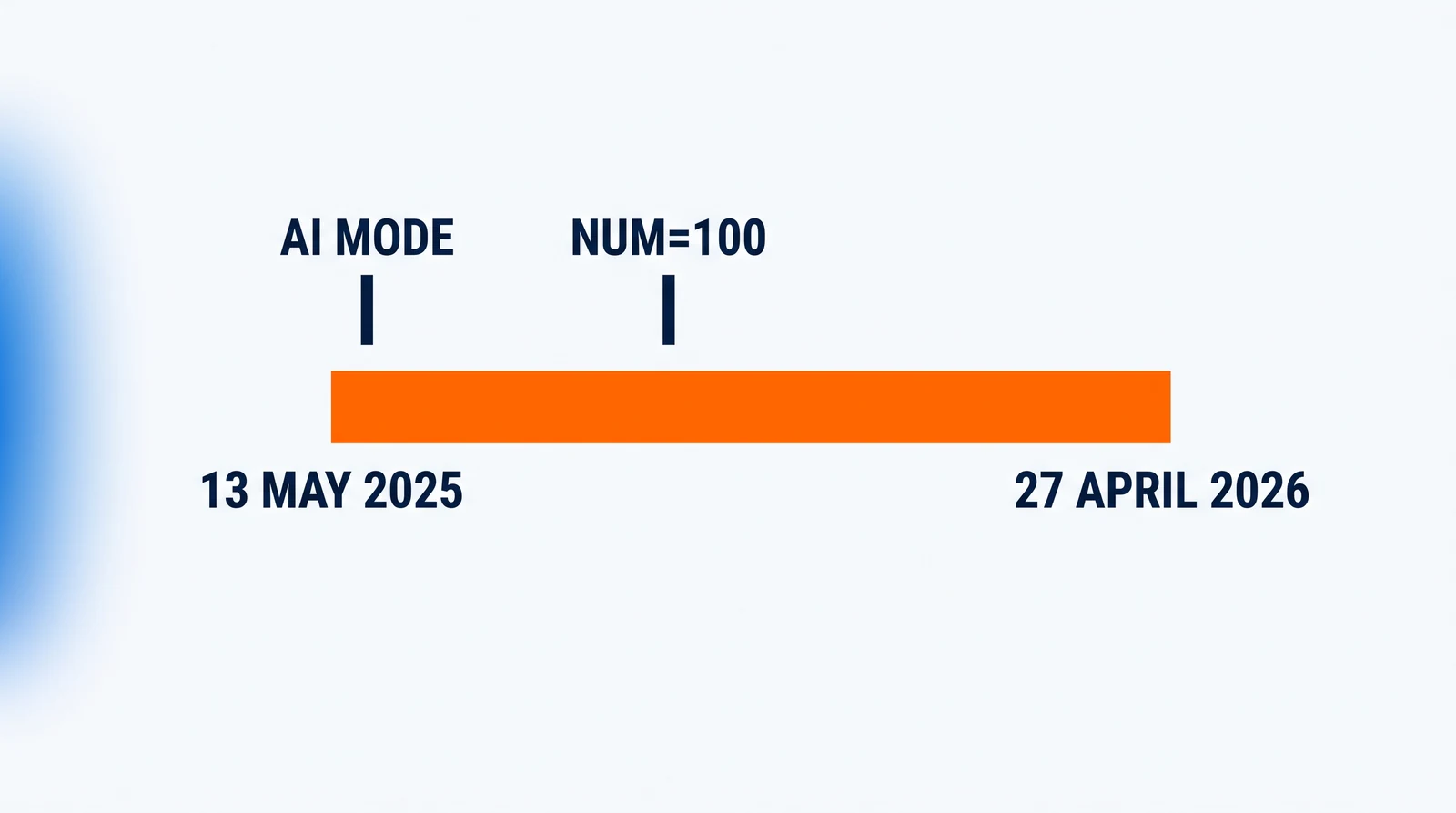
The great decoupling is the Search Console graph where impressions climb while clicks fall. It ran through the same months in which Search Console was not counting impressions accurately, from 13 May 2025 until 27 April 2026. Clicks were counted normally throughout. So the falling line stands as it was reported, while the rising one, and every rate built on it, needs a mark on the graph before anyone reads it. That is not the same as saying the pattern was a bug, and this page does not say so.
The error began on 13 May 2025, and the pattern got its name in a post on X on 31 May 2025, as Search Engine Roundtable recorded on 3 June 2025 beneath a set of console screenshots from publishers and site owners. The 18 days between the start of the error and the name are a coincidence of dates, not evidence about cause.
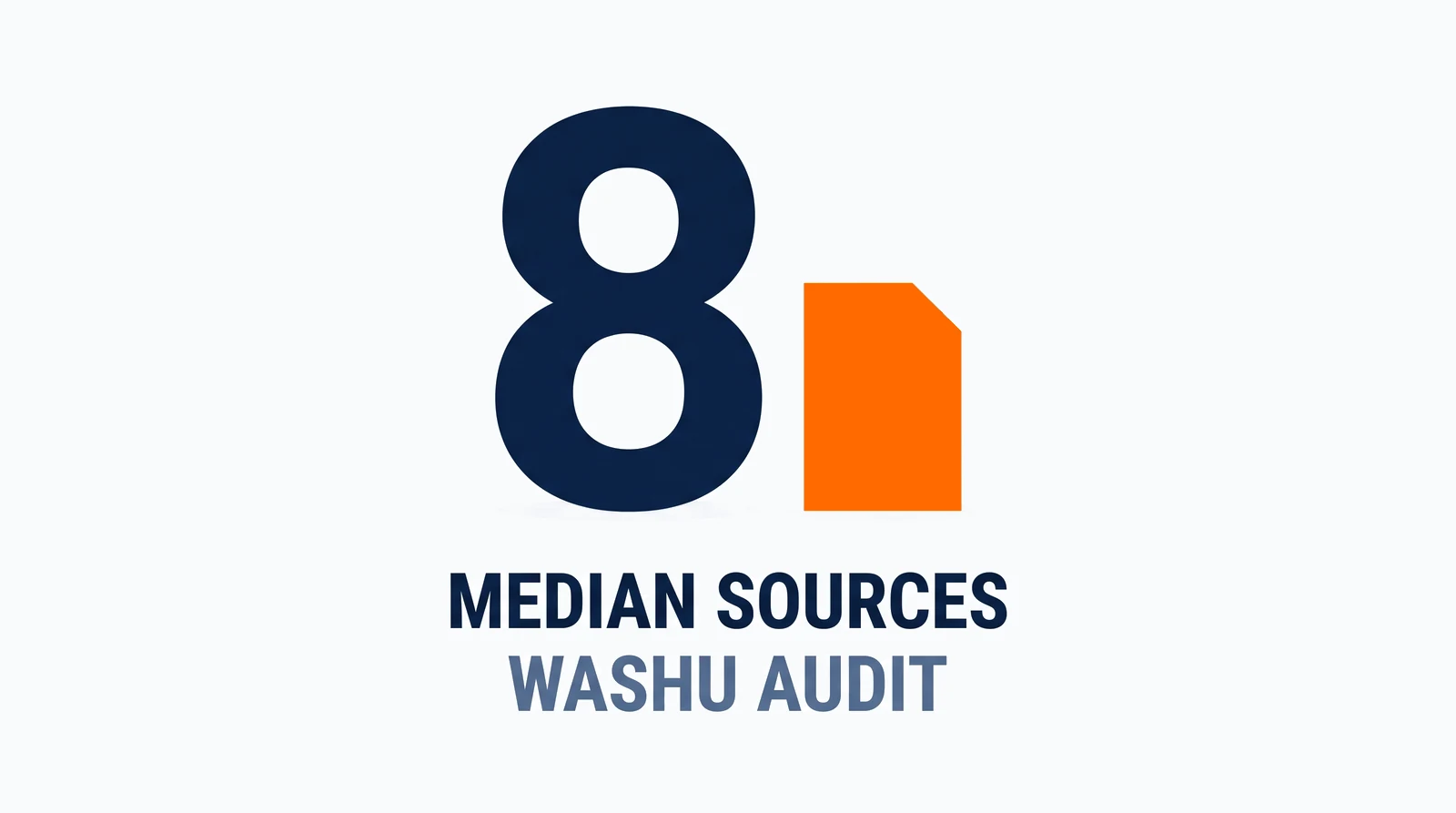
Our interest first. We sell software that logs which sources AI answers name, so how people read this console bears on our own market. We have measured nothing here: we hold no Search Console export of our own across these months. What follows is a read of Google's note, its help pages, and the eight pages that ranked for "great decoupling seo" on Google's United States results when we checked, on 5 October 2026.
What did Google's note on Search Console impressions say?
A logging error kept Search Console from reporting impressions accurately between 13 May 2025 and 27 April 2026, and clicks were not affected. The entry sits on Google's Data anomalies in Search Console help page, headed 3 April 2026, and its key sentence reads: "Only impressions and related metrics - CTR and average position - were affected; clicks were not affected by the error, and this issue affected data logging only." The same entry warns that "you may notice a decrease in impressions in the Search Console Performance report."
The wording changed after it was first posted. The 3 April 2026 text, quoted by Search Engine Roundtable on 6 April, said "Clicks and other metrics were not affected by the error". The current text adds CTR and average position to the affected list, so the scope Google gives today is wider than the one first reported.
Google's note leaves three things out:
- No size: there is no figure for how far the counts were off.
- No mechanism: the note does not say what the error logged, or for which sites.
- No "inflated": that is the reporters' word. The note says only that a decrease may follow the fix, which implies the old counts ran high; that is our inference from its wording.
Google is not correcting the affected months. On Bluesky on 3 May 2026, Barry Schwartz of Search Engine Roundtable asked Google's John Mueller: "does this mean it was fixed going forward but the past data won't be fixed?" Mueller answered "Yes": the fix runs forward, and the months already logged stay as they were. The help page itself keeps only "known issues in the last 3-16 months", so this entry will leave the page, and anyone who relies on it should keep a dated copy.
Which half of the great decoupling does the error touch?
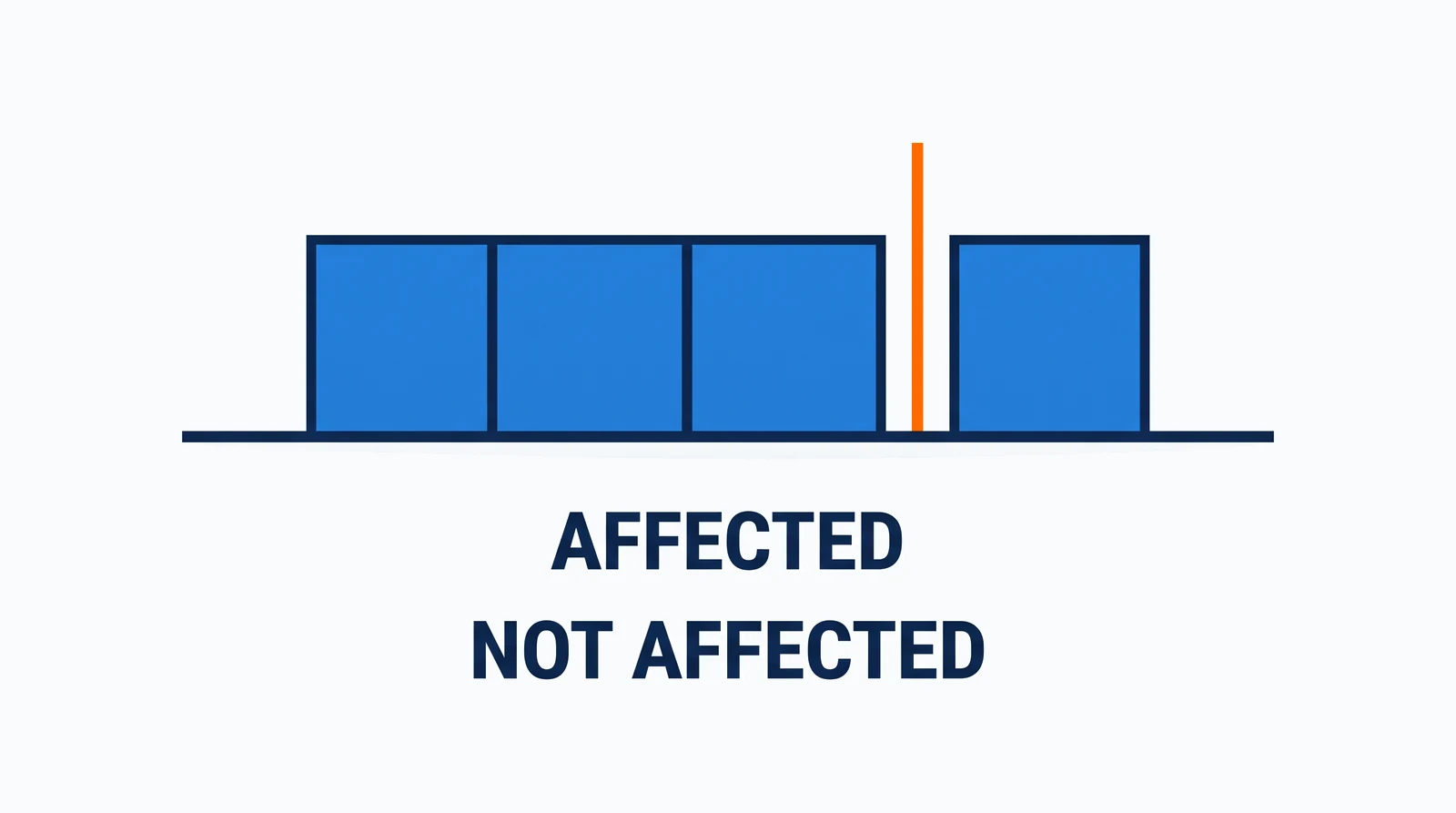
Google's logging error touched impressions and every number divided by them, and it left clicks alone. On the Performance report, that splits the four headline numbers like this:
- Clicks: not affected.
- Impressions: affected from 13 May 2025 to 27 April 2026.
- Click-through rate (CTR): affected, because it is clicks divided by impressions.
- Average position: affected, by the current wording of the note.
That unaffected line is Search Console's own count of clicks: one is counted when someone follows a result from Google Search to another site. It is the report's nearest measure of organic traffic from Google, but it is not the same count as organic sessions in Google Analytics: Google says clicks and sessions "are calculated differently", so the two will not match completely. A graph of the pattern drawn across those months sets that line, logged normally, against a line that was not. A growing gap between a correctly logged line and an incorrectly logged one is not, by itself, evidence of a shift in how people search, even where the pattern looks like a long-term trend.
We opened all eight of those ranking pages. Every one explains the gap as AI answers satisfying people on the results page: most name AI Overviews and zero-click searches, two define the pattern as search volume still growing while the traffic that leaves Google shrinks, and two name ChatGPT alongside AI Overviews. None of the eight mentions the logging error. Six carry dates before the note of 3 April 2026 and could not have carried it; one was published after it, and one was updated after it.
The link between the error and the great decoupling was made in April 2026. Glenn Gabe asked on Search Engine Roundtable on 6 April 2026 whether the error had "caused some of the alligator graphs we have seen", and Passionfruit's April 2026 analysis of 17 properties argued in the same direction. We add no estimate of our own, and we do not adopt theirs.
Did AI Overviews still cut clicks?
AI Overviews may well have cut clicks: Google's note leaves that line untouched, and the click studies we read found lower click-through where AI Overviews appear. Those studies compare sets of queries rather than prove a cause, and one of them found click-through falling on queries without AI Overviews too; we read each one and what it counted separately, and none of their figures is repeated here.
The impressions line can also rise for real reasons. Google's own help page treats a link inside an AI Overview like any other result — "Standard impression rules apply" — and adds that "An AI Overview occupies a single position in search results, and all links in the AI Overview are assigned that same position." Google's page on AI features puts it plainly: sites in AI Overviews and AI Mode "are included in the overall search traffic in Search Console", within the "Web" search type, so in the main Performance report they sit in the same totals as traditional search results.
The results page also changed for real in the same weeks. Google began rolling out AI Mode to everyone in the United States on 20 May 2025, a week after the error began; its own post that day reads "starting today we're rolling out AI Mode in the U.S. — no Labs sign-up required." Searches that end with no visit to any site are a separate measurement again, and what a zero-click figure measures is its own question.
A second change sits inside the window: the end of num=100 in September 2025. Google stopped reliably honouring that parameter, which let one results page show 100 results and which some rank-tracking tools used, as Search Engine Roundtable recorded on 12 September 2025. Site owners then reported fewer impressions and a higher average position, as the same site noted on 5 December 2025. That change is not on Google's anomalies page. The 5 December report calls scrapers the "likely" cause, and no page of Google's that we opened names one, so the mechanism is a working explanation, not a documented one.
How much of any one site's impressions line was the error, how much the new features and how much the num=100 change is a split Google has not published, and we cannot work it out from outside.
How do you check the great decoupling in your own Search Console?
Two dates do the checking on your own Performance report: 13 May 2025, when the error began, and 27 April 2026, when it ended. Mark both, read clicks straight across them, and read impressions, click-through rate and average position only within one side of the second mark. Six steps make that practical:
- See what is still there. Google's Analytics help states that "Search Console keeps data for the last 16 months." By our arithmetic, a 16-month view has not reached back to 13 May 2025 since mid-September 2026, so the months before the error began have already aged out of the report. If those months were exported, that export is the only pre-error baseline for impressions a site still has.
- Read clicks across the whole period. They were not affected, so a decline from mid-2025 is a decline in clicks from Google, whatever caused it. Organic sessions in Analytics are a separate count, worth checking beside it.
- Do not compare impressions across 27 April 2026. A drop after that date may be the correction rather than lost visibility, and by our arithmetic a year-on-year comparison has clean dates on both sides only from 28 April 2027.
- Re-check content decisions made on CTR. A page flagged for a rewrite, a merge or removal because its CTR fell between May 2025 and April 2026 was flagged on a rate Google now lists as affected, so look at its clicks before you act on it.
- Mark September 2025 too. Site owners reported impressions and average position moving after the num=100 change, a separate event from the logging error.
- Keep dated copies. Save the note and any exports taken before the fix, because the history is not being corrected and the entry will leave its page.
SEO teams that reported impressions to a client or a board across those months reported a number the note now says was not logged accurately. The honest repair for those reports is a dated note on the affected months, not a new figure, because Google has published no corrected one.
For AI features on their own, the Generative AI performance report, open to every website since 31 August 2026, counts impressions in AI Overviews and AI Mode; it logged its own error from 13 to 17 August 2026, since restored, as the anomalies page's update of 21 August records, and our read of AI Mode's citation numbers covers what it reports.
What the clicks line means for your business, including what caused any fall and whether it matters, is your call. The note only tells you which line was logged as normal.
What can a clean impressions line still not tell you?
An impression records that a link was shown, not that an AI answer used it, so even a correctly logged impressions line says nothing about citations. We first published that as a read rather than a measurement, in our overview of AI and search, and the read has a limit: it does not cover Bing's AI Performance report, which counts citations instead.
Read your clicks as logged, read the other three numbers with the two dates marked, and keep the copies.
Sources
- Google, "Data anomalies in Search Console", Search Console Help — https://support.google.com/webmasters/answer/6211453 — checked 6 October 2026
- Search Engine Roundtable, Glenn Gabe, "GSC Logging Error Yielded Inflated Impressions Since May 2025", 6 April 2026 — https://www.seroundtable.com/gsc-logging-error-impressions-41140.html — checked 6 October 2026
- Search Engine Roundtable, Barry Schwartz, "The Great Decoupling Of Clicks & Impressions From Google Search", 3 June 2025 — https://www.seroundtable.com/google-search-great-decoupling-39524.html — checked 6 October 2026
- John Mueller, reply on Bluesky, 3 May 2026 — https://bsky.app/profile/johnmu.com/post/3mkx7smlf6c25 — checked 6 October 2026
- Passionfruit Labs, "Your Search Console Data Has Been Wrong for a Year", April 2026 — https://www.getpassionfruit.com/research/your-search-console-data-has-been-wrong-for-a-year — checked 6 October 2026
- Google, "What are impressions, position, and clicks?", Search Console Help — https://support.google.com/webmasters/answer/7042828 — checked 6 October 2026
- Google Search Central, "Using Search Console and Google Analytics data for SEO", last updated 7 January 2026 — https://developers.google.com/search/docs/monitor-debug/google-analytics-search-console — checked 6 October 2026
- Google Search Central, "AI features and your website", last updated 10 December 2025 — https://developers.google.com/search/docs/appearance/ai-features — checked 6 October 2026
- Google, Elizabeth Reid, "AI Mode in Google Search: Updates from Google I/O 2025", 20 May 2025 — https://blog.google/products-and-platforms/products/search/google-search-ai-mode-update/ — checked 6 October 2026
- Search Engine Roundtable, Barry Schwartz, "Google Search Testing Dropping 100 Search Results Parameter", 12 September 2025 — https://www.seroundtable.com/google-search-drops-100-results-parameter-40097.html — checked 6 October 2026
- Search Engine Roundtable, Barry Schwartz, "Google Search Console Average Impression Jump After Num 100 Change", 5 December 2025 — https://www.seroundtable.com/google-search-console-average-impression-increase-40552.html — checked 6 October 2026
- Google, "[GA4] Queries report", Analytics Help — https://support.google.com/analytics/answer/13682862 — checked 6 October 2026
- Google, "Generative AI performance report (Search)", Search Console Help — https://support.google.com/webmasters/answer/16984139 — checked 6 October 2026
- LiamVi research: our methods, our samples and our limits — https://liamvi.com/research/ — checked 6 October 2026