Zero-click search in 2026: what share of searches actually ends without a click
There is no single share, and anyone who quotes you one without a year, a country and a panel is passing on a number they did not check. The figures in circulation run from about a third to about two-thirds, and that spread is not sloppiness. It is what happens when different studies count different things and everyone repeats the results as though they were one measurement.
So we did the boring version. We opened each study at its own source, wrote down what it counted, over what sample, in which country and period, and under what definition of a search and a click. Then we put them beside each other, which none of the pages we found ranking for this question on 15 September 2026 does.
Two limits belong here rather than at the bottom. We have never measured this ourselves and we state no figure of our own in this article — every number below belongs to somebody else and says so. And one of the most-quoted studies on the topic sits on a domain that will not open for us at all; we say which, and we do not repeat its numbers as fact.
The useful part, if you have just been handed a percentage in a meeting, is the four questions in the middle.
What does zero-click search mean?
A zero-click search ends where it started: on the results page, with the question answered and no site visited. Wikipedia's entry on the zero-click result defines it as "the successful resolution of a web query when the user gets their desired result immediately on the search engine results page without having to navigate to any followup source of information" (read 15 September 2026).
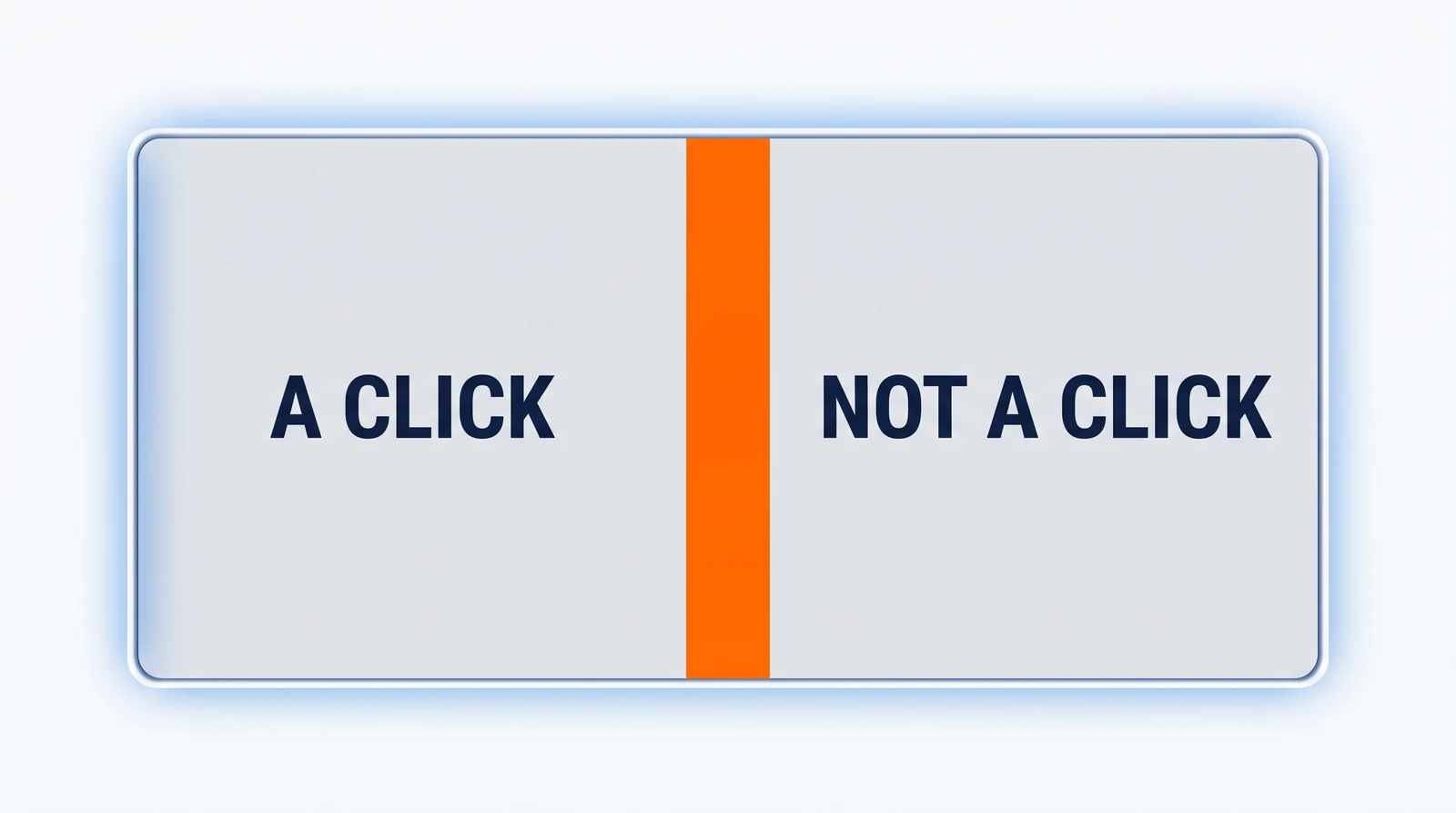
The problem for anyone quoting a percentage is that the studies do not share one definition of the click that is missing.
In SparkToro's June 2026 study, a click on Google Maps or a visit to YouTube counts as a click, and so does a click on a paid link. In Pew Research Center's March 2025 analysis, a click counts only when the next page a user visited matched a link available on the first page of results. Those are not the same event. SparkToro counts the click wherever it lands; Pew counts it only when the page opened next was already shown on the results page. The same tap can fall on either side of that line, and neither study is wrong. They answered different questions.
Is it true that 60% of searches are zero clicks?
68.01% of US Google searches ended without a click between January and April 2026, which is higher than 60% and counts something broader than most readers assume. SparkToro's study of 8 June 2026 produced that figure from Similarweb's desktop and mobile web panel, and does not publish the panel's size. The same study states the 2024 US figure as 60.45%.
The metric behind it, in the study's own words, "includes clicks of any kind (save for another search in the default search box): Google's other properties (like a search in Google Maps or a visit to YouTube), clicks on organic links to the open web, and clicks to paying advertisers in the search results". More than two-thirds of those queries sent the user nowhere at all — not to a website, not to Maps, not to an advertiser.
Three modelling assumptions sit underneath the figure, and the study names each one. The mobile and desktop split uses "the multiple–data–source–informed figure of 2/3rds mobile, 1/3rd desktop". On mobile, the researchers "assumed the end of a search session to come after 10 seconds of inactivity". Because mobile clickstream data cannot isolate paid clicks directly, the paid share was estimated from a third-party benchmark panel. One exclusion: the data covers mobile queries made in a browser and is "not inclusive of the Google mobile search application", where the study expects the zero-click rate to be higher still.
About 80% of consumers rely on zero-click results in at least 40% of their own searches. The Bain–Dynata Generative AI Consumer Survey of 1,117 respondents produced that figure in December 2024, and Bain & Company published it in February 2025 on a page that names no country. The 80% is a share of consumers, not of queries, with the 40% threshold sitting inside each person's own behaviour.
The two figures are not rivals and they do not contradict each other. One counts queries on a clickstream panel; the other counts consumers in a survey. They do not share a geography either: SparkToro's panel is US, and Bain's page names no country at all. Neither tells you what happens in India, Nigeria or Brazil.
What are zero-click searches on Google?
The knowledge panel, the featured snippet, the local pack, the People Also Ask box and the AI overview are the SERP features that end a search where it started. Each answers the query where the searcher already is.
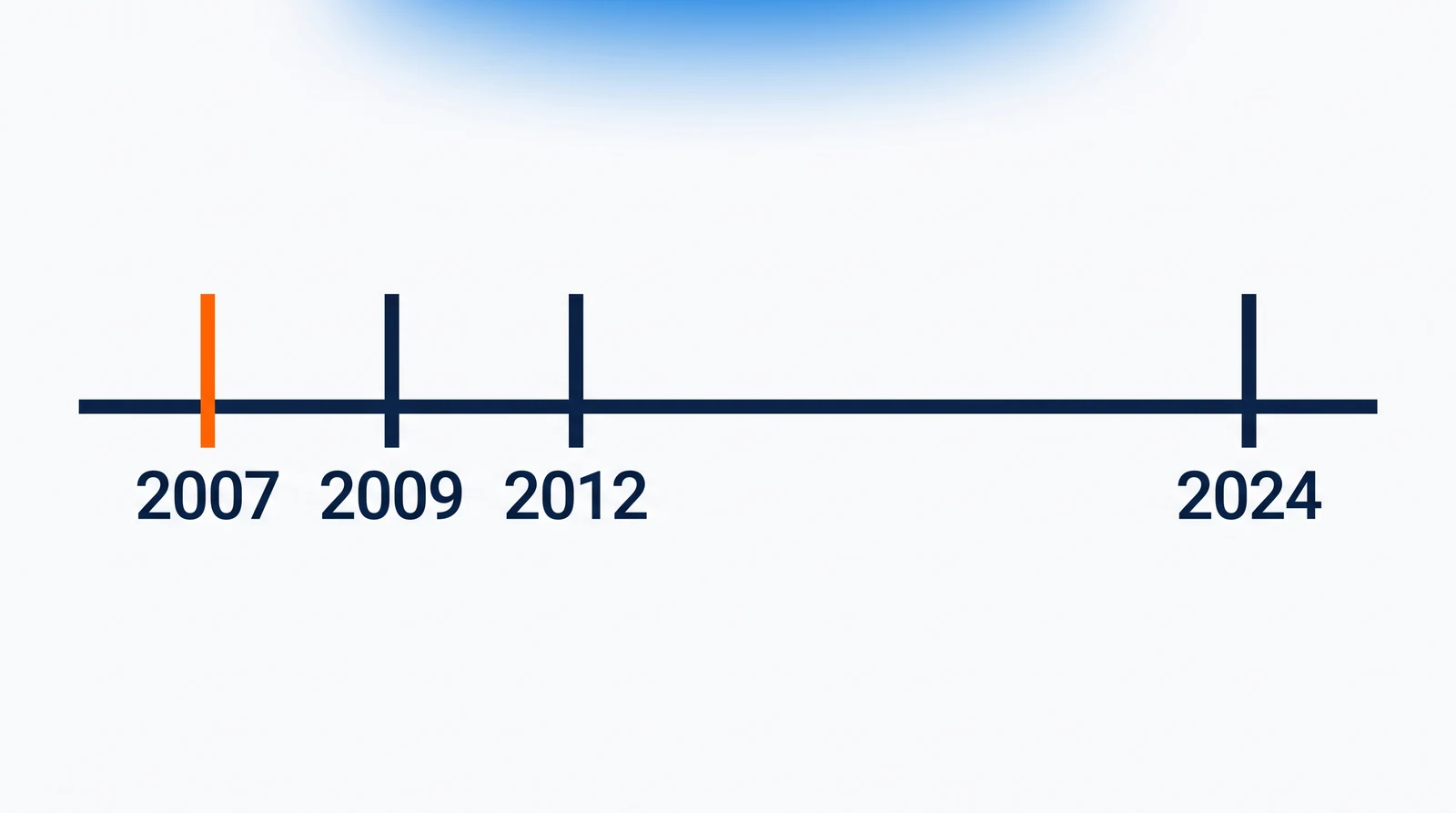
The dates matter more than the list. Wikipedia's entry tracks the sequence: Universal Search in 2007, rich snippets in 2009, the knowledge panel in 2012, AI Overviews in 2024, and AI Mode in 2025. This did not start with AI. Google has been answering queries directly on the results page for the better part of two decades, and SEO has lived alongside these features since rich snippets arrived in 2009. Each new SERP feature added to a stack rather than replaced what came before it — the featured snippet did not retire the knowledge panel, and the AI overview retired neither.
That is why a 2019 figure and a 2026 figure are not measuring one new phenomenon. They are measuring an accumulating set of answer surfaces, several of which predate every product now being blamed.
The current AI features are also smaller than the conversation around them suggests. 0.34% of queries reached AI Mode between January and April 2026, in the same SparkToro study. In the period the study covers, it was not yet doing the work.
We have written separately about what the People Also Ask box is actually worth as an SEO strategy.
Four questions to ask any zero-click figure
Four questions separate a zero-click statistic that means something from one that does not: per what, a click to where, measured how, and when and where. Read the four as our view of what a figure has to carry, not as a neutral standard — we chose them, and they are shaped by the kind of measurement we build.
Per what? A zero-click rate can be counted per query, per session or per person, and those three denominators are not interchangeable. Bain counts consumers. SparkToro counts queries. Pew counts searches inside a tracked panel of users. A figure without its denominator is not a measurement of anything, and a ratio is where that failure hides most easily: share of voice is a ratio, and every ratio has a denominator you are not being shown.
A click to where? A click can mean a visit to the open web only, a click anywhere on the search platform, or any destination at all. SparkToro's metric counts a visit to YouTube as a click; Pew's counts only links present on the first page of results. Change that one rule and the same raw data yields a different percentage.
Measured how? A clickstream panel, a consumer survey and a search console are three instruments that cannot produce the same number even when every one of them is honest. A panel observes what a recruited sample did on tracked devices; a survey records what people say they do; a console reports your own website and nobody else's.
When, and where? A zero-click figure needs a year and a country in the sentence that makes the claim. The zero-click rate is a moving target with a national scope, and a US panel figure says nothing about search behaviour anywhere else.
The studies, side by side
Five studies, five different things counted — and not all of them counted zero clicks at all. The differences sit in the method rather than in the search results.
| Study | What it counted | Sample or panel | Period | Country | What counted as a click | |---|---|---|---|---|---| | SparkToro / Similarweb, 8 Jun 2026 | Share of Google queries ending without a click | Similarweb desktop + mobile web panel; panel size not stated | Jan–Apr 2026 | United States | Any click except another search: Google properties, open web, paid links | | Bain–Dynata Generative AI Consumer Survey, 19 Feb 2025 | Share of consumers relying on zero-click results in ≥40% of their searches | 1,117 respondents | Dec 2024 | Not stated | Progressing to another destination site | | Pew Research Center, 22 Jul 2025 | Searches, and whether a link was clicked | 900 US adults; 68,879 queries | Mar 2025 | United States | A link on the first page of results or in the AI summary | | Semrush AI Overviews study, refreshed 15 Dec 2025 | Share of queries triggering an AI overview | 10M+ keywords | Jan–Nov 2025 | Not stated | Not applicable — measures a SERP feature, not clicks | | Google (Liz Reid), 6 Aug 2025 | "Total organic click volume" | Not stated | Not stated | Not stated | Not stated |
900 US adults on an opt-in browsing panel produced 68,879 unique Google searches during March 2025, of which 12,593 returned an AI summary. Pew Research Center reported those numbers, and Pew's is the only row above with every cell filled, because Pew wrote its method down. Whatever you make of a 900-person panel, you can argue with it, and that is the point. The other four rows leave a reader less to check, and one of them is a company blog post rather than a study.
The number the ranking pages quote, and the study we could not open
The most-quoted number on this topic — "58.5% of U.S. searches … ended without a click in 2024" — reaches most readers through pages that appear not to have opened the study behind it. Semrush's zero-click page, dated 13 May 2026, states that "58.5% of U.S. searches and 59.7% of E.U. searches ended without a click in 2024" and attributes it to SparkToro, with no sample, no panel and no definition of a click. Search Engine Land's guide, dated 27 November 2025, carries five separate figures from five separate sources — "nearly 60% of Google searches on mobile", "only 36% of searches actually send clicks to websites", AI Overviews on "approximately 30% of informational queries", People Also Ask in "78% of search results", and "40.7% of voice search answers" drawn from featured snippets — and never once compares them or explains how they can all be true at the same time.
Here is our own limit, and it is a limit of our reading, not a complaint about anyone's work. The 2024 study sits on a domain that returns a bot-verification page to us; we did not try to get around it, and the Internet Archive holds no capture of that URL. So we are not repeating its figures as facts in this article. We read the June 2026 study at the Internet Archive's capture of 14 September 2026 for the same reason, and we say so.
The same author's June 2026 post states the 2024 US zero-click figure as 60.45%, while the page quoting the 2024 study states 58.5%. Both are real quotes from pages we opened. We cannot resolve the difference, because we could not read the study that would, and guessing at it would be exactly the behaviour this article is about.
The author also wrote about his own long series. The 2016 and 2019 numbers came from "the now-defunct Jumpshot clickstream panel", the 2024 numbers from Datos, and the 2026 numbers from Similarweb — so, in his words, "the graph below compares a bit of apples and oranges — these aren't the same users or devices, they're not even necessarily perfect demographic matches". Anyone quoting "49% in 2019" against "68% in 2026" as a trend line is quoting across two changes of measuring instrument that the source disclosed in the same post.
None of this makes any of these numbers dishonest. A missing denominator is a missing denominator, not a lie. The people who published these studies mostly disclosed their limits. The pages quoting them dropped the limits on the way.
How often do AI Overviews actually appear?
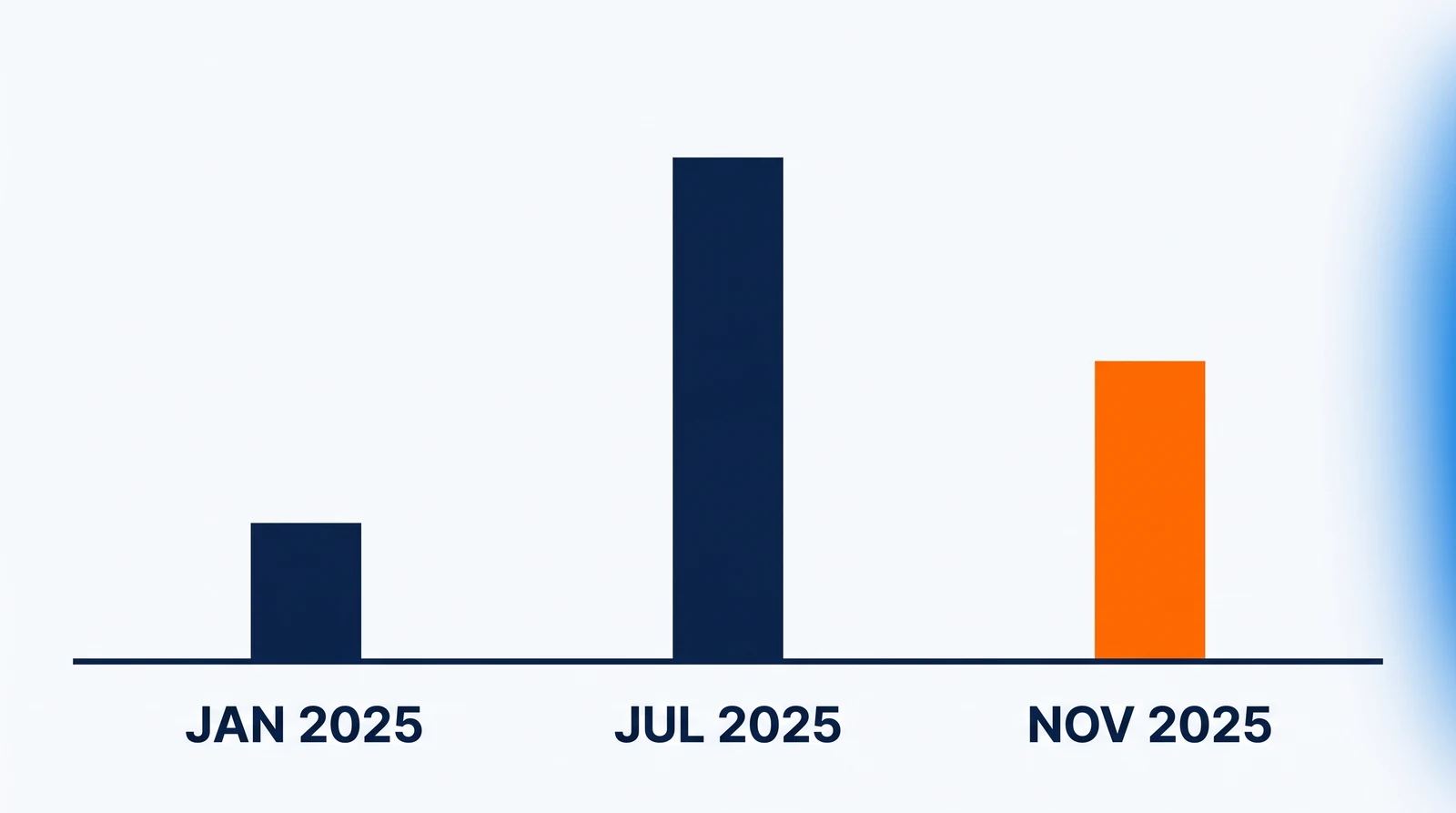
AI Overviews appeared for 6.49% of queries in January 2025, 24.61% in July 2025 and 15.69% in November 2025. Semrush's AI Overviews study produced that series from more than 10 million keywords, refreshed it on 15 December 2025, and names no country on the page. The AI overview rose, then it fell.
The same study also measured zero clicks, and the result cuts against the assumption most readers bring. On more than 200,000 keywords with a search volume over 100, tracked with Datos between January and October 2025, the zero-click rate on the same keywords fell from 33.75% to 31.53% after they began showing an AI overview — and Semrush's own reading is that "AI Overviews don't automatically increase zero-click behavior". Keywords with an overview do run higher, the study says, and it reads that as informational intent rather than cause.
Semrush's own zero-click page, updated in May 2026, still quotes "13.14% of queries in March 2025" from that same study — a cut the refresh has since moved past in both directions. The page is current; the figure on it is not.
The practical version: check the date on the figure, not the date on the page. A recently updated article can carry a number from eighteen months earlier, and on a SERP feature Google is actively tuning that is a different product.
What Google says about all of this
Google disputes the third-party zero-click studies in public and publishes no measurement to support the rebuttal. In a post of 6 August 2025, Liz Reid, VP and Head of Google Search, wrote that "overall, total organic click volume from Google Search to websites has been relatively stable year-over-year" and that "we're actually sending slightly more quality clicks to websites than a year ago". She added that this "is in contrast to third-party reports that inaccurately suggest dramatic declines in aggregate traffic — often based on flawed methodologies, isolated examples, or traffic changes that occurred prior to the roll out of AI features in Search".
We asked every study in this article for its denominator, so we asked that post for one too. It carries no percentage, no sample and no method, and it names none of the studies it calls flawed. Google holds by far the best data on this question and published none of it.
That is not a swipe. The same question should be asked of us, and we measured none of this, which is why no number of ours appears anywhere here. Where our own numbers have pointed the wrong way, we published that too.
So what should you do with a zero-click number?
Ask a zero-click number what it counted, where a click had to land, how it was measured and when — and then stop looking for a national average. No national figure will tell you what is happening to your own website, because every study here measures a market, a period and a device mix that is not yours.
What you can act on is your own data, and it is closer. Search Console reports your impressions and your clicks on your own queries, dated — though not every query: Google omits some for privacy and does not show every row in the table. Impressions rising while clicks fall is the pattern these studies describe, visible on your own site rather than inferred from a national figure — and it is an outcome, not a cause: a ranking change, a different mix of queries or a changed results page moves the same two lines. Your visibility on the answer surfaces is measurable the same way: which brand and which page an AI search result names for the questions your buyers ask. Steady positions with falling clicks is a different measurement, not a harder version of a ranking problem.
The work has picked up new names — answer engine optimization, generative engine optimization — but the question a zero-click figure should prompt is the old one, and it is about your brand rather than Google's SERP.
The habit costs nothing. When the next zero-click figure lands in your feed, find the study, open it, and read the method. In this field that alone puts you ahead of most of the pages we opened.
What people actually ask us
What is the percentage of zero-click searches? The honest answer is a range with its reasons. The most recent panel study with a published method puts it at 68.01% of US Google queries for January to April 2026, counting any click at all — including clicks to Google's own properties and to ads — as a click. A December 2024 consumer survey of 1,117 people found about 80% of consumers relying on zero-click results in at least 40% of their searches. Those numbers measure different things in different years, and only one of them says which country — and quoting either without its year, its country and its denominator is how a statistic becomes folklore.
Is zero-click search new? No. The knowledge panel arrived in 2012, rich snippets in 2009 and Universal Search in 2007 — more than a decade of Google answering queries on the results page before AI Overviews launched in 2024. The AI features are the newest layer on something already well under way, and AI Mode itself accounted for 0.34% of queries in the most recent study we could open.
What is the most unbiased search engine? Google's own People Also Ask box attaches that question to this topic, and we are not answering it. We have not measured search-engine bias, and we will not pass on a claim about it from a page that has not measured it either. That is the standard we applied to every other number here, and it would be strange to drop it in the last paragraph.
Sources
All checked 15 September 2026, and every quoted passage re-checked live on 16 September 2026.
- SparkToro, "In 2026, Less than One Third of Google Searches Still Send a Click", 8 June 2026 — https://sparktoro.com/blog/in-2026-less-than-one-third-of-google-searches-still-send-a-click/ — read at the Internet Archive's capture of 14 September 2026; sparktoro.com returns a bot-verification page to us.
- SparkToro, "2024 Zero-Click Search Study" — could not be opened: bot-verification page, and no Internet Archive capture of that URL. Its figures are not used as facts in this article.
- Bain & Company, "Goodbye Clicks, Hello AI: Zero-Click Search Redefines Marketing", 19 February 2025 — https://www.bain.com/insights/goodbye-clicks-hello-ai-zero-click-search-redefines-marketing/
- Pew Research Center, "Google users are less likely to click on links when an AI summary appears in the results", 22 July 2025 — https://www.pewresearch.org/short-reads/2025/07/22/google-users-are-less-likely-to-click-on-links-when-an-ai-summary-appears-in-the-results/
- Semrush, "Semrush AI Overviews Study", refreshed 15 December 2025 — https://www.semrush.com/blog/semrush-ai-overviews-study/
- Semrush, "Zero-Click Searches", 13 May 2026 — https://www.semrush.com/blog/zero-click-searches/
- Search Engine Land, "Zero-click searches" guide, 27 November 2025 — https://searchengineland.com/guide/zero-click-searches
- Google, Liz Reid, "AI in Search is driving more queries and higher quality clicks", 6 August 2025 — https://blog.google/products-and-platforms/products/search/ai-search-driving-more-queries-higher-quality-clicks/
- Google Search Console Help, "Performance report (Search results): Dimensions and data groupings" — https://support.google.com/webmasters/answer/17011259 — read 16 September 2026.
- Wikipedia, "Zero-click result" — https://en.wikipedia.org/wiki/Zero-click_result
- LiamVi research: our methods, our samples and our limits — https://liamvi.com/research/