Top user-friendly AI search optimization tools: easy to use is not the same as easy to check
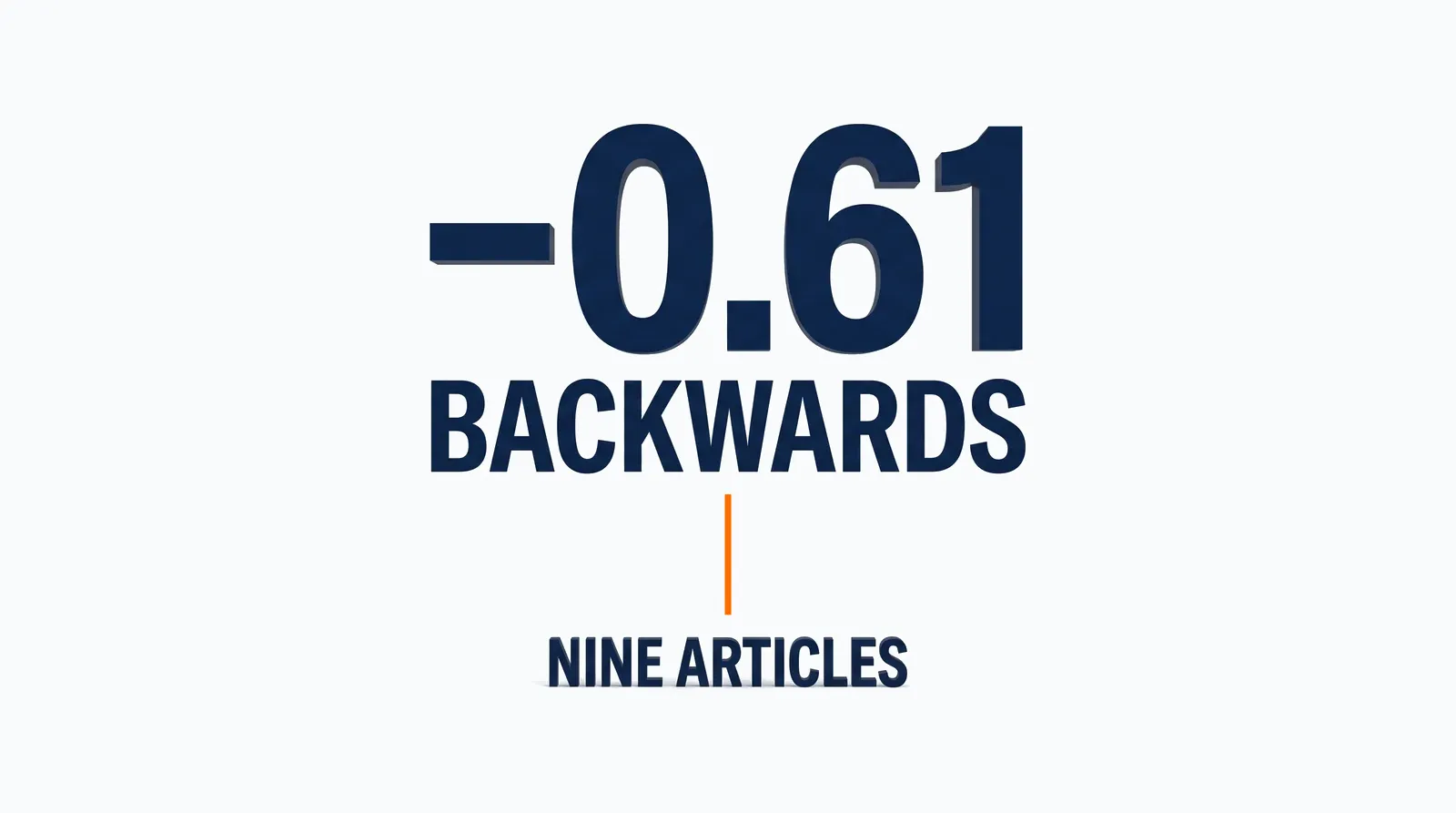
The friendliest number we ever shipped was wrong, and we only found out because we had the raw evidence sitting next to it. We built a content score — one number meant to tell a writer whether a draft was good enough to get cited — then had a set of drafts read blind for quality on a seven-dimension scorecard, with none of the numbers in view. The correlation came back negative: rho −0.61 across the nine articles our score covered, with every draft in that trial rated between 71 and 90. Those cold reads were done by independent reviewer agents, not people, and a human blind read of the same articles is prepared and not yet done. We published the write-up. We build one of these tools, so read this knowing that.
That result left us with a working definition of "easy" that has nothing to do with buttons. This guide covers what the word should mean when the thing being measured is invisible, which AI search optimization tools you can open and read today in their own words, and four checks you can run yourself this afternoon without paying anyone.
What makes an AI search optimization tool user-friendly?
An AI search optimization tool is user-friendly when a non-expert can check its output against the engine itself, not when the interface is uncluttered. That is a higher bar than it sounds, because almost every convenience in this category is built by taking evidence away.
Three abstractions do most of the work in the products you will look at, and each one hides something specific:
- One content score stands in for a judgement about a piece of writing. It hides which parts of the content produced the reading, so a writer cannot tell a real gap from an artefact of the fit.
- A recommendation list stands in for the reasoning behind it. The ranking pages those recommendations were fitted to are the evidence, and almost no SEO tool shows them to you.
- One blended visibility number stands in for five AI search surfaces — ChatGPT, Gemini, Perplexity, Google's AI Overviews and Google's AI Mode — that do not move together. A single figure across all five hides which surface you are actually losing.
Each of those is easier to read than the material underneath it. Each also removes the thing you would need in order to notice it was wrong. That is not a scandal; it is what an interface is for. It becomes a problem only when there is no route back to the evidence, because a number you cannot get behind is not something you believe on evidence — it is something you take on trust.
You will see this work called three things, and they are the same job: AI search optimization, GEO for generative engine optimization, and AEO for answer engine optimization. Classic SEO tools and dedicated AI trackers both sell into it, which is part of why the labels multiply. If you are still working out what these products measure — the difference between a mention, a citation and a share-of-voice figure — we wrote that guide separately and this one assumes it. And if the question in your head is "which platform should I start with", this is not that article. This one is about whether you can check what a platform tells you once you have started.
What "easy" cost us: our own content score pointed the wrong way
We built a content score, tested it against blind quality reviews, and found it ranking our best content lowest. Those reviews were run by independent reviewer agents, one per article, on a seven-dimension scorecard, and they saw no numbers. The correlation across the nine articles our score covered came out at rho −0.61. Every draft in that trial was rated between 71 and 90, so what failed was ranking good work against good work rather than spotting bad work. The sample is small and early and we keep measuring. The write-up is public, because a measurement company that hides its null results is not measuring anything.
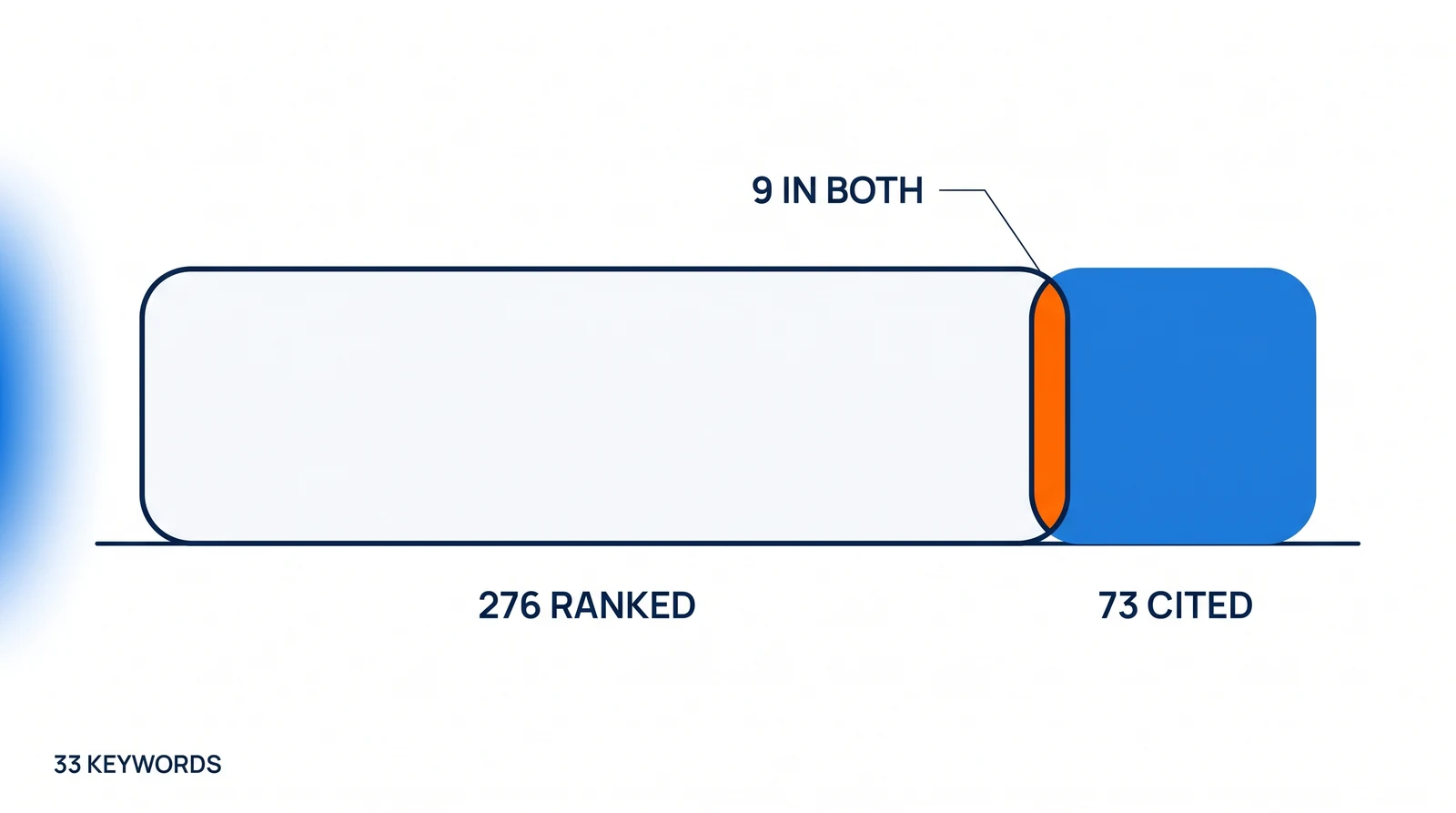
The mechanism is not mysterious. A meter fitted to the consensus of the pages already ranking rewards you for repeating them, and repetition is the behaviour these engines discard. Nine of the 276 ranking pages in our 33-keyword harvest were also cited by the engine. That same harvest turned up 73 cited pages in all, so the overlap between what ranked and what was quoted was nine pages wide. Ranking well on Google and getting cited by an engine were close to separate games in our data, which is the single most useful thing our keyword research has told us about this field.
Here is the part that belongs in an article about user-friendly tools rather than in one about scoring. The problem is not that a number can be wrong; any measurement can be wrong, ours included, and we would rather work with a flawed meter than none at all. The problem is that a single friendly number is unfalsifiable to the person reading it. We caught ours because we had an independent blind read to hold it against — reviewer agents in our case, with a human read of the same set still to come. A user with only the reading on screen had no way to catch the same thing and would have spent a year writing toward it. That is the real cost of easy, and it is why "can I check this" is the first question worth asking of any SEO tool in this field, ours included.
Which user-friendly AI search optimization tools can you verify today?
Five AI search optimization platforms we opened and read on 26 August 2026 — Surfer, Semrush AI Visibility, Ahrefs' Brand Radar, Profound and Peec AI — plus our own, described in each vendor's own words. This is our scope, not a census of the market, and it is not a ranking. We hold no measured, like-for-like analysis of these products' quality, and we know of nobody who has published one.
- Surfer is an SEO platform that calls itself an "AI Visibility Platform for maximum organic growth". Its Content Editor promises "real-time SEO and AI Search optimization guidelines in an intuitive and fun-to-use writing interface", and it tracks AI answers too, offering to "Track how your brand appears in AI tools like ChatGPT". The page says the product is "Easy to use for both startups and the world's largest enterprises". A free trial and a Google Docs integration are offered.
- Semrush AI Visibility is a large classic-SEO platform's move into AI answers, sold under the banner "From Traditional SEO to AI Discovery". Semrush also publishes an AI Visibility Index alongside the product, which matters for reasons the fourth check below gets to.
- Ahrefs' Brand Radar tracks "your brand's visibility across AI answers, YouTube, and Reddit". It separates the two things worth separating: "Track your brand mentions across AI answers" and "Find valuable AI citations". Its named surfaces are "AI Overviews & AI Mode", ChatGPT, Perplexity, Microsoft Copilot and Gemini, and it offers to "Preview your AI visibility for free" through an AI Visibility Checker.
- Profound describes itself as "the full stack marketing platform for the marketer of the future" and offers to "See how AI represents your brand in every conversation". Its named coverage runs across Perplexity, ChatGPT, Claude, Gemini, Grok, Microsoft Copilot, DeepSeek and Google AI Overviews, with source citations included in a free AEO report.
- Peec AI reports "Visibility, Position, and Sentiment" across ChatGPT, Perplexity and Gemini, and lets you "Set up Prompts" and organise them with tags. It also offers to "Export clean .csv files in seconds". An export is a route back to the raw data, and routes back to the raw data are what this article is about. A free trial is advertised on its homepage.
And the disclosure, since this article is about checking vendors. We build LiamVi, which tracks which sources hold the citations for your keywords, scores content on the properties cited pages share, and flags keywords where measured retrieval is zero. We are small and new. When we last checked this keyword, on 10 August 2026, we were not among the sources holding it, and by this article's own standard you should weigh us accordingly. What we can hand you is our research — the methods, samples and limits behind the measurements we publish, including the result two sections up, which flatters nobody.
This category turns over fast. Products rename, pivot and appear between our weekly research sweeps, so treat any list — this one included — as a dated snapshot to verify on the vendor's own page, not a standing set.
Four checks you can run yourself, free, on any of them
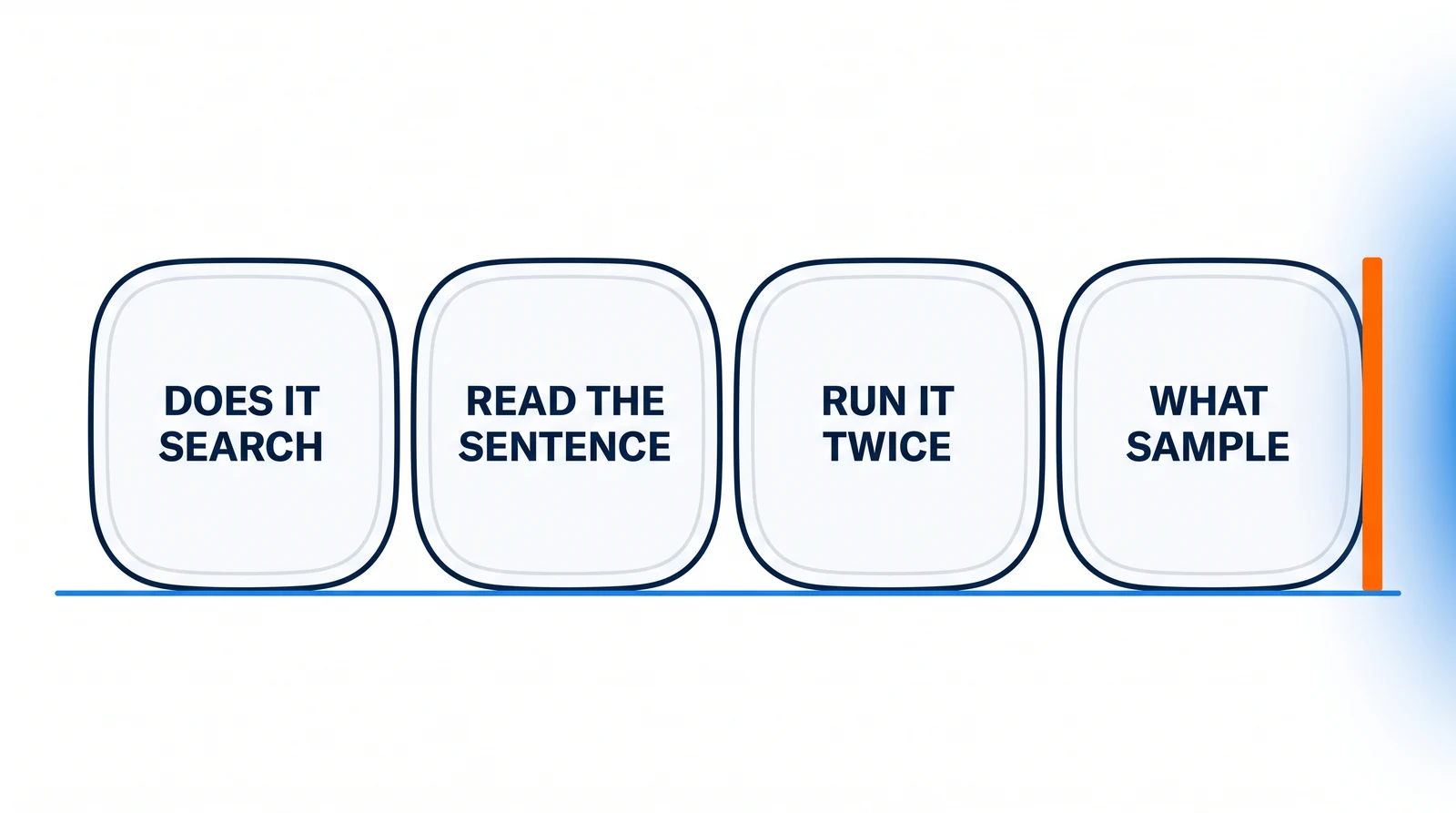
Four checks — does a search run at all, what sentence did the engine actually quote, does the number move between two identical runs, and what sample sits behind the figure — will tell you whether a tool's output is something you can verify. None of them needs a paid account. Read them as our view of what matters, since we built a product around what we chose to measure, and then run them on us.
1. Check whether a search runs at all. An AI search engine grounds its answer in the live web only when it decides the question needs it, and in Google's own grounding documentation that decision is a written-down parameter rather than a theory. In Google's grounded-answer API a developer can switch on dynamic retrieval, and once it is on, a response is grounded with Google Search only when a prediction score in the range 0 to 1 clears a threshold that defaults to 0.7. Below that threshold, Google's documentation for generating grounded answers says the model may still answer, but the answer "isn't grounded with Google Search"; leave that configuration unset, the same page says, and "the answer is always grounded". That is a developer-facing configuration on an API Google has since marked deprecated, not a description of any consumer surface — and it is still the clearest public statement we have found that the decision to search can be a gate with a number on it. Our own keyword research points the same way. Twelve of the 33 keywords in our early corpus drew a citation for nobody, at any quality level, because no search ran. What you do: type your target keyword into the engine your buyers use and see whether any source appears under the answer — and, on Google, whether an AI Overview appears above the results at all. Run it more than once, for the reason check 3 gives. If nothing is cited on any of those runs, a dashboard reporting zero AI visibility for that keyword may be reporting a slot that does not exist, and a platform that cannot flag that will bill you to track it. Engines differ here — Perplexity in particular cites far more freely than most — so run the check on the surface you actually care about.
2. Click the citation and read the sentence it points at. Some assistant citations land on the exact passage the engine lifted, not the top of the page, because a URL can carry a text fragment that points at one run of text inside a page and highlights it. MDN's reference for text fragments describes them as linking "directly to specific text in a web page", with supporting browsers scrolling to that text and highlighting it. The unit of citation is the passage, not the page. One article in our harvest was cited four separate times for four different passages inside it. What you do: ask an engine a real question in your field, click the sources, and read the sentences they land on — where an engine passes a text fragment, your browser highlights the exact one, and not every engine does. Ten minutes of that analysis teaches you more about which sentences get lifted on your own topic than any feature comparison, and it costs nothing. That reading is research, and it is free. It is also the cheapest possible audit of a tool: if a platform reports that a page of yours is cited in an AI Overview or a chat answer, you can go and look at the sentence it points at. Our guide to getting cited by ChatGPT is the long version of what that reading teaches.
3. Ask the same question twice. AI search engines are not deterministic, and in our own testing the same question returned different sources on different runs. That observation is early and mostly single-engine, so treat it as a direction rather than a constant. It has a practical consequence worth holding onto: two honest tools sampling at different moments will report different numbers, which is a reason they disagree rather than a reason to distrust them. What you do: ask the engine one keyword twice, a few hours apart, and compare what you see. If you already pay for a platform that tracks that prompt, set your two runs beside its figure; if you do not, the two runs on their own still show how much the ground moves. A dashboard whose number never moves at all is smoothing its data, and you want to know what it smoothed.
4. Ask what sample sits behind the number — and notice who already answers. A figure with no sample and no date is an opinion with decimals. The useful version of this analysis is comparison rather than cynicism, because some vendors publish the answer already and you can read it before you talk to anyone. Semrush's AI Visibility Index announcement, published on 26 June 2026, states that it analysed "126 million U.S. AI search prompts … from January through April 2026" across ChatGPT, Gemini, Google AI Mode and Google AI Overviews. That Semrush dataset is scoped to the United States, which matters if your buyers are somewhere else. Ahrefs says its Brand Radar runs on prompts that are "search-backed … not synthetic ones", a claim about method you can ask them to expand. Set those beside the shape of claim that arrives with nothing attached: Surfer's page states that content optimized with it is "25% more likely to get cited by AI", and the page does not carry the sample or the comparison you would need to check that figure.
A missing sample on a marketing page is not evidence of bad data, and this is the place to say so plainly. Surfer is the one competitor whose AI citation data we have independently cross-checked, and it held up. We compared the ChatGPT source lists Surfer exported in March and May 2026 against our own citation measurement, collected with different prompts and a different method so that agreement could not be an artefact of copying. Their exported sources tracked what we measured at roughly twice the rate of a control set drawn from the ranking pages on Google. We have not published the underlying counts for that comparison, so treat it as a direction we found rather than a figure to quote. The point is the discipline, never the vendor: ask everyone, us included, and notice who has the answer ready.
What about free AI search optimization tools?
The most useful free tool in AI search optimization is the engine itself, and several vendors add a free look on top of it. That is the honest answer to a question a lot of people are searching, and it is worth saying before any product name, because the free version of this work is real work rather than a demo. The four checks above need nothing but an hour, a browser and one keyword you care about.
Beyond that, from the pages we read on 26 August 2026: Ahrefs offers to "Preview your AI visibility for free" with its AI Visibility Checker, Profound offers a free AEO report that includes source citations, and Peec AI and Surfer both advertise free trials. We quote no prices and no tier limits here, because what a free plan includes in this category changes often. Check it on the vendor's own page on the day you sign up, not in an article.
One limit belongs here rather than at the end. AI visibility data moves week to week, so a free view you can only refresh monthly cannot show you the change you are trying to see. That is a limit of the free tier, not a criticism of the vendor offering one, and it is the usual reason a free plan stops being enough.
What do you actually do once you can check the tool?
Pick the keywords your buyers really type, find out who holds them now, publish something with a specific in it, then check again — that is the whole loop, and every tool in this category exists to close it faster. The analysis is yours; the platform is the measurement. Applied to GEO — generative engine optimization — the loop is unchanged, because the label moved and the work did not.
- Do keyword research that starts with retrieval. Before writing anything, put the keyword to ChatGPT, Gemini or Perplexity and see whether anyone at all is cited. If nobody is, pick a sharper, more specific question, because there is no slot to win on that one. That is two minutes of research, and it is the cheapest decision in the whole loop.
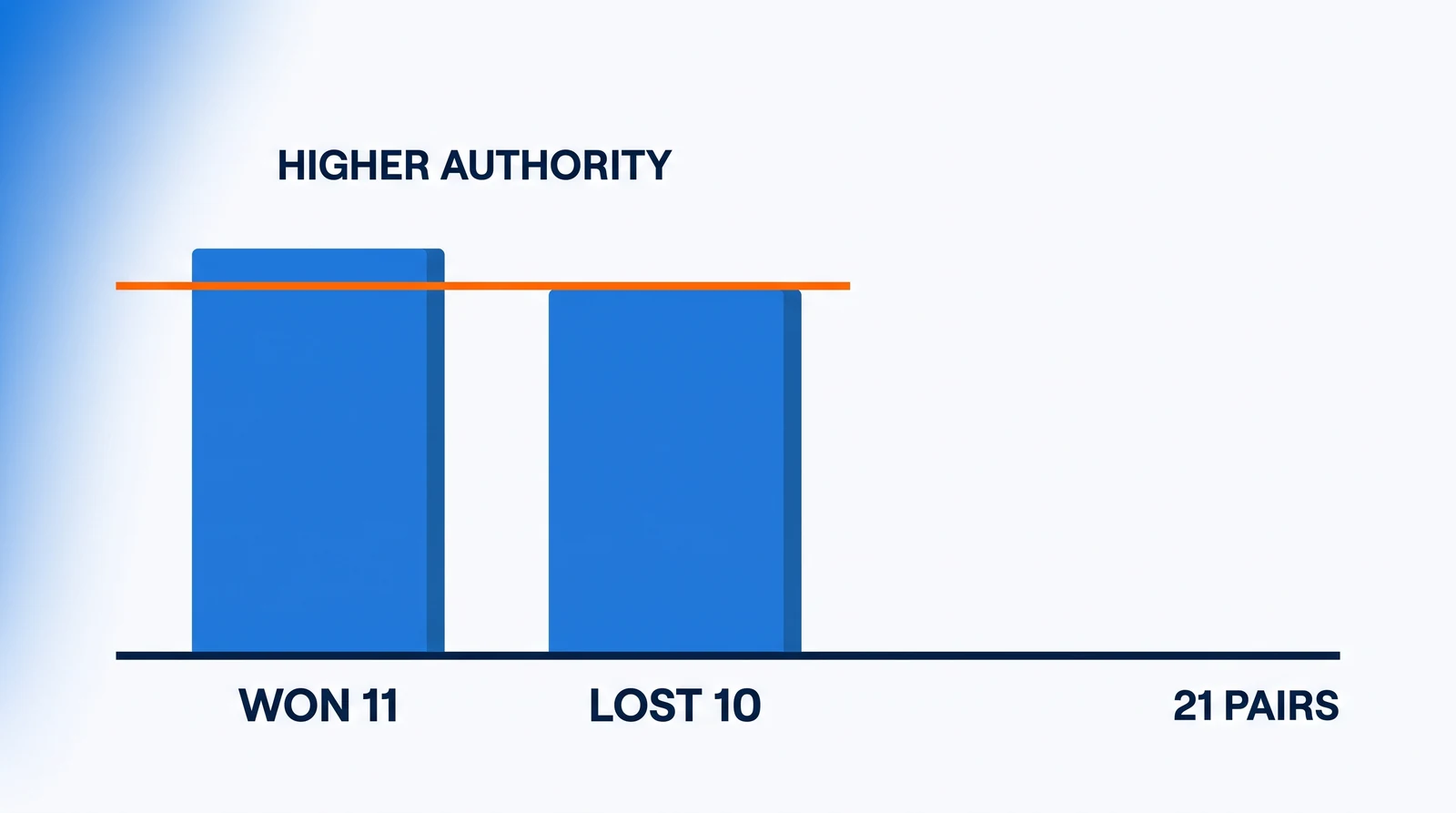
- Find out who holds the answer today. Knowing you are absent is half the picture; knowing which site holds the citation is the half you can act on. Across 21 matched pairs in our testing, the higher-authority domain won 11 and lost 10, so a small site taking a slot from a large one is an ordinary result rather than a hopeful one.
- Write sentences that survive being quoted alone. A self-contained sentence carrying a figure, a date or a named thing can be lifted out of your content; a paragraph that only works in context cannot.
- Add one thing that is genuinely yours. One number you measured, one documented experience. Nine of the 276 ranking pages in our harvest were also cited, and the passages engines did lift carried something the rest of the ranking set did not have.
No platform can promise you a citation, and ours cannot either. What a tool buys you is the feedback loop: whether you appeared this week, which competitor appeared instead, and whether the change you made moved anything on the engine you care about.
What people actually ask us
Are there free AI search optimization tools? Yes, in two senses worth telling apart. The engines themselves — ChatGPT, Gemini and Perplexity among them — are free to use, and they are the only place the ground truth lives, so the four checks in this article cost nothing but time. Separately, several vendors offer a free look: Ahrefs' AI Visibility Checker preview, Profound's free AEO report, and free trials from Peec AI and Surfer, all as stated on their own pages on 26 August 2026. What a free tier includes changes often, so verify it on the vendor's page rather than in any article, this one included.
What is the easiest AI SEO tool for a small business? The easiest AI SEO tool to live with is the one whose claims you can check in an afternoon and whose cheapest view you can refresh as often as the number actually moves, which on our data means weekly. Feature counts are a poor guide at this stage of a young category, because these products are converging on similar feature lists while differing enormously in how much evidence they will show you. The skill you build by running your own prompts and doing your own research transfers to whatever SEO tool you use next, and in a market this new that matters: the one you start with may rename, pivot or disappear.
Is a high content score a good goal? No — a band is the goal, and the top of the range is not. AI-cited pages score a median of 65 on our own citability checklist rather than 100, which says plainly that the content winning citations is not the content maximising the meter. We say that as people who build one of these meters: use it to catch what is missing, stop when the piece is honest and specific, and never trade a true sentence for a point.
Sources
- Google Cloud — generate grounded answers with RAG — the dynamic retrieval prediction score and its default 0.7 threshold, checked 26 August 2026.
- MDN — text fragments — how a URL links to and highlights a specific passage; page last updated 22 June 2026, checked 26 August 2026.
- Surfer — product site, checked 26 August 2026.
- Semrush AI Visibility — product page, checked 26 August 2026.
- Semrush — expanded 2026 AI Visibility Index announcement — published 26 June 2026, checked 26 August 2026.
- Ahrefs Brand Radar — product page, checked 26 August 2026.
- Profound — product site, checked 26 August 2026.
- Peec AI — product site, checked 26 August 2026.
- LiamVi — our own site, checked 26 August 2026.
- Our research — methods, samples and limits — the methods, samples and limits behind the measurements we have published, including the null results, checked 26 August 2026.