The best AI visibility tools in 2026: what they measure, and how to judge one
The best AI visibility tools are the ones that can show you, with evidence, whether AI search surfaces like ChatGPT, Gemini, AI Mode and Google's AI Overviews name your brand — and which competitor gets named instead. We build one of these platforms, and this year we measured what actually drives those naming decisions. This guide shares what the measurements say, which visibility tools do this work today, and the questions that separate a real tracker from a dashboard with a confident tone.
What does an AI visibility tool actually measure?
An AI visibility tool measures whether AI assistants mention or cite your brand when people ask about your category — continuous AI search visibility monitoring rather than a one-off audit. That is a different job from rank tracking: in AI search there is no results page to hold a position on, only an answer that either names your brand or does not. Search visibility in this world is presence in answers, and monitoring it means checking every surface, weekly, against each competitor.
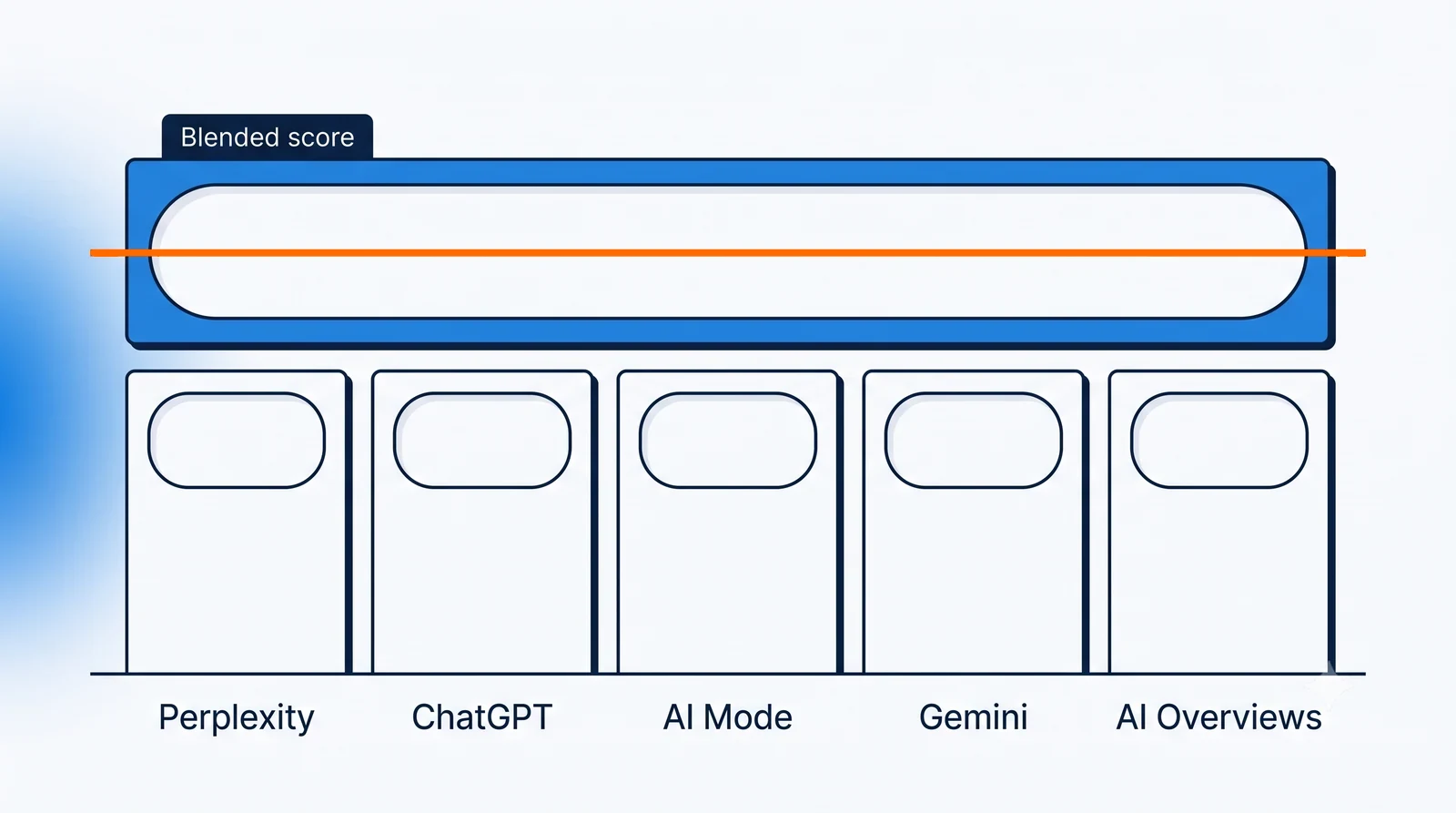
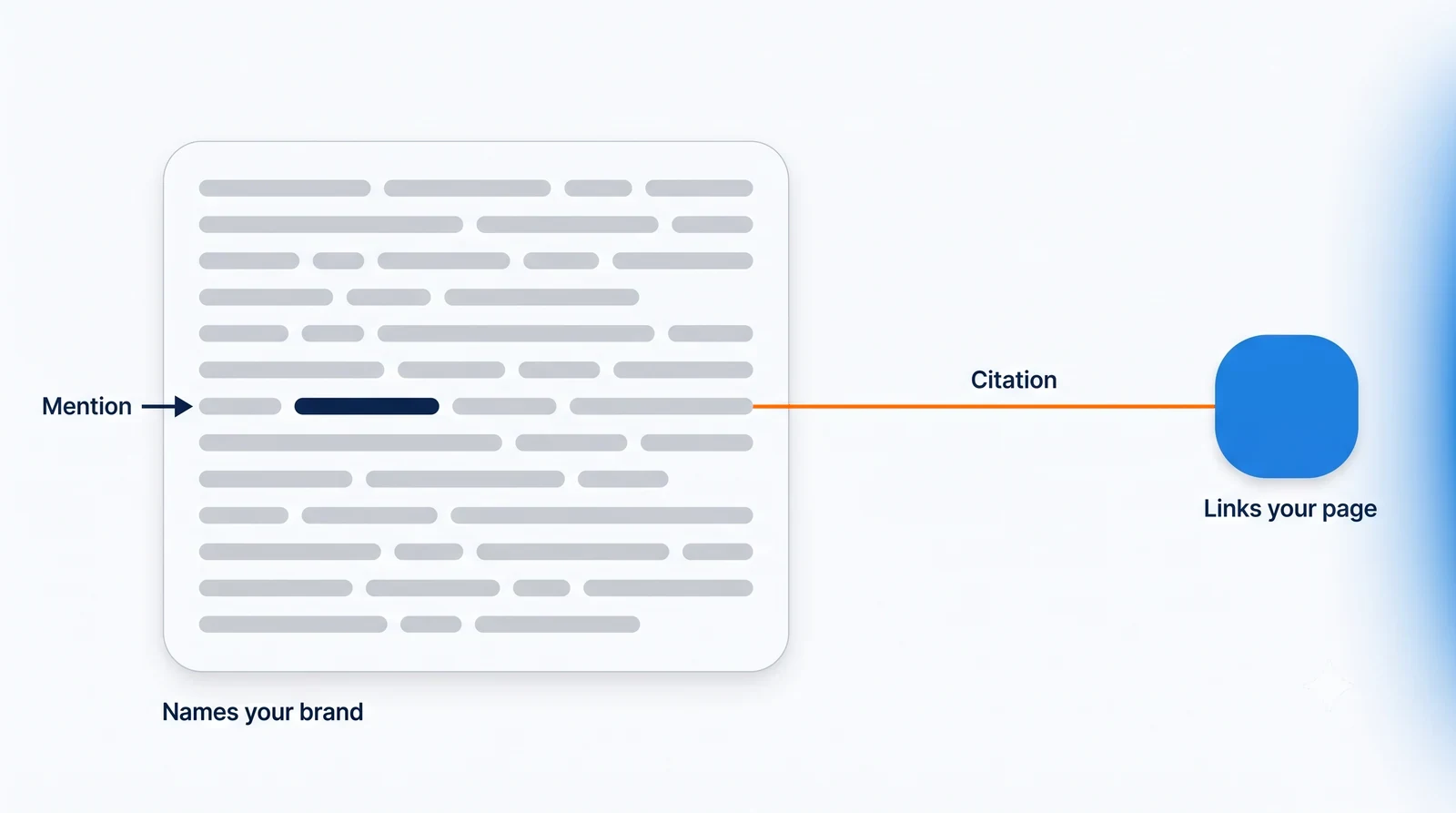
The better platforms separate three things that sound alike:
- Mentions — the LLM names your brand in its answer text.
- Citations — the assistant links your page as a source. In our testing, some citation links point at a single sentence inside a page, not the page as a whole — the unit of citation is the passage.
- Share of voice — how often your brand appears across a set of tracked prompts compared with each competitor.
The AI search surfaces worth tracking are Google's AI Overviews and AI Mode, ChatGPT, Gemini and Perplexity. Each behaves differently, which is why serious monitoring is per-surface analysis rather than one blended dashboard number.
What we measured about AI citations this year
Three measured results define how we judge every visibility tool, including our own: question framing decides whether AI search retrieval happens at all, domain authority does not decide citations, and redundant pages get discarded.
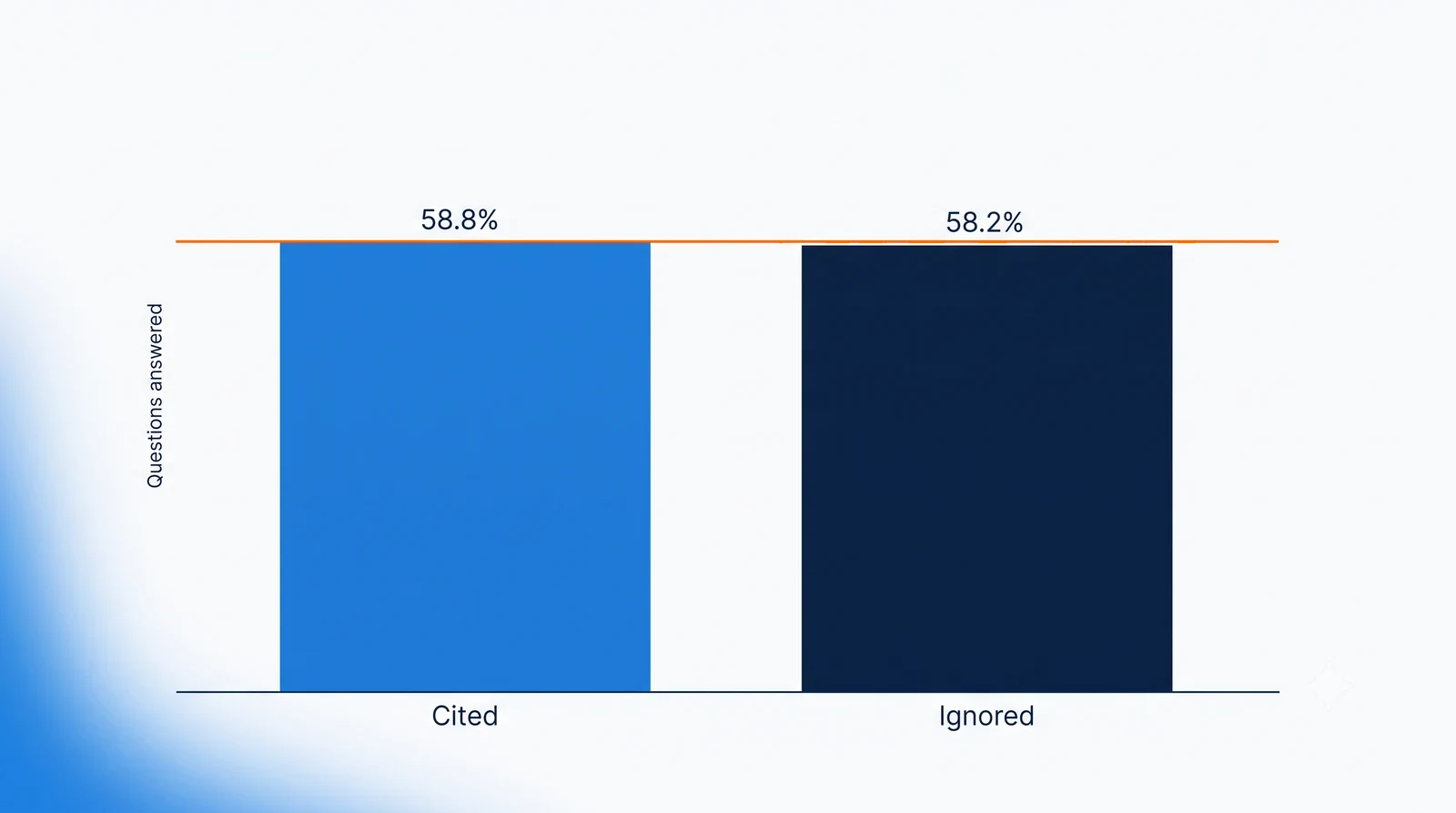
The data behind each. We pulled the pages ChatGPT actually cited across an early sample of keywords and compared them with the ranking pages it ignored. One result: cited and ignored pages answered searcher questions at almost identical rates (58.8% against 58.2% in our sample) — a difference of nothing, which puts a popular theory in serious doubt. The sample is small and we say so plainly; we keep measuring every week, and we will publish what changes as the dataset grows.
Framing first. In a small pre-registered test, none of the conceptual "what is X" framings triggered source retrieval on the engine we measured, while every dated, comparison-shaped framing did. Engines differ — some, like Perplexity, cite far more freely — but the direction was unambiguous: a tool that tracks only conceptual prompts is watching the quietest corner of the game.
Authority did not decide. Across our matched keywords, higher-authority domains won and lost against smaller competitors in almost equal measure — statistically nothing. Our tracking sweeps keep finding small, recently created sites holding citation slots next to household names. For any brand without a large domain, that is the most hopeful measured fact in AI search optimization.
Redundancy is discarded. ChatGPT's own description of its selection behaviour is that five articles repeating the same points are not five sources. Pages assembled from the consensus of what already ranks — the standard SEO playbook — are precisely the pages an LLM skips.
The honest limit: this is an early dataset — a handful of industries, mostly one engine — so these are measurements, not laws. They are still more than most AI search optimization advice is built on, each one changed a design decision in our own platform, and the dataset grows with every weekly sweep.
Which tools track AI visibility today?
Three verifiable products track AI visibility today: Semrush's AI Visibility Index, Profound, and LiamVi.
- Semrush — AI Visibility Index. The largest SEO platform's entry into AI search tracking, part of its move "from traditional SEO to AI discovery".
- Profound. A dedicated AI search platform — brand visibility monitoring and citation analysis across ChatGPT, Perplexity, Claude and Gemini.
- LiamVi. Our own visibility tool, which is why this article exists: it tracks which competitor holds the citations for your keywords, scores drafts on the properties cited pages share, and flags topics where measured retrieval is zero. Judge it by the same questions below — we publish our methods and samples so you can.
The category is young and turning over: our weekly competitor sweeps keep surfacing smaller trackers we had not seen the month before. Treat any list you read — this one included — as a snapshot, and check a product exists before you compare it.
How do you choose the best AI visibility tool?
Choose a visibility tool by asking every vendor questions with measurable answers. These six are ours — and since we built LiamVi around what we chose to measure, read them as our view of what matters, not a neutral standard:
- Does it track citations, or only mentions? A mention is nice; a citation is a source relationship. If the platform's citation analysis cannot tell them apart, it cannot tell you what to fix.
- Does it show which competitor holds the slots you want? Knowing you are absent is half the picture; knowing a three-person blog holds the citation is the actionable half — authority did not decide our matched tests, so those slots are contestable.
- Does it check whether retrieval even fires for your topics? Our framing ladder went from no retrieval to consistent retrieval on wording alone. A tool that cannot flag dead topics will happily bill you to track them.
- Which LLM surfaces does it cover, separately? AI Overviews, AI Mode, ChatGPT, Gemini and Perplexity behave differently. One blended dashboard hides which AI search visibility surface you are losing.
- Does it publish its method and its limits? Any number without a stated method is an opinion in a dashboard. That applies to us as much as anyone — we publish how we measure and where the data is thin, including the results that flatter nobody.
- What does weekly monitoring cost — and what does the free tier actually show? Search visibility moves week to week; most platforms, ours included, price around weekly checks. A free plan that only shows a monthly blended score is priced to hide its own trend.
How do you increase AI visibility?
You increase AI visibility by fixing framing before content, writing passages a machine can lift, stating facts in your own voice, and adding something the best competitor pages do not have. In the order we would apply them:
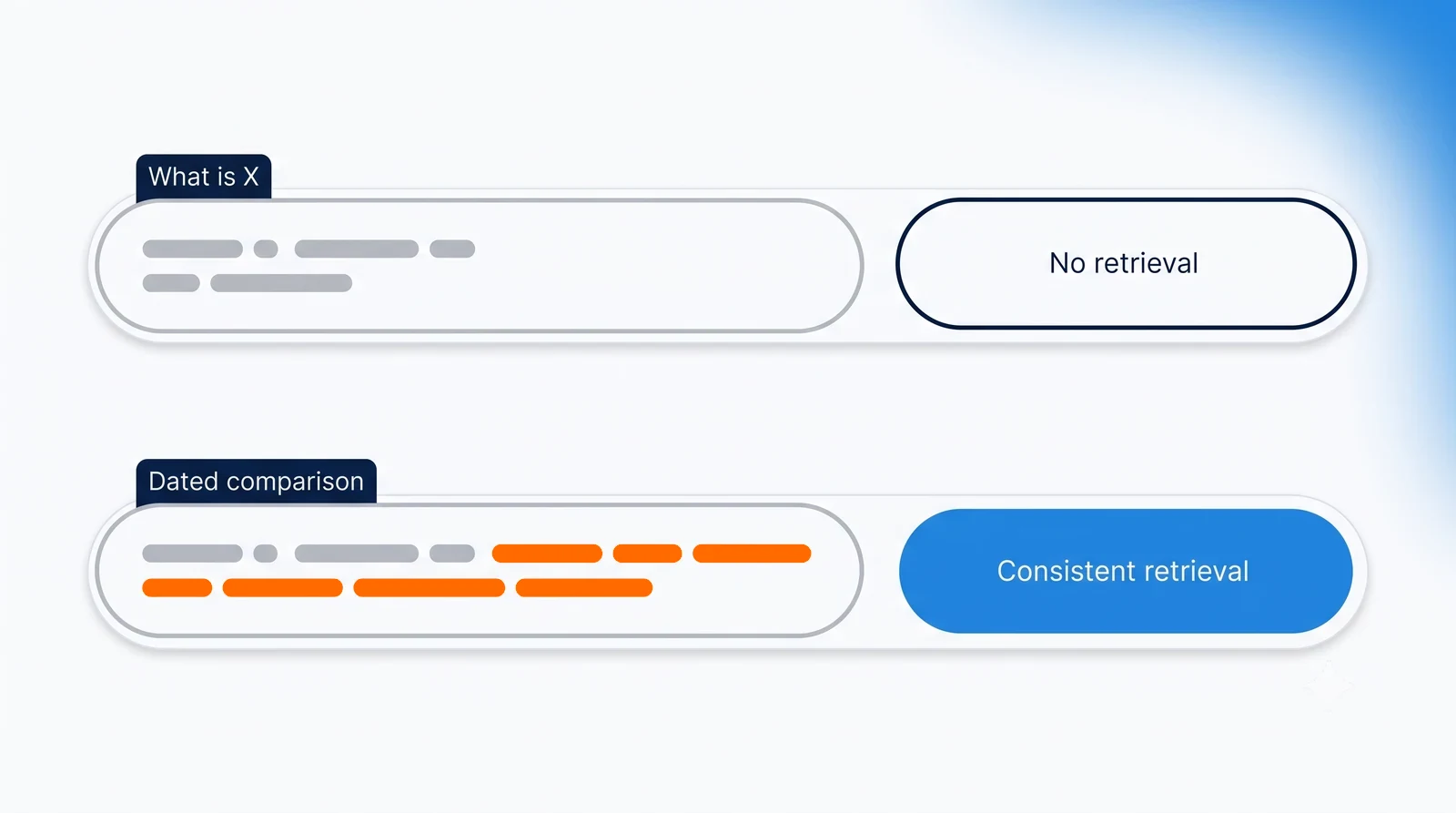
- Fix the framing. Comparison-shaped, dated, entity-specific pages triggered retrieval consistently in our ladder tests; "what is" pages triggered none of it. Reframing an existing page is the cheapest optimization with a measured effect.
- Write liftable passages. Citations point at sentences. A self-contained sentence carrying a figure and its source can be cited; a paragraph of context cannot.
- Own your sentences. In our cited-page sample, pages that made claims directly were cited more than pages that attributed everything onward. Keep the links; carry the claims.
- Say something new. The one behaviour every LLM we tested consistently punishes is redundancy. One original measurement or documented experience outweighs another polished summary of the consensus.
No visibility tool, ours included, can promise a citation. What monitoring gives you is the feedback loop: which slots you hold, which competitor took one, and whether this week's optimization moved anything on which surface.
What is AI visibility optimization?
AI visibility optimization is the practice of making a brand more likely to be named or cited by AI assistants — choosing topics where retrieval actually happens, structuring pages so passages can be lifted, and monitoring the result per surface. The industry also calls this GEO, for generative engine optimization; a GEO platform and an AI search visibility tool are, today, mostly the same product wearing two labels. GEO overlaps SEO but is not SEO: rank is position on a page, AI search visibility is presence in an answer, and our matched tests found the two funnels mostly disjoint.
Which AI is best for SEO optimization?
No AI is "best for SEO optimization", because assistants are not SEO tools — they are the surfaces your search visibility appears on. The useful version of the question is which AI search surfaces your buyers actually use, and whether your brand is present when they ask. That is measurable, weekly, per surface — which is the whole case for using the best AI visibility tool you can verify, rather than the one with the most confident dashboard.
Sources
- Semrush — AI Visibility Index — the product page, checked 4 August 2026.
- Profound — the product site, checked 4 August 2026.
- Our research — methods, samples and limits — every measurement this article draws on, with the numbers stated precisely and the null results included.