How to get citations from ChatGPT: real sources, correct formats, and what we measured
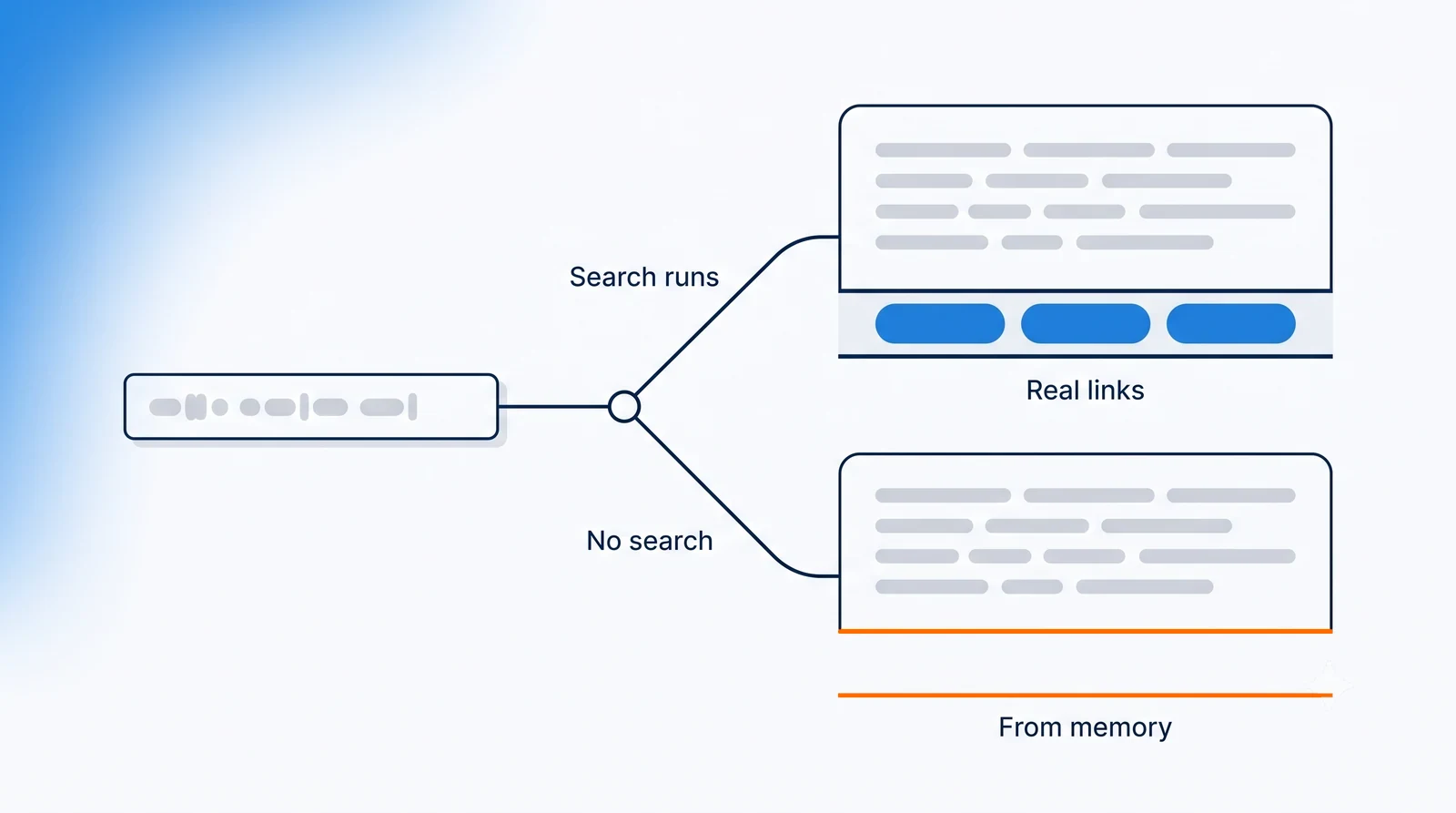
ChatGPT gives real citations only when it actually runs a search — and it decides, query by query, whether to search the web; OpenAI describes the choice as made "based on what you ask". When search runs, the answer arrives with links to the pages behind it. When it does not, the model is writing from training data, and any reference list it creates there is reconstructed from memory — which is exactly how fabricated citations happen.
"How to get citations from ChatGPT" also means two opposite things, and people bring both to the same search box. Students, academics and working writers want ChatGPT to hand over sources they can check, copy and cite. Marketers want it to cite their pages as the source. We measure the second question for a living, and this year the measurements turned out to explain the first one too. This article answers both, with the method stated beside every claim.
Can you ask ChatGPT to cite its sources?
Yes — when search is on, the answer cites sources as links in the text and behind a Sources button below the response. Search has been available to everyone in supported regions since February 2025, no signup required. Inline links alone are not the test, though: OpenAI's help documentation says that when inline citations are not shown, the Sources button beneath the response opens a panel of the pages it cited. So check the panel, not just the prose. If the panel is empty too, nothing was retrieved — and requesting sources afterwards tends to produce a plausible-looking reading list, not retrieval.
Whether search fires is not random, and it is not about how politely you ask. In a small pre-registered study we ran this year, none of the conceptual "what is X" phrasings we used triggered retrieval, while every dated, comparison-shaped phrasing of the same topics did. Engines differ — Perplexity cites far more freely than ChatGPT, and retrieval thresholds can move without notice — but the direction was unambiguous, and it matches the official "based on what you ask". Method, samples and limits are in our research.
What to do with that, today:
- Turn search on yourself from the search icon, instead of hoping it volunteers.
- Ask for something current or comparative. "Best identity-verification providers for UK fintechs in 2026" pulled sources in our study; "what is identity verification" did not.
- Put sources in the prompt itself — "search the web and provide a source for each claim" — rather than requesting them after the response text is already written.
- Treat an answer with nothing in Sources as unsourced. Use it for orientation only; nothing to cite.
Can you use ChatGPT to generate citations for a paper?
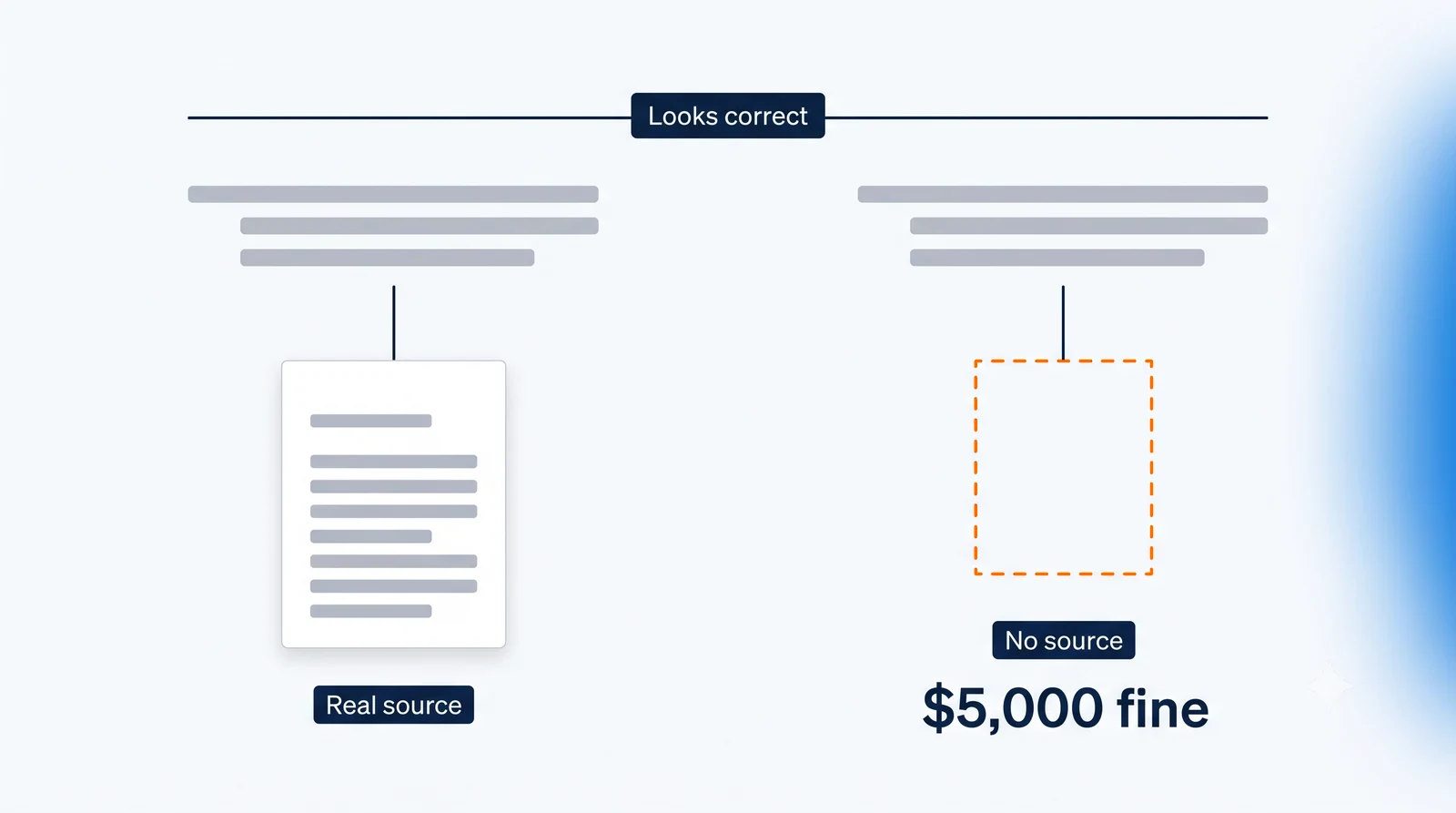
ChatGPT can format citations; it cannot be trusted to verify them, and an AI tool's unverified output has already cost real money in court. In Mata v. Avianca, a federal court in New York fined two lawyers and their firm $5,000 in June 2023 for a court submission built on "non-existent judicial opinions with fake quotes and citations created by the artificial intelligence tool ChatGPT". The same opinion notes there is "nothing inherently improper about using a reliable artificial intelligence tool for assistance" — the sanction was for submitting the output unchecked. That is a US case, but the behaviour it documents is not jurisdiction-specific.
So the working rule for academic writing: use it as a formatter, never as a source of record.
- Find the real source first — in the library database, on Google Scholar, or on the publisher's page. Journal articles that only exist inside a conversation may not exist at all.
- Paste the real details in and request the style you need — APA, MLA, Chicago. Formatting known details is the reliable half of the job; using a free citation generator or citation manager does the same work deterministically, which is why most university library guides recommend one for academic sources.
- Check every reference against the actual article or PDF before it goes into the assignment. A fabricated reference usually looks perfectly formatted — author, year, journal, even a plausible DOI. Formatting was never the risky part; existence is.
And when the model searched and linked a page itself, cite that page, not the middleman — the link exists so you can open it, verify the claim, and go straight to the source.
How do you cite ChatGPT itself in APA, MLA or Chicago style?
Cite ChatGPT as an academic source only when text it created actually appears in your work — and take the format from the standards bodies themselves: APA and MLA both updated their guidelines in 2025, and older examples still circulate in university library guides.
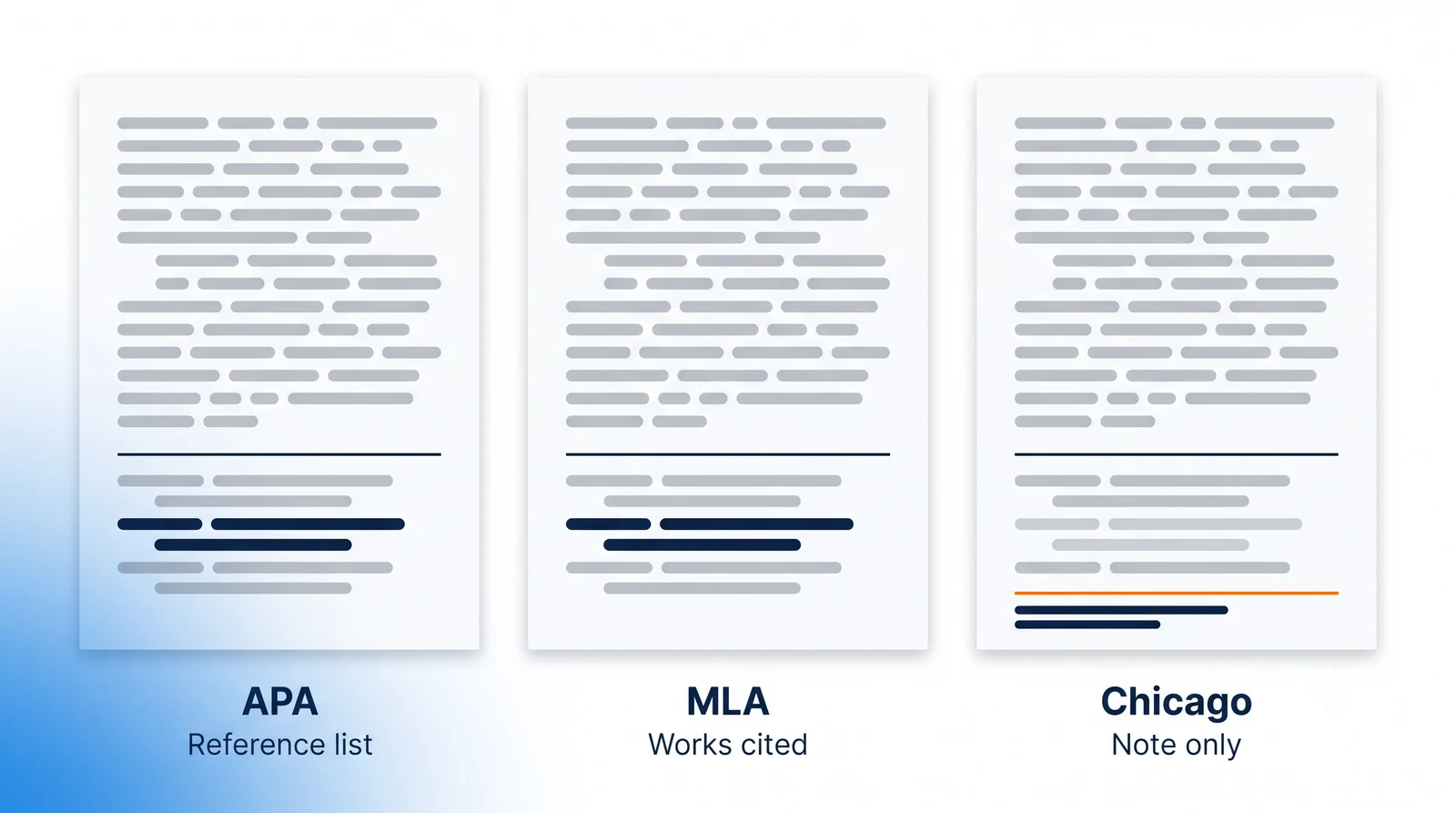
APA format. APA replaced its April 2023 ChatGPT guidance in September 2025 — the current APA Style guidance gives this reference for the tool: OpenAI. (2025). ChatGPT [Large language model]. https://chatgpt.com/ — with the in-text citation (OpenAI, 2025). Two changes from the old post: cite a specific chat by the URL its share button provides, where one exists, and name the model (APA's example: "ChatGPT-5") rather than a version date. The 2023 post is now marked archival — an APA example that was correct in 2023 is superseded in 2025, so check the live guideline, not a screenshot of it.
MLA. The MLA Style Center's updated guidance, published 13 August 2025, supersedes its 2023 post. The template still puts the prompt in the title slot, but two things changed: the AI model now goes in the version slot, and a stable, shareable link to the conversation is preferred — fall back to the tool's general URL only when it cannot produce one. MLA's current works-cited example: "Describe the theme of nature in Jane Austen's Mansfield Park" prompt. ChatGPT, model GPT-4o, OpenAI, 23 Sept. 2024, chatgpt.com/share/66f1b0a0-d704-8000-be9a-85f53c850607. The principle under it is the one to carry: acknowledge the tool whenever its output reaches your work — quoted, paraphrased, or built on.
Chicago. The Chicago Manual of Style Q&A treats generated text as a note, not a bibliography entry: acknowledge it in the text or in a numbered footnote — for example, "Text generated by ChatGPT, OpenAI, March 7, 2023" — and "don't cite ChatGPT in a bibliography or reference list unless you provide a publicly available link", because a conversation nobody else can open works like personal communication.
One principle sits under all three: a fact the model found on the web gets cited to the source page it came from, in that page's own right; the AI tool formats above are only for text the tool itself created.
How do you copy a citation from ChatGPT?
Copy the source's own URL, not the chat link. Open the Sources panel — OpenAI's instruction is to "click Sources beneath the response/action bar" — follow the cited link, and cite that page in whatever format your work requires. People reading your work have to be able to reach what you read, and a link into a private conversation is one login wall away from a dead end. If you need to cite ChatGPT's own words, use the share button to create a public link to the chat and use the APA or Chicago form above — both expect you to provide a URL that works for any reader.
How do you get cited BY ChatGPT?
Getting your page cited by ChatGPT starts before writing: the query has to be one where the assistant searches at all, and the writing on your page has to carry sentences worth lifting. What follows is what we have measured — and since we built our tooling around exactly these measurements, read it as our view of what matters, not a neutral standard.
Know who holds the citations now. On 3 August 2026, the two sources ChatGPT cited for this exact query were OpenAI's help centre and Scribbr — one dated snapshot from our own tracking, not a law, but it says the query is live and that modest sites can hold slots. In our matched tests, higher-authority domains won and lost against smaller ones in almost equal measure; authority alone decided nothing we could detect.
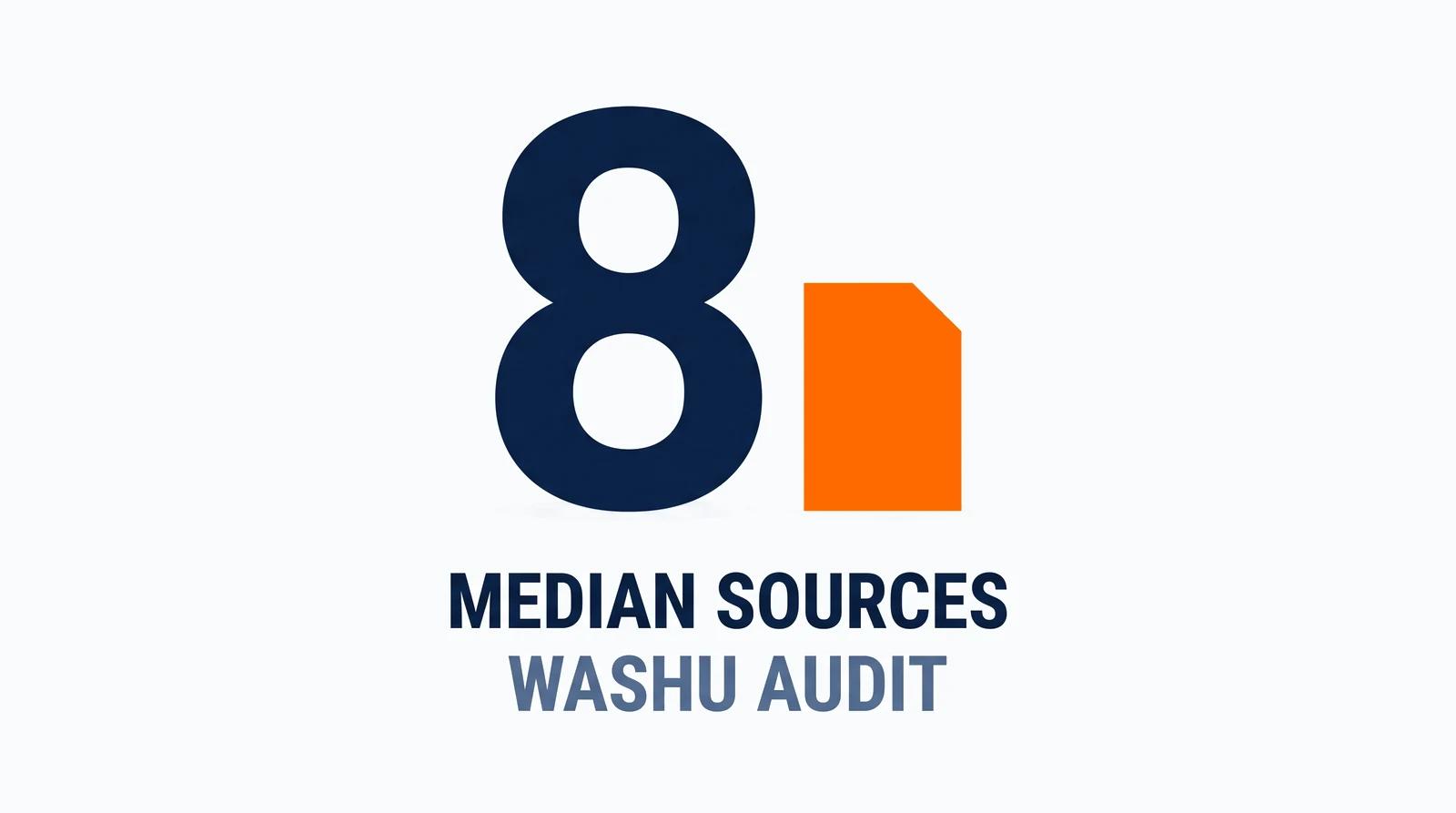
Aim at queries where retrieval fires. Roughly a third of the queries in our early sample drew a citation for nobody — the assistant simply never searched. Comparative, dated, named-entity queries fired; timeless-conceptual ones mostly did not. The same gate that decides whether a student gets real links decides whether your page can be one of them. Engines differ and thresholds move, so we keep re-measuring weekly, using fresh queries, and will publish what changes.
Write passages a model can lift. Some citation links point at a single sentence: on Gemini, we recorded citation URLs carrying text fragments that scroll to the exact quoted span. The unit of citation is the passage, not the page. A self-contained sentence stating a fact, with a figure and a named thing, in your own voice — not "according to..." — is the liftable kind.
Say something the other pages do not. ChatGPT's own description of its selection behaviour, in our testing: an article that adds no new evidence gets ignored, because several articles repeating the same points are not several sources. The page assembled from the consensus of what already ranks is the page that gets skipped.
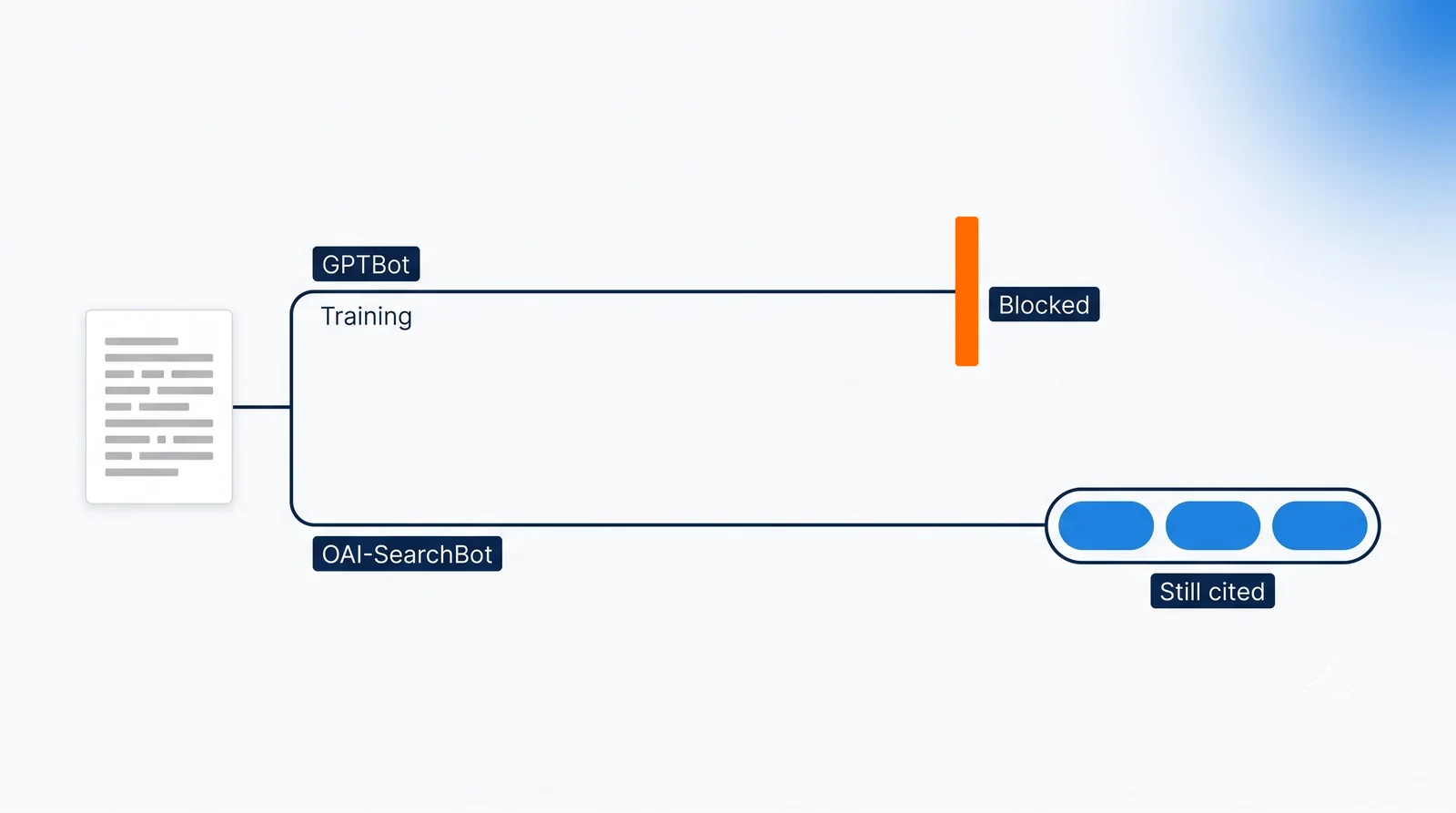
Do not block the wrong crawler. GPTBot is the training crawler; OAI-SearchBot is the one that surfaces sites in ChatGPT's search results. Blocking GPTBot does not remove a site from search citations — in our sample, sites blocking GPTBot still got cited. If you want to appear, OAI-SearchBot is the crawler to allow.
None of this is a promise. Our dataset is small and early, these are moving systems, and we can only report what raised the odds in our own measurements. But every item above is checkable this week, free: run your query with search on, read who sits in the Sources sidebar, then read the writing on your own page asking one question — which sentence here could an assistant quote whole?
Sources
- Introducing ChatGPT search — OpenAI — how search links to sources; "based on what you ask"; checked 4 August 2026.
- Citing generative AI: reference formats — APA Style blog — the current APA forms, September 2025; checked 4 August 2026.
- How do I cite generative AI in MLA style? (Updated and Revised) — MLA Style Center — the current MLA template: prompt in the title slot, model in the version slot, shareable conversation link preferred; published 13 August 2025; checked 2026-08-12.
- ChatGPT Search — OpenAI Help Center — inline citations, and the Sources panel beneath the response when they are not shown; checked 2026-08-12.
- Chicago Manual of Style Q&A on citing ChatGPT — note-only treatment for generated text; checked 4 August 2026.
- Mata v. Avianca, Opinion and Order on Sanctions, S.D.N.Y., 22 June 2023 — the $5,000 penalty for fabricated ChatGPT citations; checked 4 August 2026.
- OpenAI crawler documentation — GPTBot vs OAI-SearchBot; checked 4 August 2026.
- Our research — methods, samples and limits — the framing study, the passage-level observation, and our tracking checks; checked 4 August 2026.