Do backlinks matter for AI search: what each published correlation was measured against
Somebody is about to renew a link building budget on the strength of a correlation coefficient. The coefficient is real, it came from a study with a stated sample size, and it was published in the last two years by a company with no reason to make it up.
The coefficient still cannot tell them what they think it tells them. Five datasets circulate under this question, and each correlates link metrics against a separate outcome: a position inside an AI generated answer, a count of mentions, a share of voice, or a count of brand mentions inside a single Google surface. Four separate outcomes are not high and low readings of the same quantity. A number from one study cannot be set beside a number from another until you know what each was measured against.
We have not run a study of our own here. No figure below is ours, and every number is named with the company that published it and the date it carries. What we can do is open the five studies and set their methods side by side — the work none of the ranking pages has done.
Do backlinks still matter in 2026?
Every study in this set that ran its own numbers found a positive relationship between link metrics and something an AI system does — a finding close to useless on its own, because the something is not the same in any two of them.
The apparent disagreement between the five studies below mostly dissolves once you know what each one measured.
What each study actually counted
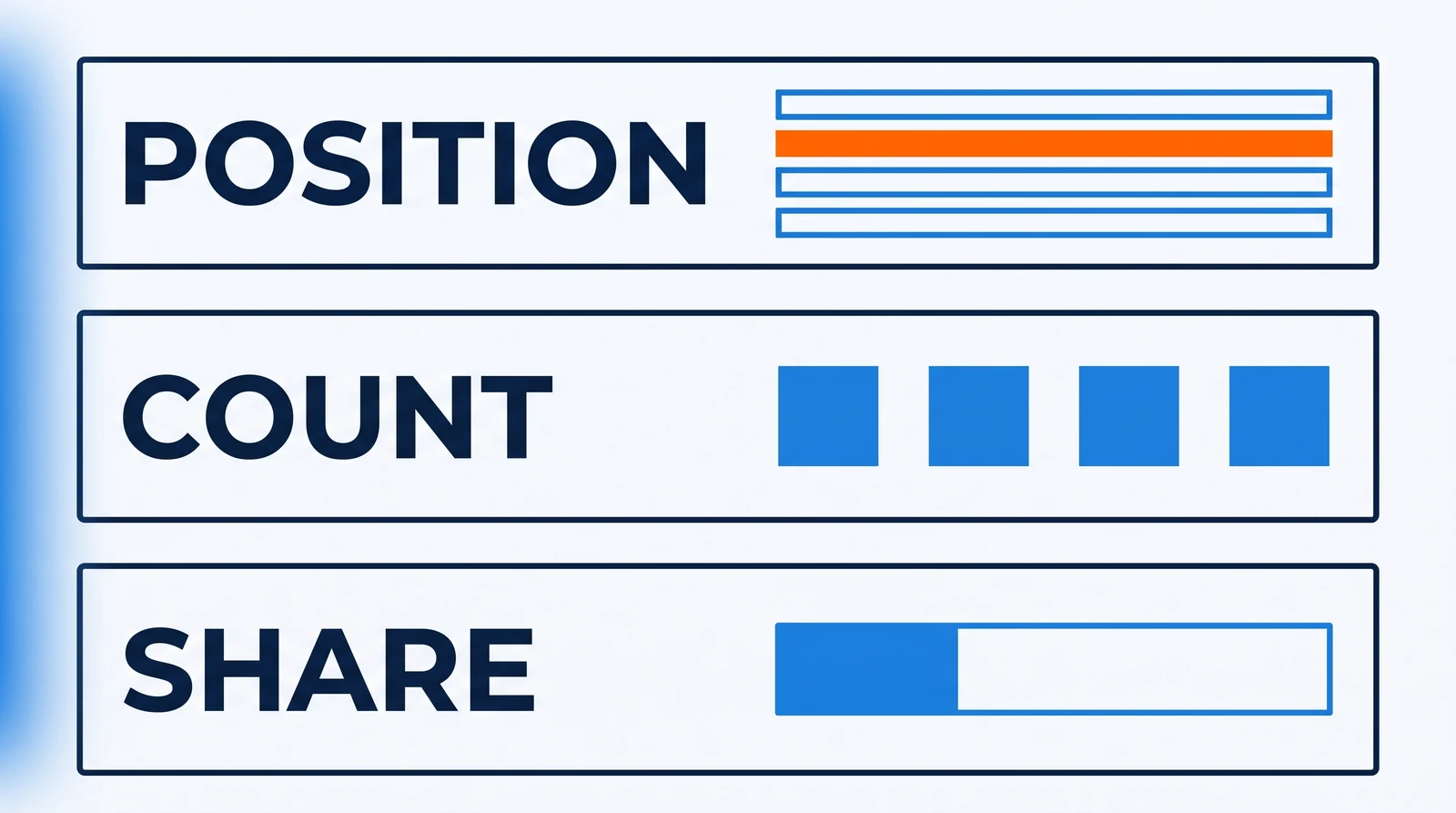
The five datasets measure link metrics against five outcomes: a normalized rank position inside an AI model's recommendation, a count of AI mentions, an AI share of voice, mentions and citations together, combining rule unstated, and a count of brand mentions inside Google AI Overviews. A rank position, a count and a ratio are three kinds of quantity, and this set contains all three.
Three of the eight pages ranking for this question — the United States results captured 17 September 2026, our query and our date — carry original numbers; a fourth quotes a study from elsewhere, a fifth aggregates other publishers' figures, a sixth reasons from documentation, and the last two — a forum thread and a LinkedIn post — were excluded as a discussion and a listing.
| Study | Population | Link metrics correlated against | Surfaces | Statistic | Date on the page | |---|---|---|---|---|---| | Semrush | 1,000 randomly selected domains inside its own toolkit | AI mentions, and AI share of voice | five | Pearson and Spearman | 16 October 2025 | | Pitchbox | "20+ major B2B software tools" | normalized LLM rank — a position inside an answer | four | Pearson | none printed | | SALT | 5,825 URLs, travel and content-heavy websites | mentions and citations, combining rule not stated | four | not stated | 27 December 2025 | | Ahrefs | 75,000 brands rated above 40, minus the ~26% with none | brand mentions in Google AI Overviews, counted | one | Spearman | 26 May 2025 | | Contently | — | no original data | — | — | 12 May 2026 |
A count of mentions is not a share of voice, because a share has a denominator that moves on its own — the arithmetic is worked through in our piece on AI visibility analytics. And a brand mention is not a citation: an AI generated answer can name a company without linking to it.
Not one of the five prints a complete query set or a query count; Pitchbox prints six example prompts and no total. So no reader can tell how much of any result is the choice of questions asked. The dates in that table are publication dates, and not one of the five says when its data was collected.
Google's AI Mode is named as a surface by none of the five studies. Semrush names ChatGPT, ChatGPT with Search, Gemini, Google AI Overviews and Perplexity; SALT names AI Overviews, ChatGPT, Perplexity and Gemini; Pitchbox names ChatGPT, Claude, Grok and Gemini; Ahrefs names AI Overviews alone. Each list is printed on its own study page. We have not measured AI Mode either; this is a statement about what these studies cover.
The two most-quoted numbers answer separate questions
Referring domains correlate with a tool's average position inside an AI model's recommendation at +0.62, p < 0.001 — Pitchbox's reading of "20+ major B2B software tools, including HubSpot, Semrush, Ahrefs, and Pipedrive" across ChatGPT, Claude, Grok and Gemini, on a page carrying no date and no keyword total. Total backlinks came in at +0.55 (p < 0.001), links from domains rated 35 and above at +0.52, and from domains rated 65 and above at +0.43 (both p < 0.01). Its method sentence: "We computed the rank per tool across all LLMs per keyword, then used Pearson correlation".
Backlinks correlate with how many mentions a brand collects inside Google AI Overviews at 0.218, by Spearman rank correlation over 75,000 brands rated above 40, less the roughly 26% with no mentions — Ahrefs' study of 26 May 2025, covering that surface and no other.
Pitchbox's +0.62 describes where a software tool lands in a list an AI model produces; Ahrefs' 0.218 describes how often an already-mentioned brand is named inside one Google feature. A reader who sets those two against each other and concludes the teams measured the same thing has been misled by the shared word "backlinks", not by either study.
Inside the Ahrefs table alone, referring domains score 0.295 and backlinks 0.218 — two link metrics, two answers, same brands, same surface, same statistic. Pitchbox's headline figure is a referring-domains figure. Within a single study, "backlinks" is already not a single input.
What one page's comparison leaves out
The scope is what goes missing: "AI visibility" in the most repeated sentence in this ranking set means brand mentions inside Google AI Overviews and nothing else, measured in a study published in May 2025. That sentence belongs to insightland, published 12 August 2025: "Ahrefs analyzed 75,000 brands and found that brand mentions correlate more strongly with AI visibility than backlinks alone (0.664 vs. 0.218)".
Insightland's comparison is sound inside the Ahrefs study: both figures come from one table, one surface and one statistic, so the gap is real and means what it appears to mean. Carry 0.218 away as a general fact about backlinks and AI search, though, and you will eventually set it against a figure like Pitchbox's — and that comparison does not hold.
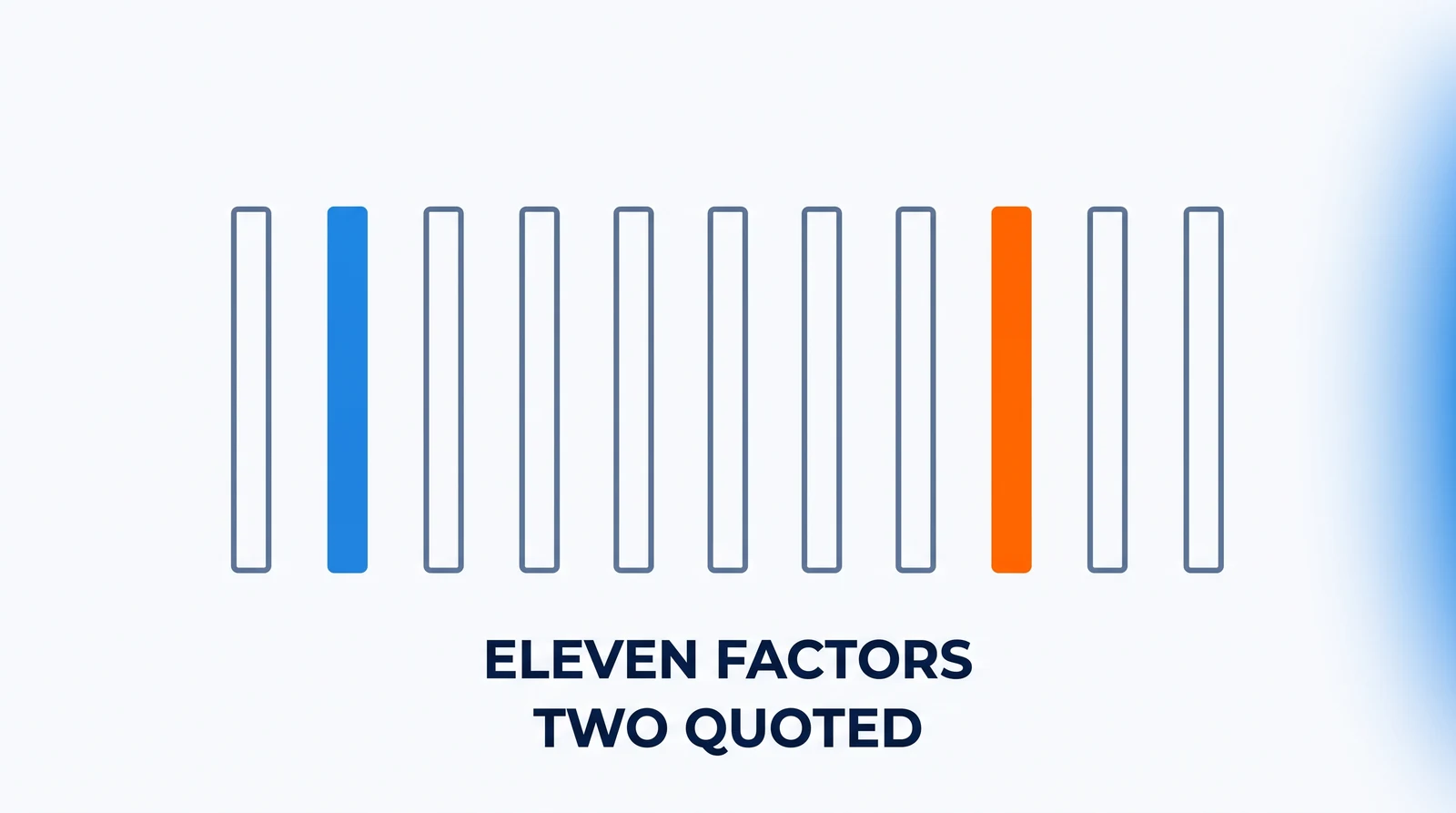
The Ahrefs table runs to eleven factors, and quoting two of them drops the rest: branded web mentions 0.664, branded anchors 0.527, branded search volume 0.392, Domain Rating 0.326, referring domains 0.295, backlinks 0.218. Ahrefs states the limit on its own page: "While the data shows statistical relationships, I should emphasize that correlation ≠ causation." Every page we opened that quotes the study leaves that sentence behind.
The page ranking third reports no data of its own
Contently's article of 12 May 2026 answers its own title, AI citations vs backlinks, with seven figures from five other publishers, not one of them carrying a sample size.
Two of those figures, as printed: "44.2% of ChatGPT citations come from the first 30% of a page", carrying neither a sample nor a date, and "Adding citations produced a 115.1% AI-visibility increase", carrying a year and no sample.
Contently's piece is an aggregation written in the grammar of a finding. The figures may well be sound at their source; on that page there is nothing to check them against.
Total Dizajn's page of 1 August 2026 takes the honest alternative, arguing from platform documentation — Google's guidance that links help it discover pages and assess relevance — on a four-part model of discovery, relevance, authority and retrieval eligibility. That page presents no measurement and does not pretend to: the clearest reasoning in the set, the weakest evidence.
The studies' own authors are more careful than their headlines
"Backlinks Still Matter, But Quality Trumps Quantity in AI Search" is Semrush's conclusion of 16 October 2025; "You cannot rely on existing backlinks strategy to earn your spot in AI answers" is SALT's of 27 December 2025. Two teams, similar inputs, opposite advice.
SALT measured 5,825 URLs from travel and content-heavy websites against mentions and citations in four AI models, reporting Domain Rating at 0.25 against Google AI Overviews, backlinks at 0.39 against ChatGPT, and referring domains at 0.42 and 0.41 against Perplexity and Gemini. Semrush's figures, on 1,000 domains across five surfaces, sit in the same moderate range. The headlines differ more than the numbers do.
What "quality trumps quantity" resolves to in Semrush's own data is worth stating, because the phrase travels further than its evidence: the authority-score correlation against AI mentions runs at 0.65 by Pearson, while the correlations for individual link types — follow, nofollow, image, text — sit between 0.334 and 0.415. The stronger relationship there is with a domain-level score, not a count of links.
Each study's caveat about itself is the part that goes unquoted everywhere else. Semrush calls the effect "moderate overall", notes that "the weighting also varies slightly by platform", and says gains appear only after a domain reaches certain authority levels. Ahrefs describes its whole factor set as showing "moderate to very weak correlations". On this evidence, opening the original study before acting on a summary of it is worth the time.
What we have measured, and why it does not settle this
Source domain authority did not separate the pages ChatGPT cited from the ones it ignored, across the 21 matched pairs we published in September alongside a much larger third-party dataset pointing the same way. Domain authority sits among the page-level tactics we tested and could not make work. Neither of those findings is about backlinks, and both were published before this article.
The distinction we drew on that page is the reason this article exists: "Link counts have been measured against citation counts, which is a different object." Our own work concerns a third object again — a domain-level authority score rather than a link count, and citation rather than mention. Three related questions, three measurements, no shortcut between them.
We cannot tell you whether to keep buying links. What we can give you is the reading method.
How to check the next study you are handed
Measured where, over what set, on what date, and what exactly is being counted: four questions get most of the way, and they are the same four we set out in our piece on reading an AI citation index.
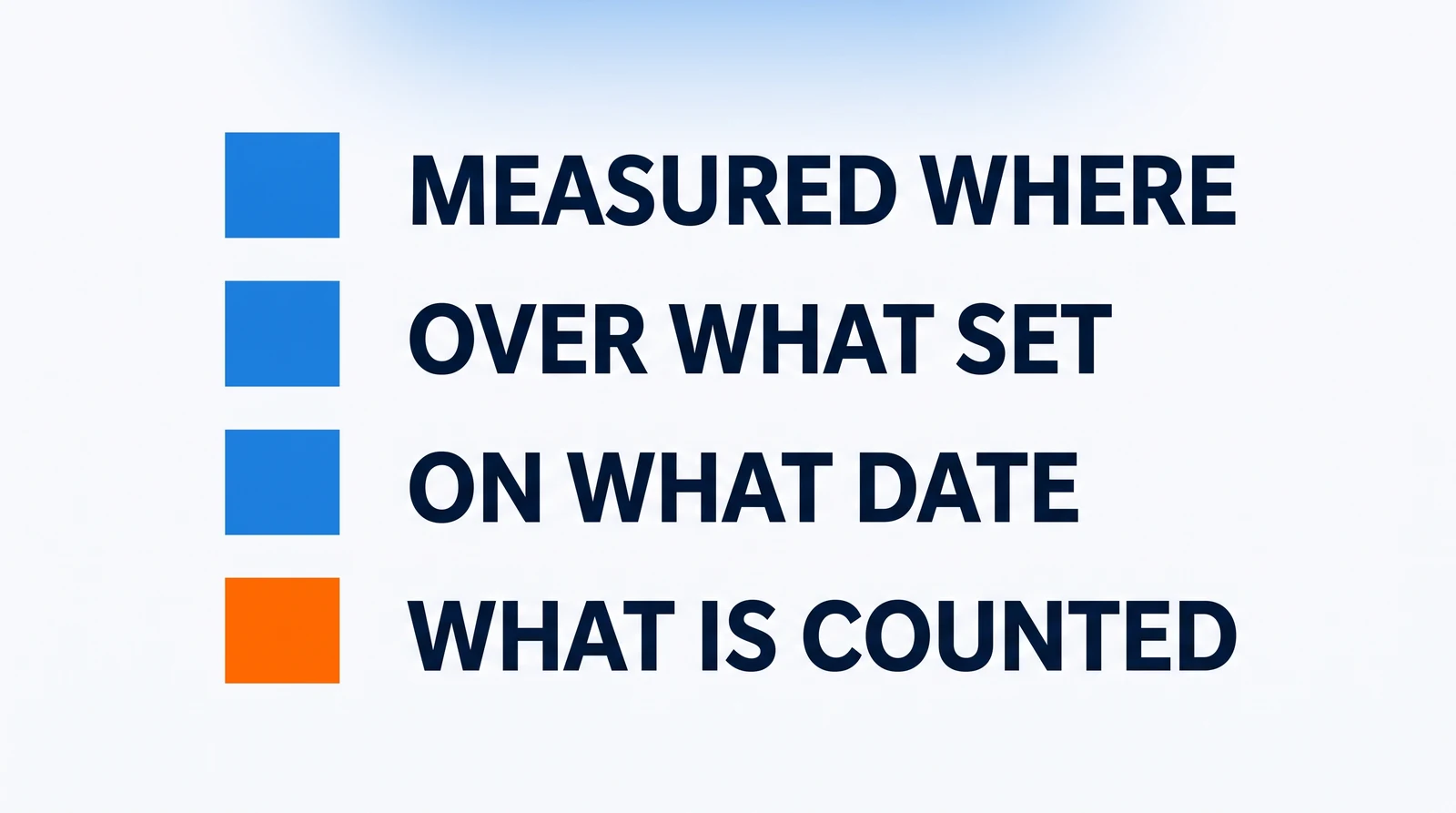
Measured where. Which surfaces, and how many. Ahrefs looked at one Google feature; Semrush at five. Both are legitimate and not the same claim.
Over what set. How many domains or pages, chosen how, in which sector. A travel-only sample and a B2B-software-only sample answer separate questions, and neither answers yours unless you work in that sector.
On what date. And whether the date you can see is a publication date or a collection window. None of these five states a collection window, and the oldest was published in May 2025.
What exactly is being counted. The fourth question catches the most, and it is the whole of this article: "A citation with a link, a brand mention without a link, a domain, a page and a quoted passage are five different units of measurement."
Those four questions are ours, and we have a stake in them: a company that sells measurement benefits when readers start interrogating measurements, so treat the list as our position rather than a neutral standard. It is the list we are held to as well. The same four applied to published AI search market share figures are worked through in a companion piece.
What people actually ask us
Is SEO dead now with AI? Not on this evidence. Every study here found link metrics related to something an AI system does, and the traditional search vocabulary — referring domains, Domain Rating, authority scores — is what all five chose to measure with. What none shows is what happens to a particular website that changes its links, because a correlation across a population of domains does not predict an individual case. Nobody here has demonstrated the relationship is causal, and two say so themselves.
How do I optimize SEO for AI searches? That depends on a business we do not know, and a general answer would be worth less than the four questions above applied to whatever advice you are being sold. One pattern is worth carrying: the two studies with the most careful method sections make the most modest claims. Where a recommendation rests on a case study with no sample size, treat it as a hypothesis.
Is AI content bad for SEO? Nobody in this ranking set measured it, and neither have we. None of the five studies recorded how its sample's pages were produced, so any coefficient you are shown on this question was measured against something else. Saying that costs less than inventing a view.
Where is the Semrush AI report people keep citing? It is the backlinks and AI search study published on 16 October 2025 by Margarita Loktionova, which correlates link and authority metrics against AI mentions and AI share of voice for 1,000 randomly selected domains across five surfaces, using Pearson and Spearman. Knowing that before you open it tells you which figures apply to your case.
Sources
- Semrush, Backlinks Still Matter, But Quality Trumps Quantity in AI Search, 16 October 2025 — https://www.semrush.com/blog/backlinks-ai-search-study/ (checked 17 September 2026)
- Pitchbox, Data study: backlinks and AI search, no date on the page — https://pitchbox.com/data-study-backlinks-ai-search/ (checked 17 September 2026)
- SALT, Backlinks aren't dead, but they're not enough in AI search, 27 December 2025 — https://salt.agency/blog/backlinks-arent-dead-but-theyre-not-enough-in-ai-search/ (checked 17 September 2026)
- Ahrefs, Branded web mentions correlate with AI Overview visibility, 26 May 2025 — https://ahrefs.com/blog/ai-overview-brand-correlation/ (checked 17 September 2026)
- insightland, Backlinks in the era of AI search, 12 August 2025 — https://insightland.org/blog/backlinks-in-the-era-of-ai-search-do-they-still-matter-in-geo/ (checked 17 September 2026)
- Contently, AI citations vs backlinks, 12 May 2026 — https://contently.com/2026/05/12/ai-citations-vs-backlinks/ (checked 17 September 2026)
- Total Dizajn, How do backlinks influence visibility in AI-driven search engines, 1 August 2026 — https://www.totaldizajn.com/blog/how-do-backlinks-influence-visibility-in-ai-driven-search-engines.html (checked 17 September 2026)
- LiamVi research — https://liamvi.com/research/ (checked 17 September 2026)