How does Google choose AI Overview sources? What Google says, and what one audit found beyond page one
A Google AI Overview, in the company's own account, is built from pages in its Search index, retrieved by its core ranking systems. Google's documentation for site owners says a page can only be a source if it is indexed and allowed to show a snippet. What the company does not publish is how it chooses among the pages that qualify. The company's guide to generative AI features describes the systems involved, not the weights.
An independent team has measured how far those sources sit from the ordinary results. In an audit by Washington University in St. Louis researchers, averaged across 7,562 AI Overviews of US trending searches in spring 2026, 29.8% of cited domains were missing from the first page of results for the same search.
We build software that records the sources AI answers cite; we have not measured AI Overview citations ourselves, so each figure here is the work of whoever published it. We read the search engine's own pages, the paper, and the guides that rank for this question, listed at the end.
What does Google say a page needs before it can be a source?
Google's page-level rule for an AI Overview source is that the page must be in the index and able to show in Search with a snippet. The AI features page, last updated on 10 December 2025, adds: "There are no additional technical requirements." The same page tells site owners that ordinary SEO practice still applies to AI features.
Meeting the rule is a floor, not a promise. A page that meets every requirement can still be left out, because "Indexing and serving isn't guaranteed." Site owners who want to limit what is shown from a page can use nosnippet, max-snippet or noindex controls, and those apply to AI features too. There is also a switch for a whole site: the Search generative AI control in Search Console, available worldwide since 31 August 2026, includes every site by default and lets an owner exclude theirs.
The short answer to whether AI can find your website, at least for these AI features, starts with an older question: can Search index the page and show a snippet from it?
What does Google say about how it picks among those pages?
Google describes the choice as its ordinary ranking and quality systems at work, not as a separate list of AI factors.
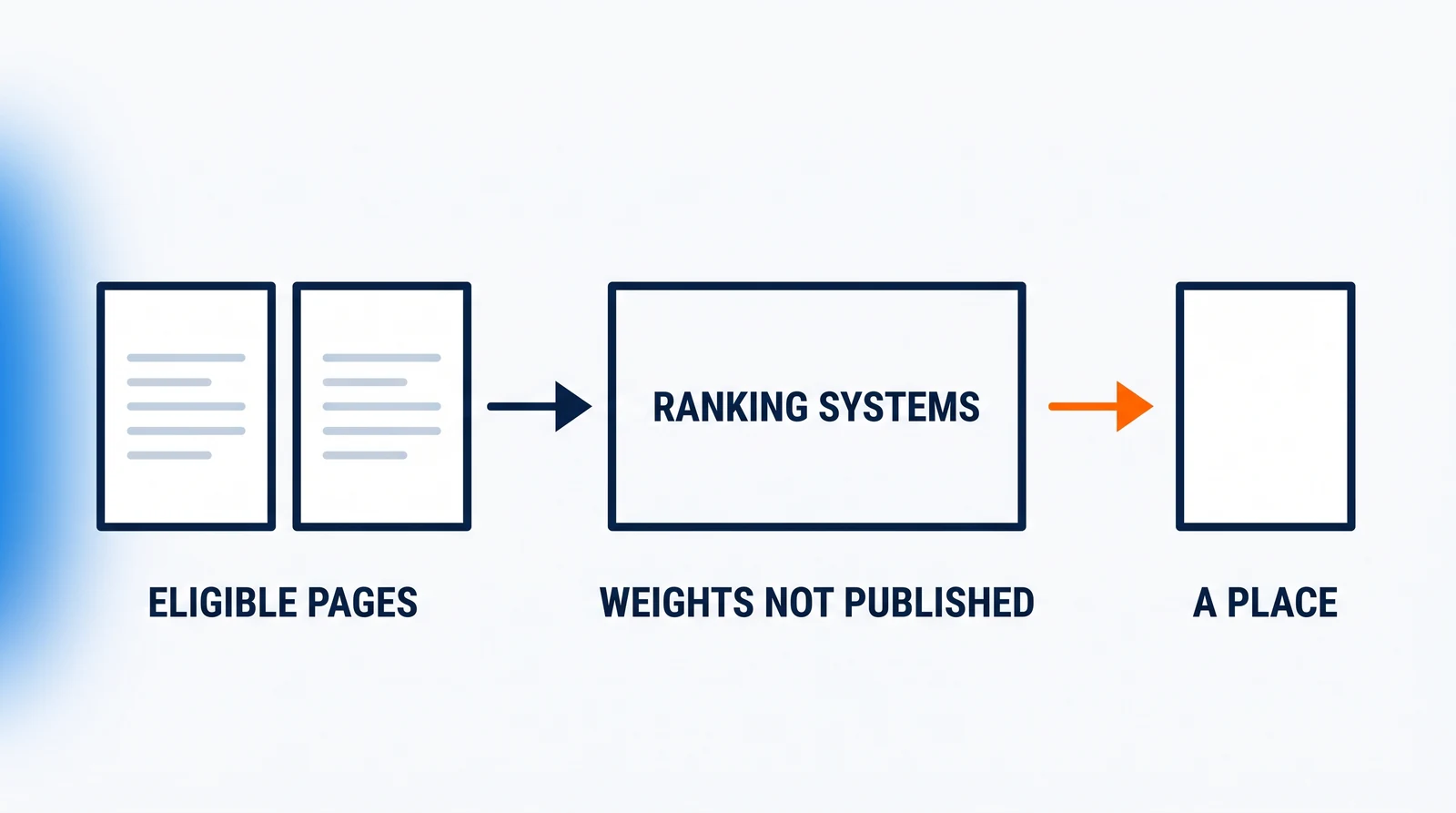
A Google document from May 2025, AI Overviews and AI Mode in Search, says AI Overviews use "a customized Gemini model" that works with "our quality and ranking systems". The same document says AI Overviews "are built to surface information that is backed up by top web results". The document states a stricter rule for "Your Money or Your Life" queries, where in its words "information quality is critically important": there it has "an even higher bar for showing supporting information from reliable and trustworthy sources".
The generative AI guide, last updated in July 2026, adds the mechanism. The search engine retrieves pages from its index using "our core Search ranking systems", then reviews the specific information on those pages to write the response. The search engine may also run related searches, which it calls query fan-out: a question about fixing a lawn full of weeds can set off searches for herbicides or for weeding without chemicals. The guide says its systems can understand the relevance of a page "even when there is no exact match" with the query. The two features, AI Mode and AI Overviews, can run on different models and techniques, which is why how AI Mode's own citation figures compare is a separate question.
The same guide frames its advice as "improving your website's visibility" in both AI search and ordinary Search, and says that, from its side, AEO and GEO work is "still SEO". Our read of these documents: the company names the systems, not their weights. Nothing it has published says which of two eligible pages wins a place.
What did Google change on 15 October?
Google's post of 15 October 2026, More ways to connect with the web from Search, changes how links are shown in AI answers. The post does not say how sources are chosen.
The post says Google is "launching updates" to show inline links "higher up in responses more frequently". Its second section opens: "Sometimes, there are only one or two official places on the web to complete a specific task or get the exact info you need." For those cases the post says "We'll be testing a new display" that puts such links in a dedicated section at the top of a response. The section is a test, in the post's own word. The short AI-generated summary printed above the post says the section "now highlights official websites"; the post itself says testing.
The post also says the carousels of timely articles in AI answers "also highlight your Preferred Sources", the sites a reader has chosen as preferred. That is a display change for readers who opted in, and what Preferred Sources does and does not change is covered on its own page.
What did the Washington University audit find beyond page one?
Nearly three in ten of the domains an AI Overview cited were not on the first page of results for that search, in the audit's US trending searches of spring 2026. In the paper's own figure, 29.8% of cited domains were absent from that first page, averaged across 7,562 overviews.
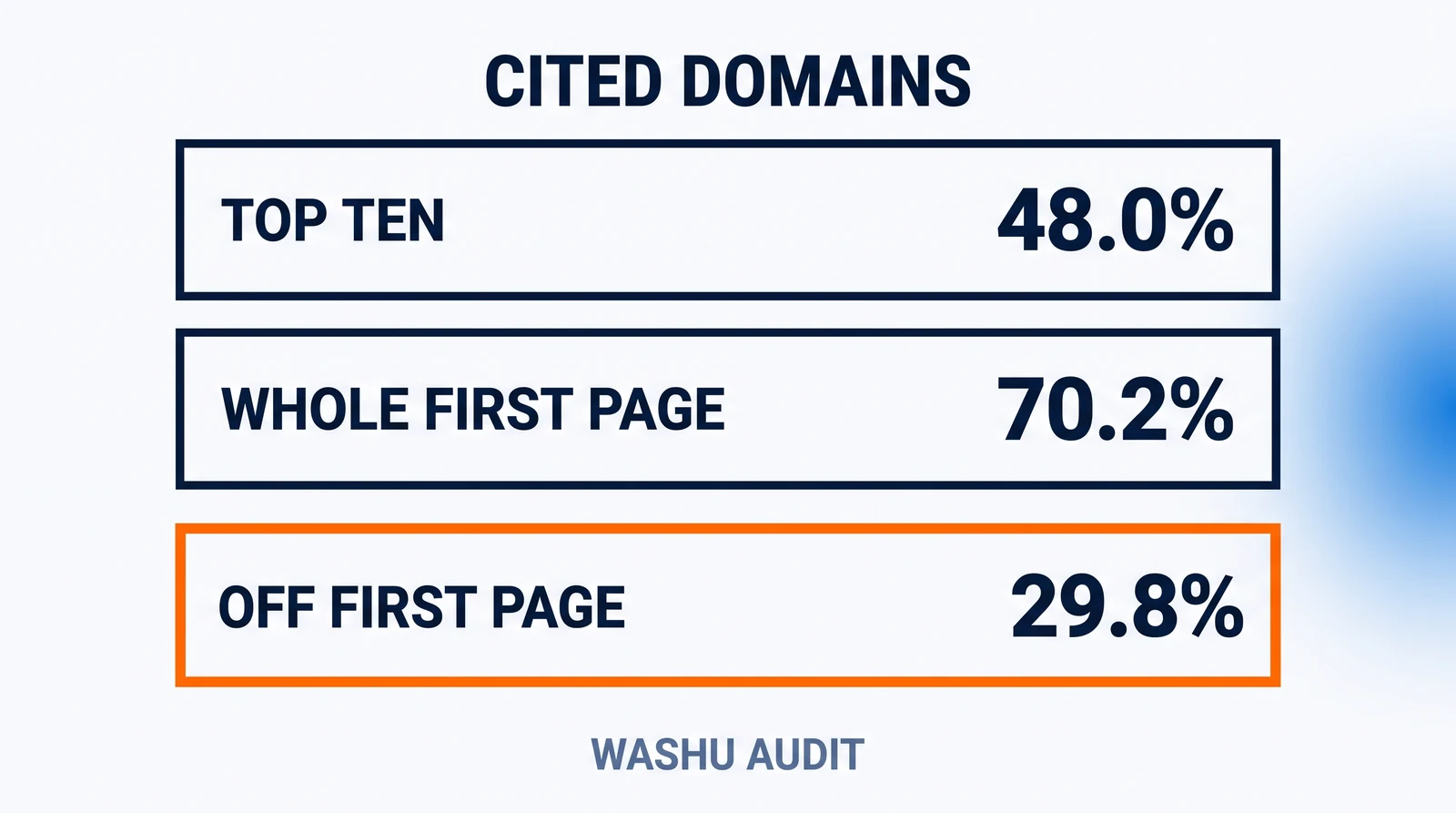
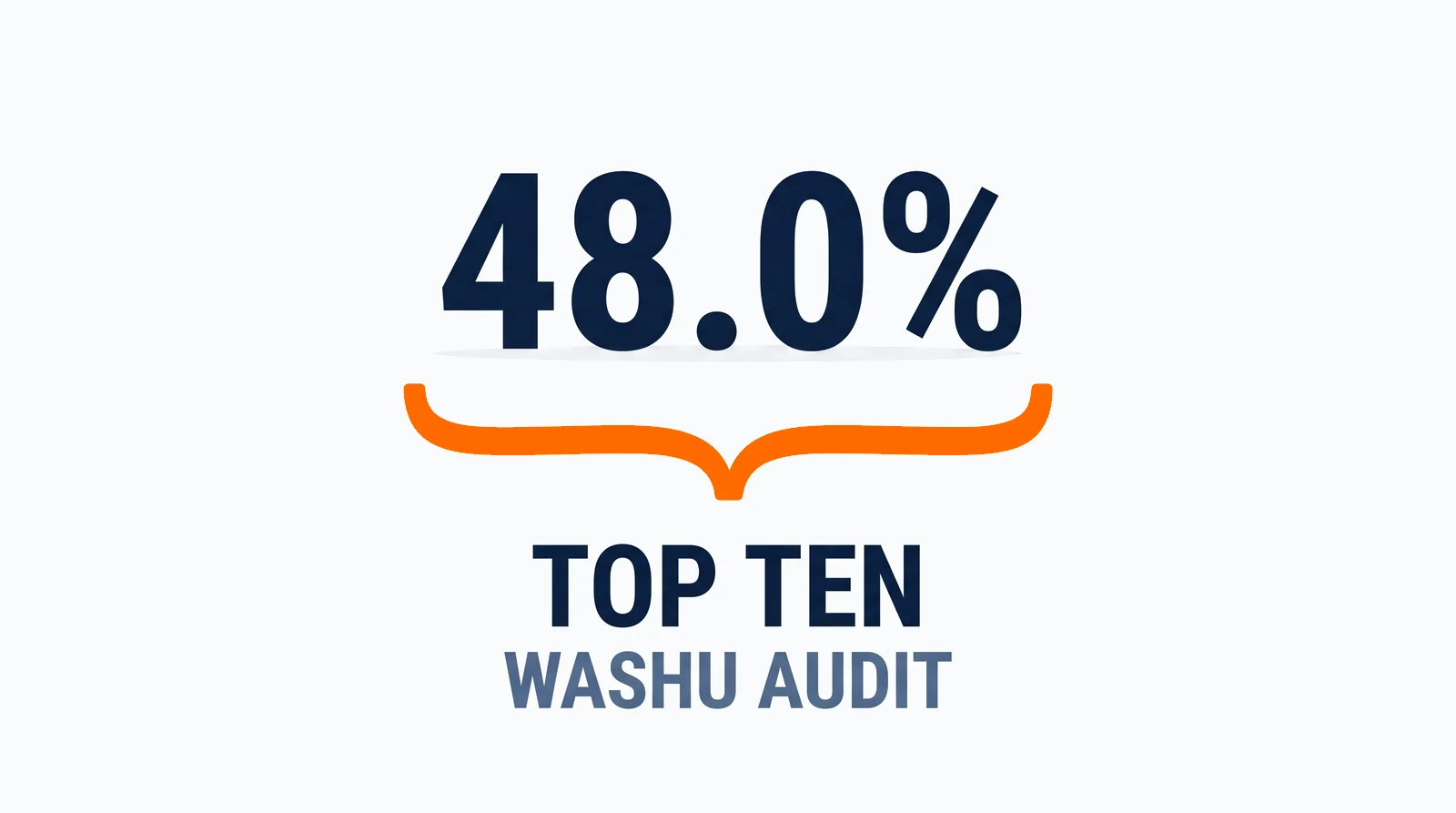
On average, 31.5% of the cited domains overlapped with the top five ordinary results, 48.0% with the top ten, and 70.2% with the whole first page. In the paper, the whole first page means all the first-page links the crawler captured, not only the first ten.
The setting matters for all of those numbers. Xu, Iqbal and Montgomery ran 55,393 trending queries from the US Google Trends dashboard, across 19 categories, over 40 days from 13 March to 21 April 2026. Their crawler searched from a single location in Northern Virginia, with a fresh browser profile and no cookies each time. The version read here is v2 of 1 October 2026, published in the proceedings of the 2026 ACM Internet Measurement Conference.
The authors read the result as indicating that "Google's AIO system draws on a source pool and prioritization system distinct from its own ranking algorithm". They also note that the 2025 document speaks of "top web results", and that the share of cited pages missing from the first page had not been published.
Our read, and it is ours rather than the paper's: the audit compared each overview with the first page for the same query. The audit did not look at the related searches the search engine says its AI features may run, so it cannot tell whether those domains ranked for one of them. Not on page one is not the same as not ranking. We think that is a possible gap between the two statements, not a proven one. An indirect check of it, in the Ahrefs research below, did not find the pattern it expected. The same audit also counted how many links each overview carried.
Why do other overlap figures disagree?
Other overlap figures for AI Overview sources are not directly comparable with the audit's. Each is based on its own sample, unit and period.
Ahrefs' study, published in July 2025 by Louise Linehan with Xibeijia Guan, analysed "1.9M citations from 1M AI Overviews", counting the three most visible citations in each, and reported that "76.10% of AI Overview-cited pages rank in the top 10". That count is of pages, from 2025, and of the top three citations; the audit counts domains, across all of an overview's citations, in spring 2026. Ahrefs also tested the related-searches idea indirectly. It expected the pages from beyond the top ten to appear for more keywords and longer queries; instead they appeared for fewer keywords and shorter queries, which Ahrefs says "doesn't neatly fit" the fan-out profile it expected. That comparison used keyword data, not the related searches the search engine ran. Another research team's study, of 11,500 queries, compared the sources ordinary results, AI Overviews and Gemini retrieved with its own method. We read the Ahrefs study and the audit in full, and the second paper in its abstract only; the method behind each figure decides what it can tell you.
What do the factor lists say that Google does not?
The search engine's own documents name fewer factors than the guides that rank for this question, which mostly list E-E-A-T and schema markup.
Five of the six practitioner guides we read recommend schema markup or structured data. The generative AI guide treats structured data as optional for generative AI search, with no special schema.org markup to add, though it stays useful for rich results. The guide from Webplanners says the same: no special schema guarantees inclusion.
All six guides name E-E-A-T as well. The two AI pages read here do not use the term, though both point to Google's guide to helpful, reliable, people-first content, which does. That guide, last updated in October 2026, says the company's systems identify a mix of factors that help show which content has experience, expertise, authoritativeness and trustworthiness. The same guide says E-E-A-T is not in itself "a specific ranking factor". The generative AI guide adds a call for "a unique viewpoint that stands out", since the search engine's AI systems look across many sources. For what Google's own documents say about expertise and trust, we have a fuller read.
None of this makes the lists wrong. The point is that a reader should know which items the search engine itself has written down and which are an SEO practitioner's theory, however reasonable.
What can a site owner check?
Two checks can be run from the search engine's own documents, and neither guarantees a place in an AI Overview.
First, is the page indexed, and is it allowed to show a snippet? A noindex or nosnippet setting you did not intend would rule it out, and so would a site excluded in the generative AI control. The URL Inspection tool in Search Console shows the HTML Googlebot received.
Second, if a task has only a couple of official places on the web, is your page the official page for it? The 15 October test raises that question; it is not a tactic, and the post says nothing about how the test picks.
Whether either check matters depends on the searches your readers make, and that judgement is yours. We will keep reading the documents and the audit's next version, and say what changes.
Sources
- Google Search Central, "AI features and your website", last updated 10 December 2025 (checked 20 October 2026) — https://developers.google.com/search/docs/appearance/ai-features
- Google Search Central, "Optimizing your website for generative AI features on Google Search", last updated 10 July 2026 (checked 20 October 2026) — https://developers.google.com/search/docs/fundamentals/ai-optimization-guide
- Google Search Central, "Creating helpful, reliable, people-first content", last updated 5 October 2026 (checked 20 October 2026) — https://developers.google.com/search/docs/fundamentals/creating-helpful-content
- Google Search Console Help, "Search generative AI control", undated, rolled out to all websites worldwide as of 31 August 2026 (checked 20 October 2026) — https://support.google.com/webmasters/answer/16908024
- Google, "AI Overviews and AI Mode in Search", May 2025 (checked 20 October 2026) — https://search.google/pdf/google-about-AI-overviews-AI-Mode.pdf
- Google, Hema Budaraju, "More ways to connect with the web from Search", 15 October 2026 (checked 20 October 2026) — https://blog.google/products-and-platforms/products/search/updates-ai-mode-overviews-explore-web/
- Xu, Iqbal and Montgomery, "Measuring Google AI Overviews: Activation, Source Quality, Claim Fidelity, and Publisher Impact", arXiv 2605.14021, v2 of 1 October 2026 (checked 20 October 2026) — abstract https://arxiv.org/abs/2605.14021 · full text https://arxiv.org/html/2605.14021v2
- Washington University in St. Louis, news story on the audit, 29 September 2026 (checked 20 October 2026) — https://source.washu.edu/2026/09/washu-research-finds-gaps-in-google-ai-overview-citations-claims/
- Ahrefs, Louise Linehan with Xibeijia Guan, "76% of AI Overview Citations Pull From the Top 10", 21 July 2025 (checked 20 October 2026) — https://ahrefs.com/blog/search-rankings-ai-citations/
- "How Generative AI Disrupts Search: An Empirical Study of Google Search, Gemini, and AI Overviews", arXiv 2604.27790, v1 of 30 April 2026 (checked 20 October 2026) — https://arxiv.org/abs/2604.27790
- Webplanners, "How Google's AI Overviews Actually Choose What to Show, And How to Get Chosen", 15 September 2026 (checked 20 October 2026) — https://www.webplanners.com.au/blog/ai/how-googles-ai-overviews-actually-choose-what-to-show-and-how-to-get-chosen/
- The results we read for "how does google choose ai overview sources", US search, 19 October 2026: Stackmatix, a Google Search Help Community thread, Alphametic, Adsby, semai.ai, Search Engine Land, Webplanners, a LinkedIn article, and Briskon.