Google's AI contribution pilot pays for influence, not citations: my read on the unit it chose
Google has started paying some websites when their content shapes an AI answer, and what it chose to pay for is influence while the answer is being written, not the link that shows up afterwards. I think that choice of unit matters more than how much money is involved, because, on everything published so far, it is a unit only Google can see.
Before you weigh that, you should know where I stand. I run LiamVi, and we sell SEO software that tracks when AI answers cite a page. A payment scheme that leaves the citation out cuts against the premise our product is built on, so read what follows as the view of someone with a stake in the citation.
We have measured nothing about paying publishers or about this scheme, and I am not in it. Every fact below comes from the help text as Digiday published it, from the company's own pages, or from the publication named beside it, and where a sentence is my judgement it says so. The pilot is early and, for now, open only to invited sites, so some of this may move before you read it.
What does Google's AI contribution pilot pay for?
The AI contribution pilot pays a site when its content shapes an AI-generated response in the Gemini app, AI Overviews or AI Mode, and it does not pay for a link added after the response is written. The pilot's name was already visible in links in Google's support documentation by 13 April 2026, with no details behind it; its help page became public on 14 September 2026, in a screenshot. Digiday published it, and every quotation from the help page in this section comes from that image, because we could not open the page from outside the pilot; the SEO news site Search Engine Roundtable carried the same image that day.
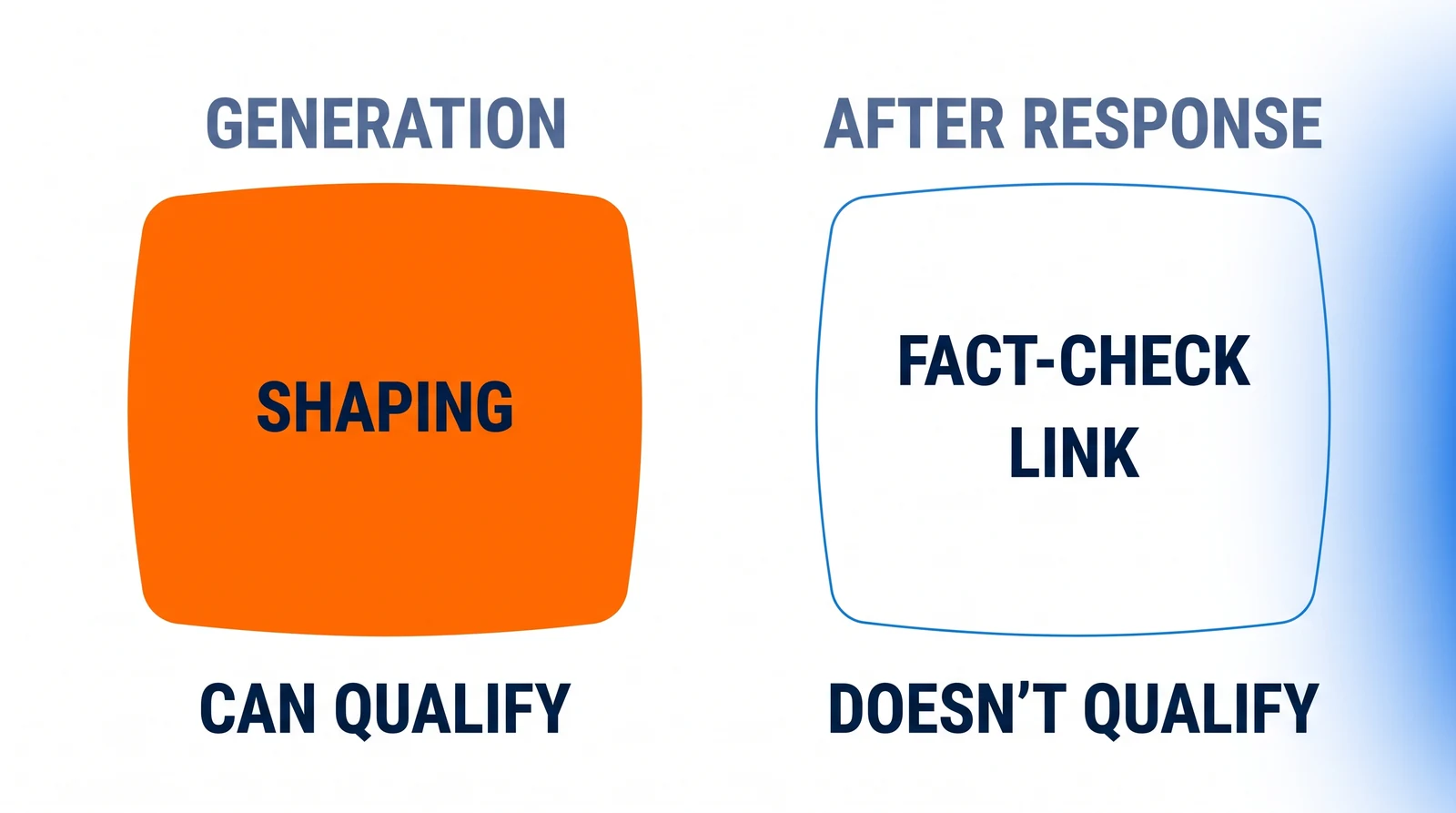
Participants, in the help page's words, "earn money when your content contributes significantly to the creation of AI-generated responses shown to users in participating products." The help page's next two sentences set the rule: "AI contribution focuses on the phase of generation where web content can significantly influence what response is generated. Web content may also confirm facts or be linked to within Google's AI after a response is generated, but those instances don't qualify for AI contribution."
The exclusion is narrow: what earns nothing is the link, or the fact-check, that comes after the writing is done. As I read it, a page that shaped the answer and was also linked would still count for the shaping; the link on its own is simply not the thing being paid for.
The help page points participants to a Google Search Console report "to track your earnings and last payment", and it adds that they can "join or leave the program at any time through your Search Console settings." Digiday's reporting adds four details the screenshot does not show. The earnings widget displays "a monthly earnings number (with some history), though no other detailed information on how payouts are calculated currently." Payments are "based more on value than raw usage", and the headline calls the scheme a "pay-per-value AI licensing program". At least dozens of publishers had been approached, the scheme had appealed more to small and mid-sized publishers than to large ones, and it reaches well beyond news publishers, though the number could not be confirmed. Google confirmed to Digiday that the scheme is "an early-stage learning pilot to test how best to reward high-quality content, on top of the traffic and tools it already provides."
The company described the idea in public on 18 June 2026, on its policy blog. Markham Erickson, its vice president for government affairs and public policy, wrote: "Beyond news, we are piloting a new way to partner with websites whose content meaningfully contributes to the freshness and factuality of generative AI responses through the process of grounding." The same post lists its paid news program as a separate item, so the two are not the same thing. Digiday also notes that the company has stayed out of the large lump-sum licensing deals other AI companies struck with major news publishers, the kind of deal our editorial team wrote about separately.
Where it agrees with the position we published, and where it parts
The AI contribution pilot agrees with the position our editorial team published on 12 September 2026 about the crawl, and parts from it about the citation. In our piece on AI and search engine optimization, the team wrote that "the unit of value is a citation rather than a crawl. How often a page is fetched and how often it is used are separate quantities, and only the second one pays." The team stated that as what it thinks, not as a measurement, and I hold it the same way.
The agreement is real: the scheme does not pay by the fetch, and Digiday describes its basis as value rather than raw usage. Cloudflare began reshaping its pay-per-crawl product toward pay-per-use on 1 July 2026. Its stated reason was that "crawling is a crude measure of value", and the move is one company's product direction, still at the experiment stage, which I report as theirs.
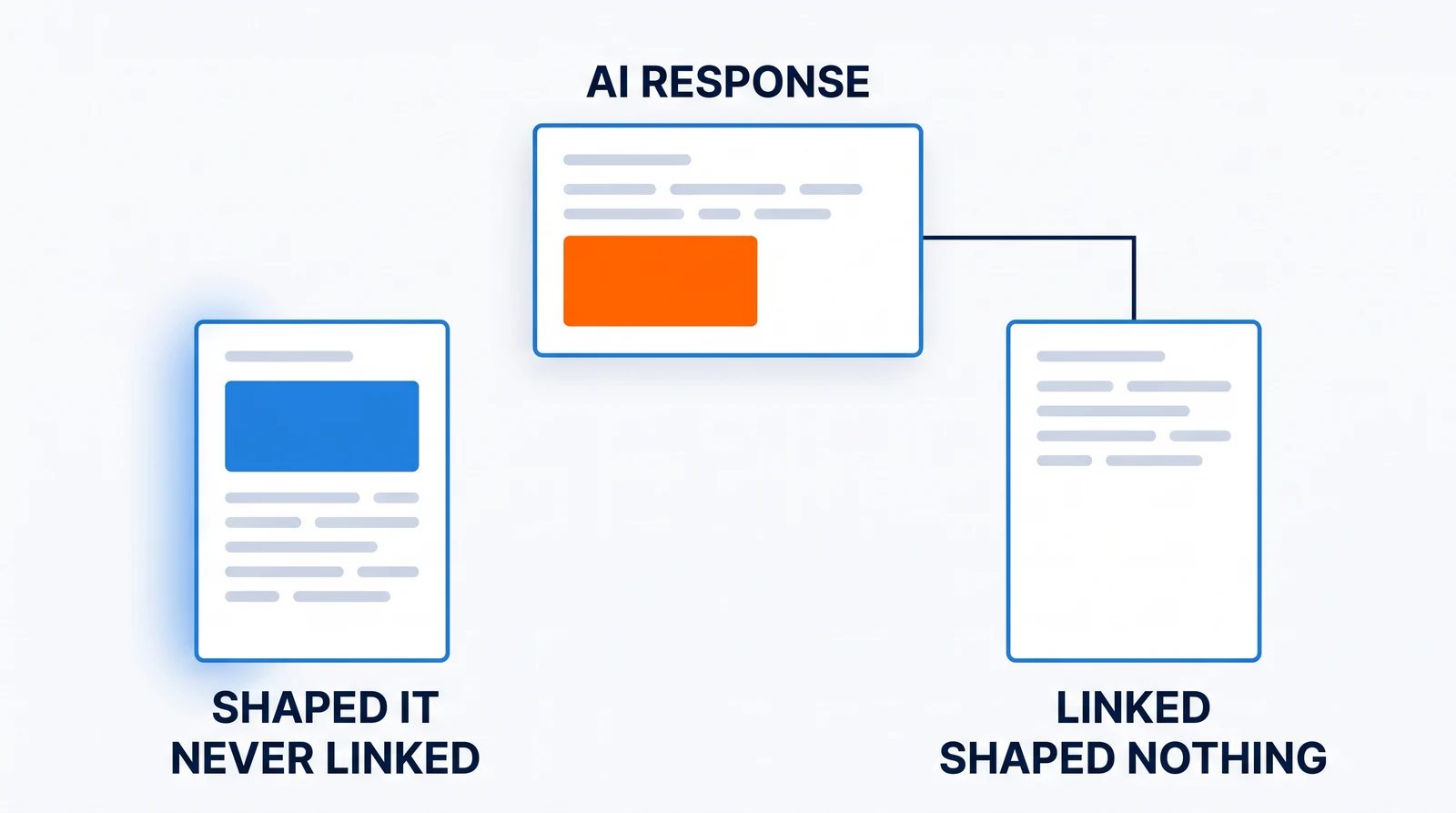
The parting is just as real: where the team treated a page's use as something you could see in a citation, the scheme pays at the step before any link exists, and the link that follows does not qualify. A page can shape an answer and never be linked, and a page can be linked while having shaped nothing. Google chose the shaping. The position we published chose the visible link.
The best case for Google's unit
Paraphrase is the strongest case for paying on contribution: an AI-generated response can rework one page's explanation and link a different page, or none, and a scheme that counts links leaves the page that did the work unpaid. I think that argument is partly right. The help text names the opposite failure too: a page linked only to confirm a fact after the answer is written, which a link count would reward for decoration. If contribution can be measured well, it may be closer to what a publisher is owed than any count of links, including the count our own product makes.
Nor is the scheme a gesture: the help text describes funds transferred to a bank account, which may differ from estimated earnings because of tax deductions or local payment thresholds. It is early by the company's own account, and anyone in it can leave at any time. Two executives at participating publishers told Digiday that, basic as the information is, it is far better to be inside testing direct payments than on the sidelines. The company may yet publish its method, and my argument below does not depend on it never doing so.
What a publisher can see, and what it cannot
A publisher in the pilot can see clicks and impressions in Search Console and links counted by third-party citation-tracking tools, and none of the three measures contribution at the phase of generation, which is the thing being paid for. My concern is not the unit in principle but the fact that, on what has been made public so far, nobody outside Google can observe it.
Clicks are a different question from payment. Impressions sit in Search Console's generative AI performance report, which first launched for a subset of sites on 3 June 2026 and had reached all websites worldwide by 31 August 2026. As of 24 September 2026, the report's own help page lists only AI Overviews and AI Mode, not the Gemini app. The SEO software company Semrush pointed that out on 22 September, and it means one of the three participating products is missing from the report a publisher would check first. Links inside AI answers are counted by the citation-tracking tools sold to SEO teams, including the one we sell.
Semrush, which sells citation tracking too, put the consequence plainly in the same piece: "citation data tells you where your content is visible and can't tell you what it would earn." The same limit applies to the citation tracking we sell, and I would rather say so myself.
What participants see instead is the monthly figure described above. The help text in Digiday's screenshot also points to an earnings report with "a breakdown of your accrued earnings"; none of the coverage we read shows what that breakdown contains. "It's quite black box," one executive with knowledge of the matter told Digiday.
My read is that a payment you cannot check against anything you record yourself is very hard to judge. A small monthly figure could mean your pages rarely shaped answers, or shaped many that were each valued low, or were measured in a way you would dispute, and the figure alone cannot tell you which. The problem holds whether the sum is large or small, and it is the part I would want fixed first. One executive in the program put it plainly: "Do I wish they were more transparent? Definitely."
What I would want Google to publish
No public document explains, as far as we could find on 23 September 2026, how a contribution is judged or how a payment is calculated. Semrush reported the same a day earlier. If I were invited, I would want three things published before I weighed the money:
- what "contributes significantly" means, and how it is measured;
- which pages earned, in which product, and how often, even if the breakdown already shows some of it to participants;
- whether the figures can be read against anything else in Search Console, such as the AI performance report.
The program terms are not public either. Semrush noted that "The program terms haven't been made public, so it's unknown what rights a publisher grants Google by accepting." For a business, that is the question I would want answered before any of the others.
None of this is an accusation. Digiday reports that the company holds weekly calls with some partners, who described its approach as "extremely collaborative."
Whether to join is your call
Joining the AI contribution pilot is a business decision that turns on your advertising revenue, your leverage and the program terms, and none of those is visible from outside your business. I am not going to tell you whether to join.
What I can do is set out what the reporting says. Digiday reports that publishers can opt out at any time, and the help text says so twice. Digiday's sources pull both ways: one said the early returns had delivered "peanuts" relative to their advertising revenue; a publishing executive argued that taking part could weaken a publisher's leverage in later revenue talks, because what is paid could be pointed to as compensation already offered; and one participant said they were hopeful that the precedent of "exploring paying publishers directly for content" is meaningful.
The question I would ask first is the one about the terms, written above.
That is my read. You know your business; I don't.
Sources
- Digiday — Google rolls out pay-per-value AI licensing program to publishers — Jessica Davies and Sara Guaglione; carries the screenshot of Google's help page "About AI contribution pilot" and of the Search Console panel. Published 14 September 2026; checked 24 September 2026.
- Search Engine Roundtable — Google's AI contribution pilot, paying publishers for use of content in AI — Barry Schwartz; carries the same help-page screenshot and notes the page cannot be seen outside the pilot. Published 14 September 2026; checked 24 September 2026.
- Search Engine Roundtable — Google Search Console Testing AI Contribution Report — Barry Schwartz; the pilot's name seen in links in Google's support documentation, with no details. Published 13 April 2026; checked 24 September 2026.
- Google — Google's ongoing commitment to supporting the information ecosystem — Markham Erickson, Vice President, Government Affairs and Public Policy. Published 18 June 2026; checked 24 September 2026.
- Google — Introducing Search Generative AI performance reports in Search Console — Hillel Maoz and Moshe Samet, Google Search Central Blog; the launch for a subset of sites, and the note that the reports reached all websites worldwide as of 31 August 2026. Published 3 June 2026; checked 24 September 2026.
- Google — Generative AI performance report (Search) — Search Console Help; the features the report covers (AI Overviews, AI Mode). Checked 24 September 2026.
- Google — AI features and your website — Google Search Central; where AI Overviews and AI Mode traffic is reported in Search Console. Checked 24 September 2026.
- Semrush — Google's AI contribution pilot pays publishers — Cecilia Meis. Published 22 September 2026; checked 24 September 2026.
- Cloudflare — Making AI search smarter — the move from pay-per-crawl toward pay-per-use. Published 1 July 2026; checked 24 September 2026.
- LiamVi — AI and search engine optimization in 2026 — our editorial team's position on the unit of value, stated there as what the team thinks. Published 12 September 2026; checked 24 September 2026.