Does original data get cited more by AI: the popular figures only count pages that were already cited
One published test set the ranking pages Google AI Overviews cited beside the ones they passed over, and the cited ones were no more original. It covered 50 keywords on a single day in July 2026, it is the only comparison of that kind we could find, and legal content, on five of the keywords, leaned the other way. Original data, in this article, means research, measurements or numbers a site publishes itself; being cited means an AI assistant such as ChatGPT or Google AI Overviews linking to that work as a source for its answer. Whether AI tools invent references, or which AI research paper has been cited most, are questions from the academic side of this search, and they belong to another article.
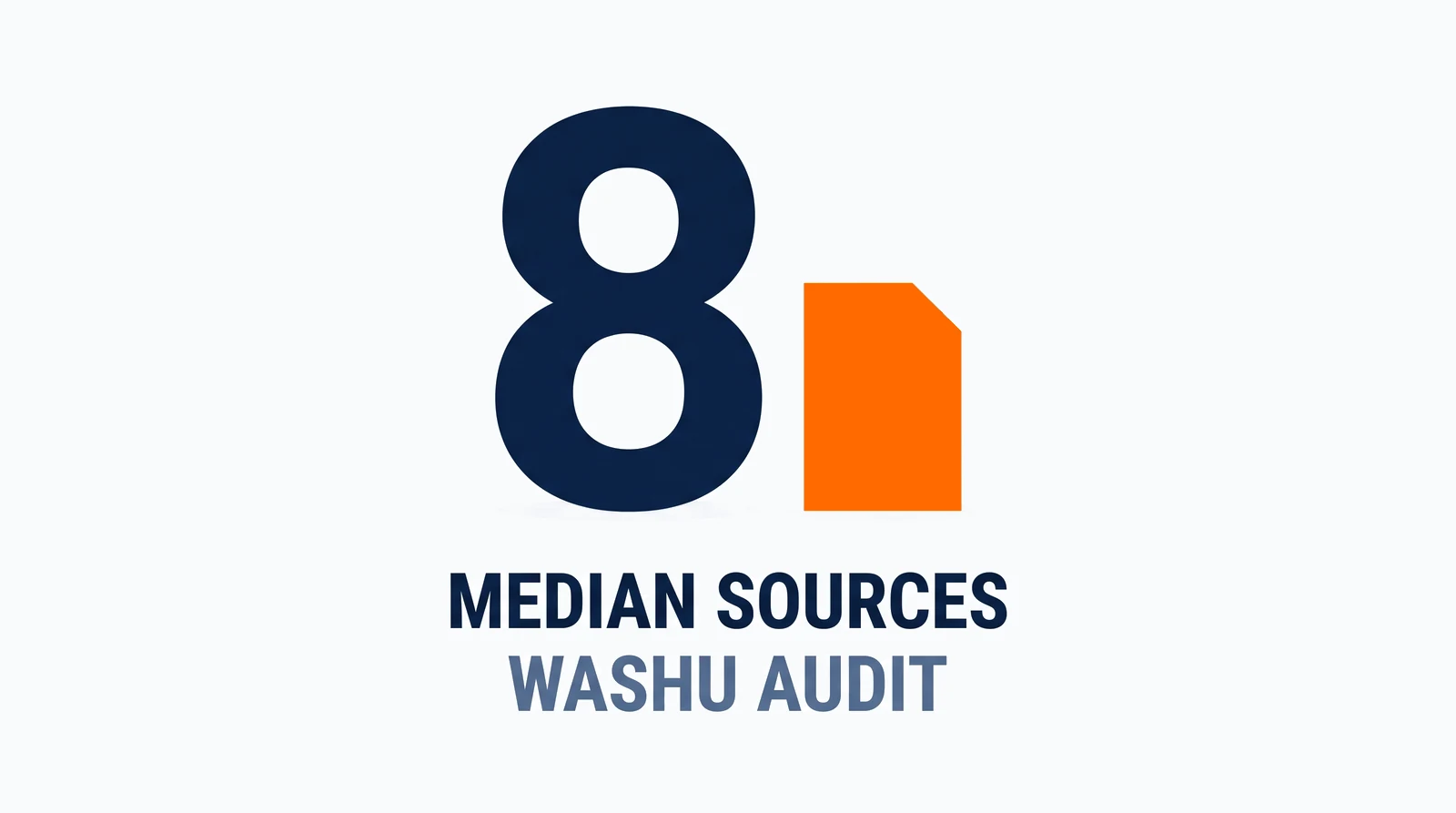
The figures the top-ranking articles quote for the opposite answer work differently: they compare sources that assistants had already cited with each other. In one of them, 8 of 301 already-cited pages were primary research, and those eight averaged 11.3 citations each against 3.4 for the rest. The analysis is Kevin Indig and Amanda Johnson's, from July 2026, on citation records from the AI visibility company Gauge. It shows how research fared once an assistant had found it, not whether publishing research raises the chance of being picked, because work that no assistant used is not in the set.
This desk has not measured originality, and no number below comes from us; each figure sits with the study that produced it. Our reading covered the nine results in a Google search captured for the United States on 24 September 2026, of which eight opened for us (the ninth, a Reddit thread, would not open and is quoted nowhere), the studies those results take their figures from, and On-Page.ai's two studies, which sit outside the results altogether. It is a close reading of what those results rest on, not a systematic review of everything published. One interest belongs here, before we question anyone's figures: we build software that scores drafts and tracks AI citations, and Gauge, ZipTie and amicited, whose work we read below, sell citation monitoring, several of them in competition with us.
Does original data get cited more by AI?
No published study we could find and read shows original data winning out when an AI assistant chooses what to cite. The single comparison that also counted what AI skipped found no difference in AI Overviews, and its one reversal, in legal content, rests on five keywords.
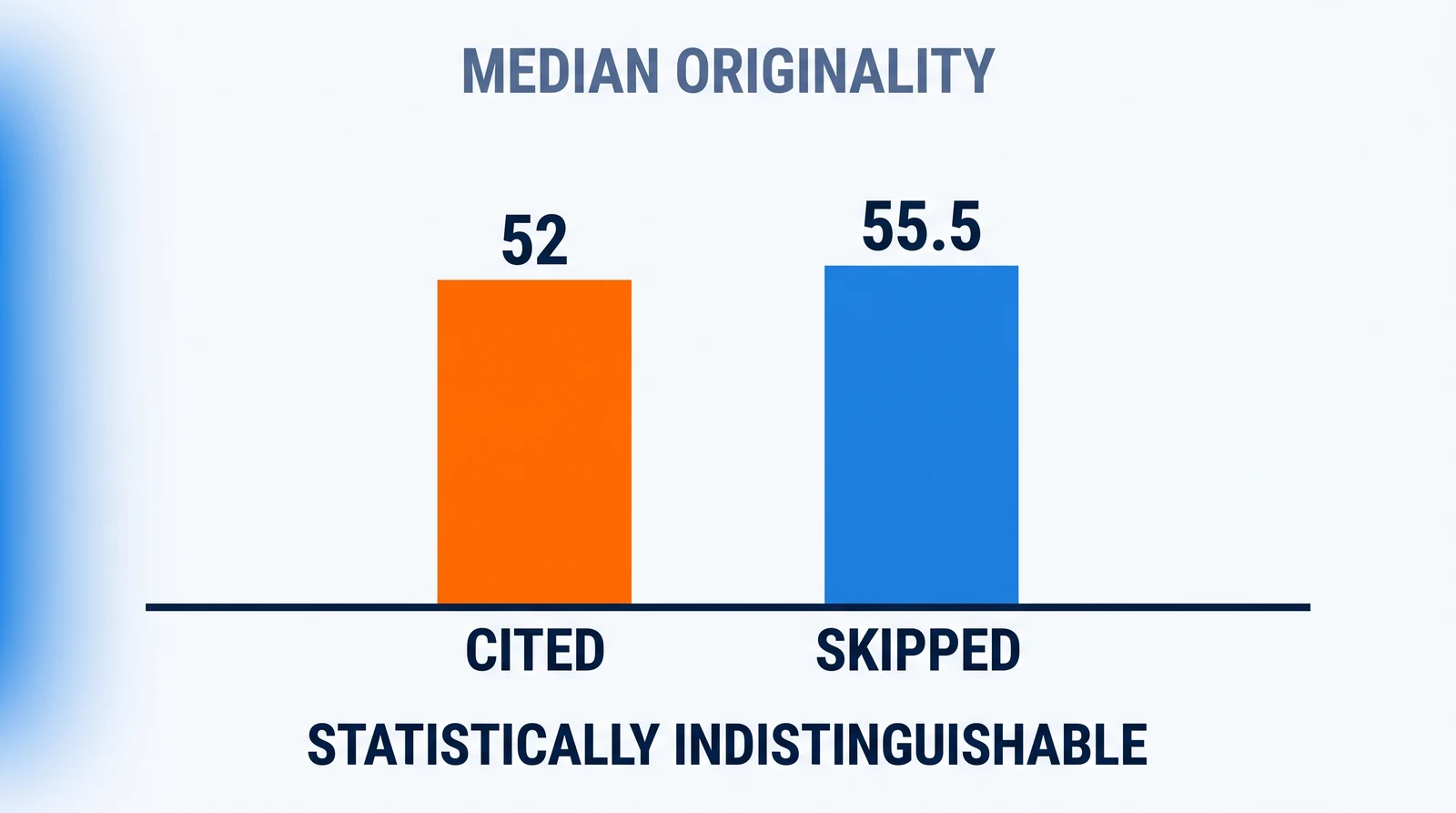
Eric Lancheres ran that comparison for On-Page.ai, in a test published on 15 July 2026. He took 50 keywords across ten verticals, captured each search's results on one day in US English, and recorded every source the AI Overview linked; an Overview appeared for 49 of the 50 keywords. Every first-page organic result was then scored on the company's own 0–100 Information Gain Score, and 312 of the 370 ranking pages carried enough text to score.
The comparison stays inside each search's results, which takes keyword difficulty and subject out of it. Ranking pages the Overviews cited had a median originality score of 52 across 146 of them, and skipped ones a median of 55.5 across 166, a gap with a p value of .07. The study's word for the two groups is "statistically indistinguishable", and the small difference runs against the premise: the linked ones were, if anything, slightly less original. Among the 44 searches whose results held both kinds, the cited side scored higher on average in 19, close to a coin flip.
The most original ranking page was among an Overview's citations in 15 of the 46 searches where an Overview cited at least one scored ranking page. Random picking of the same number would have included it about half the time, by the study's own calculation. Cited pages carried a median of 4 unique numeric data points and skipped ones a median of 5, the line closest to this article's subject.
Legal content leaned the other way. Legal pages in the Overviews' citations had a median score of 62, against 49 for the ones left out, and legal was also where the Overviews drew on the most ranking pages, 26 of 35 scored. The legal result rests on five keywords, and the study runs no separate significance test on it; it calls the result "a direction, not a law".
All of this rests on a single answer engine, one day and 50 keywords chosen by hand for breadth, not drawn at random, and it measures a vendor's own score for what ranks, not research a site has published. The test is also missing from the nine results Google showed for this search in our 24 September capture from the United States, so someone searching it meets the other figures first.
What does the originality score measure?
On-Page.ai's Information Gain Score grades, from 0 to 100, how much of a page's main text is new relative to everything else that ranks for the same keyword. The score judges by meaning, not exact wording.
The company set out what the score tracks in an earlier study, published on 12 June 2026, of the 150 results holding the top three positions for the same 50 keywords. Pages carrying 15 or more unique data points averaged 62, against 40 for those carrying one or none, the strongest association in that study. A high score tends to go with numbers the other results lack. Such a score does not show that the text reports a study of its own, with its method, which is what the other side of this debate counted.
The score is also the company's product. The company sells an SEO API in paid credits and offers the score through it and through a free checker, so it built the instrument, tested with it and sells it. The direction of the result is worth knowing too: a vendor whose product grades originality published a finding that originality did not decide what Google AI Overviews cited from the rankings, and its implications section sums up information gain as "a ranking-side and reader-side investment, not a direct lever on AI citations."
The test is plain about what it cannot see. A citation counts when the answer links a source, not when a source shapes the answer without a link. ChatGPT was queried through OpenAI's API with web search switched on, which may behave differently from the consumer app. And 58 of the 370 ranking pages could not be scored at all, chiefly forum threads and video, so the originality of a real part of what ranks is unmeasured.
What do eight pages out of 301 show?
The 8 of 301 pages show primary research drawing more citations each among sources AI systems had already cited, not research raising the chance of being picked.
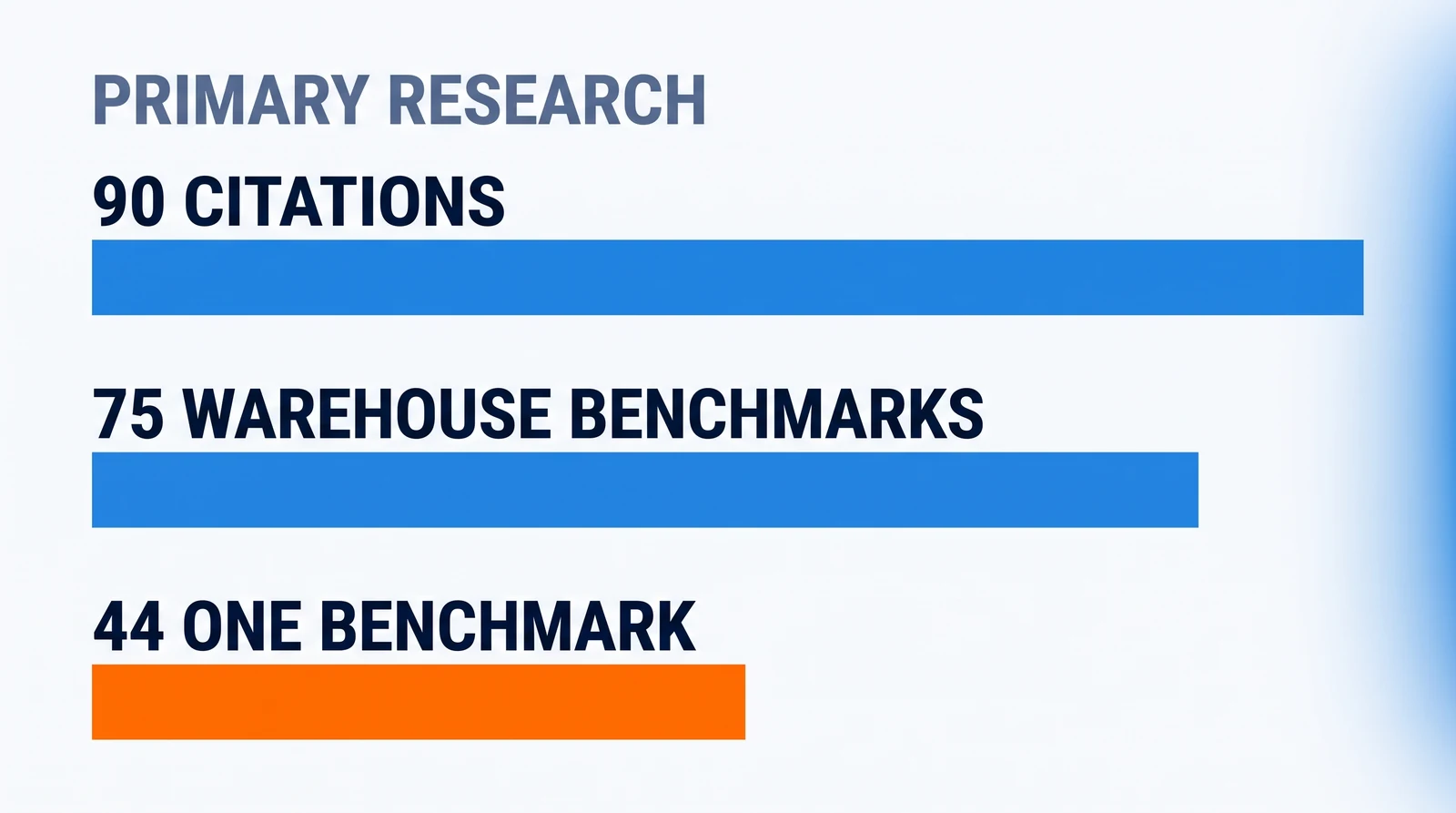
The set is Gauge's, and the reading of it is Kevin Indig and Amanda Johnson's. Gauge sells AI visibility tracking across ChatGPT, Claude, Gemini, Perplexity, Copilot, AI Mode and Google AI Overviews, and its cited-URL set held 301 live pages that AI systems had linked in answers to 316 prompts across seven verticals, with 1,075 citations between them. Of the 301, 8 qualified as primary research, meaning "the original source of the data and methodology are on the page… rather than a writeup of someone else's numbers." Those 8 of 301 pages took 90 of the 1,075 citations, a citation rate of 11.3 each against 3.4 for the rest of the set.
The analysis went first to subscribers of the Growth Memo, Indig's newsletter, on 6 July 2026, where the issue is paid beyond its summary line: "Primary research is rare, but when it appears, it is much more citation-dense than ordinary pages." Search Engine Land republished it on 8 July, with the authors' permission; that page would not open for us on 24 September, so we read and link the Internet Archive's copy from 20 August 2026.
The 90 citations are concentrated, and the write-up says so. Benchmarks of cloud data warehouses account for 75 of the 90, and a single Fivetran warehouse benchmark accounts for 44; Fivetran's two benchmark pages together account for 58. Three topics the authors name, B2B SaaS and CRM, education and TEFL, and product analytics, produced no cited primary research at all.
The Fivetran benchmark that took 44 dates from 2022. Indig and Johnson credit it with naming the warehouses it compared, BigQuery, Redshift, Snowflake and Databricks, walking through its methodology step by step, linking its raw data, and staying at one address for four years.
The authors draw the conclusion themselves: "Strip the benchmark cluster out and first-party research barely registers in the citation set." Indig and Johnson also write that original data "does, in fact, win", and then narrow the claim: "The win is not 'we published original data.'" What they found winning was a benchmark that answers a buying comparison, with its method shown in full. The write-up names no assistant and no collection period, so it cannot say whether the pattern holds on ChatGPT, on Google AI Overviews, or on both.
The larger limit is who is in the set. All 301 had already been cited, so the analysis compares winners with other winners, and the 301 are only the live ones: in the same records, 64 of 365 cited URLs were dead, redirected or broken, taking 203 citations with them. The figure answers a real question, how heavily research was cited once it was in an answer, and the question most readers bring to it is a different one.
Amplistory's article, by Grace Windsor and last updated on 23 September 2026, carries the 11.3 against 3.4 under a heading that says such research seems to punch above its weight "with a caveat", and calls the figure "a very strong case for original research". By our reading, the section never names the caveat outright; the nearest it comes is a condition, that original data can punch above its weight "when it answers a specific question that other people need a source for", and the concentration in a single benchmark cluster is not there. In that section, the 8 of 301 pages are the only citation evidence. The same article closes by saying "Original research is not a guarantee of AI visibility."
Is the 4.31x figure about original research?
Yext's 4.31x compares a business's own website with its listings on directory sites in AI answers about local businesses; it does not measure research at all.
ZipTie's article on original research, written by Ishtiaque Ahmed and revised on 15 September 2026, states the figure like this: "Yext's analysis of 17.2 million AI citations found that websites hosting original research or first-party content generate 4.31x more citation occurrences per URL than listings." ZipTie's link for that study now redirects to Yext's 404 page, and the study sits at a new address, dated 28 April 2026.
The 17.2 million citations came from four models, Gemini, Claude, Perplexity and SearchGPT, over the last quarter of 2025, in answers to questions about businesses gathered at the level of individual locations. Yext's framework sorts sources by how much control a business has over them, and its top tier is "content entirely created and hosted by the business": a brand's own website, blog and newsroom. Yext's sentence reads: "Websites generate far more citation occurrences per URL (4.31x vs 2.46x)." In that notation, 4.31x for a business's own website sits beside 2.46x for its listings. ZipTie's "more … than listings" reads the first number as if it were already the comparison, and Yext was not sorting by anything of the kind. Yext names its own limits, starting with "Correlation, not causation", and adds that most of its queries were US-based.
ZipTie's reason for the effect is that "AI engines are risk-minimizing systems that preferentially cite verifiable, attributable data over derivative content." That is a reasonable-sounding argument, but ZipTie itself tests nothing and voices its mechanism through a practitioner's Reddit comment. The peer-reviewed evidence it leans on is the GEO paper by Pranjal Aggarwal and co-authors, presented at KDD 2024, in which a language model rewrote existing web pages to add statistics, quotations or citations and the authors measured how visible each rewrite became in generated answers. That is a test of editing a page, not of publishing research of your own, so it does not bear on original data. amicited's blog post, by Viktor Zeman on 14 August 2026, states it more flatly: "Original research, industry benchmarks, and statistical analysis significantly increase the likelihood that AI will cite your content." amicited names no study for the line.
The first result in our Google capture for the United States on 24 September, Digital Applied's article of 24 June 2026, rests on a meta-analysis: Cyrus Shepard's scoring for Zyppy, published on 7 May 2026, of "54 Experiments, Patents, and Case Studies" into 23 factors. None of the 23 scores originality. The nearest factor, "Factually Specific", covers specific, verifiable facts and scores 8.3 out of 10, and Shepard reminds readers that "Correlation is not causation." When we read a popular eight-signal checklist against the published tests, it carried no originality item either.
Can both findings be true at once?
Both findings can be true, because the two studies measured different things in different places, and neither refutes the other.
Indig and Johnson counted pages that publish their own data and method, among sources AI systems had already cited, on assistants their write-up does not name. On-Page.ai scored the new material in the text of results ranking on Google's first page, and compared the ones AI Overviews linked with the ones they skipped. Research can be cited heavily once an assistant finds it while originality still plays no part in what an Overview picks from the rankings. Perplexity is among the assistants Gauge says it monitors, but Indig and Johnson do not say which assistants their set came from, and On-Page.ai tested AI Overviews and ChatGPT only, so nothing here says how Perplexity treats such work.
Indig and Johnson draw the bridge between the two measures themselves. Describing the earlier part of their series, they write that "original data correlated with page originality more than any other trait"; of this part, that "original data correlates with citation density." The earlier part, Why proprietary data is your most defensible AI citation asset of 29 June 2026, opens with "Original data wins citations, but being the primary source might not". In Search Engine Land's republication of 2 July, read in the Internet Archive's copy of 21 July 2026, its figures on originality come from Lancheres's June study, and the authors note that the study "doesn't take AI citations or mentions into consideration". The same June study ties the two measures from the other side, with unique data points the strongest correlate of its score, which is why the July null bears on original data at all.
The July test holds a result that cuts the other way. Three in four of the 584 AI Overview citation links went to sources outside the first page of results. What the two answer surfaces cited from beyond it, sampled at up to six per keyword, had a median of 57 across 168 scoreable text pages, against 54 across the 312 ranking pages. ChatGPT's 14 scoreable articles from outside the rankings scored a median of 66. The study calls that sample "too small to lean on". A likely route to those sources, the test notes, is query fan-out, the related searches an answer engine runs behind a single question.
We think the pattern fits originality counting in what an assistant fetches from beyond the rankings, and in some kinds of question, more than in what it picks from the rankings. The Fivetran benchmark answered a comparison buyers make, and legal content is where getting a detail wrong costs the most. The pattern is a hypothesis of ours, not a finding. A first test for it is the July study's design, setting what was cited against what was skipped from the same search, run on pages that publish primary research.
Every number here is small: 8 of 301 pages in the first set, 50 keywords over a single day in the other, five of them legal. Nothing in either study shows that original data does not help, and neither publisher claims it; the July study says outright that "nothing here shows that AI answer surfaces penalize originality".
What did ChatGPT do with the same questions?
ChatGPT searched the web in 32 of 150 test runs and answered the rest from its own knowledge, with no citations at all.
On-Page.ai's test asked each of the 50 keywords three times through OpenAI's API with web search enabled, and left the choice to search to the model, as the product does. Searching runs cited 7.8 sources per answer on average and 213 distinct URLs in all, and just three of those 213 were first-page Google results for the query. With so little overlap there was no cited-against-skipped comparison to run for ChatGPT, so the originality result belongs to the Overviews alone.
ChatGPT's sources also moved between identical runs. Of the URLs it cited, 85% turned up in only one of the three runs of the same keyword. The study prints that share without the count behind it.
Two practical points follow, and neither needs a number of ours. On a query where the assistant does not search, there is no citation to win, original or not, which is why checking whether an assistant runs a search for your topic in the first place comes before anything else we suggest. And a single run is a single sample: put an identical question to an assistant on two occasions and the sources it gives can differ, so any report of a citation needs to say how many runs stand behind it.
Should you publish original research to get cited?
No published figure can tell you whether original research will earn AI citations, because none measured what happens before and after research is added.
Research can earn its place on other grounds, and a ranking article says so itself. Amplistory's article puts it well: "The research should still have a reason to exist if no AI system ever cites it." It also warns that "'Original research gets cited' can become another content tactic very quickly", and adds that a badly designed survey can produce a unique statistic and still be bad research. A good study can be read, linked to and reported on by people, whatever an assistant does with it, and those are reasons a content strategy can stand on.
If AI citation is part of the reason, the narrowest reading of the evidence is Indig and Johnson's own: what drew citations in their set was a benchmark that compared named products on measurable terms and set out its method in full. Their description covers 8 of 301 pages, most of the effect from a single company's benchmarks, and it describes what happened, not a recipe.
Google, which runs AI Overviews, puts a different emphasis in its guide to its generative AI features, updated on 10 July 2026: content "that people find unique, compelling, and useful will likely influence your website's presence in generative AI search in the long run more than any of the other suggestions in this guide." Google's line is guidance about the long run, not a measurement, and the test above measured one day. Both can be accurate at once.
Weigh all of it with the sellers in view. On-Page.ai sells the score it tested with; Gauge, ZipTie and amicited sell citation monitoring; Yext sells listings and AI search software; the Growth Memo is a paid newsletter with a premium tool; and our own interest is the one declared at the top. Whether a study is worth its cost depends on what your readers need, and that is a judgement we cannot make for you.
Three questions the sources raise
These three come up in the articles and studies above, and each has an answer in them.
What counts as original research?
Research is original when the people who gathered the data publish it with their method, rather than summarising someone else's work. That is the test Indig and Johnson applied to their set, and Amplistory gives the same idea in a line: "Original research means you are the source of the evidence, rather than summarising somebody else's." An article that reports another company's study, however well, fails both definitions; a survey, a benchmark or an analysis of a company's own product data can be.
Is information gain the same as original data?
Information gain is not the same as original data, although On-Page.ai's score rises most with unique data points, as its June 2026 study found. The score grades any material that is new against everything else ranking for the same keyword. Pages with 15 or more unique data points averaged 62 on it, against 40 for those with one or none. A first-hand example or a failure case can add to the score without a number, and a number copied from another study adds nothing once others that rank for the keyword carry it too. The idea entered search-industry discussion through a Google patent, "Contextual Estimation of Link Information Gain", as the company tells it, with a caution worth keeping: "A patent describes a capability, not a confirmed ranking system."
What does Google say about original content and AI search?
Google's guide to its generative AI features asks site owners for "non-commodity" content, and says a first-hand review "provides a unique perspective based on personal experience, whereas a summary of existing content simply restates information already available elsewhere." The guide adds: "Don't just recycle what others on the internet have already said, or could easily be produced by a generative AI model." That is the operator's advice, updated on 10 July 2026 on Google Search Central, and it measures nothing about what AI Overviews cite.
Were the pages that never got cited in the sample?
The next study claiming original research wins AI citations deserves one check before any other: whether pages no assistant cited are in its sample.
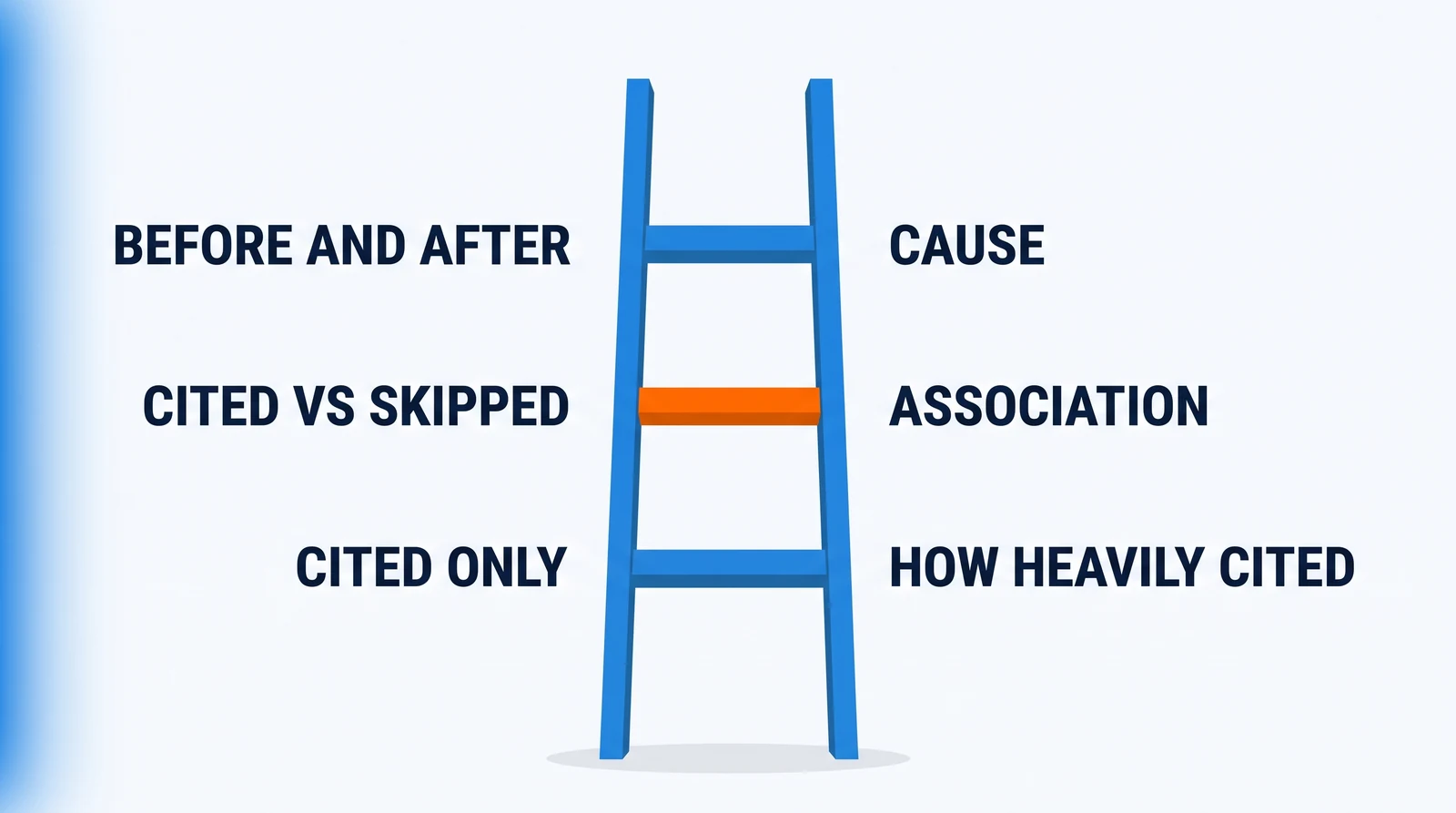
Setting what an assistant cited beside what it could have used for the same query and passed over, as On-Page.ai did for Google AI Overviews, would show whether research pages are picked more often, and nobody we could find has yet run it on sites that publish primary research. Even that would show an association, not a cause, because sites that publish research differ in other ways too, such as age, links and reputation. Only adding research and comparing before and after, or against matched pages left alone, could show that publishing it raised the chance of being cited. Until then, there is no clear answer to the question this article's title asks, and the case for funding a study rests on what the study does for your readers. That call is yours.
Sources
All URLs checked 24 September 2026.
- On-Page.ai (Eric Lancheres), Do AI Assistants Cite Original Content? 793 AI Citations Measured Against the Pages That Rank, 15 July 2026 — 50 keywords, ten verticals, one day, US English; Google AI Overviews (49 of 50 keywords) and ChatGPT with web search through the API (150 runs); 312 scoreable first-page results; the cited-versus-skipped comparison covers AI Overviews only — https://api.on-page.ai/research/ai-citation-study
- On-Page.ai (Eric Lancheres), Information Gain in Google's Top-Ranking Results: A Measurement of 150 Pages, 12 June 2026 — what the score tracks — https://api.on-page.ai/research/information-gain-study
- On-Page.ai, pricing — the SEO API sold in paid credits, through which the score is offered, alongside a free checker — https://api.on-page.ai/pricing
- Kevin Indig and Amanda Johnson, Why most original data never gets cited, Growth Memo, 6 July 2026 — paid beyond its summary line — https://www.growth-memo.com/p/why-most-original-data-never-gets
- Kevin Indig and Amanda Johnson, Why proprietary data is your most defensible AI citation asset, Growth Memo, 29 June 2026 — the earlier part of the series; paid beyond its opening lines, read in full in the republication below — https://www.growth-memo.com/p/why-proprietary-data-is-your-most
- Kevin Indig and Amanda Johnson, Why proprietary data is your most defensible AI citation asset, Search Engine Land, 2 July 2026 — its originality figures come from On-Page.ai's June study; the live page refused us, read in the Internet Archive's copy of 21 July 2026 — https://web.archive.org/web/20260721131719/https://searchengineland.com/proprietary-data-ai-citation-asset-481380
- Kevin Indig and Amanda Johnson, Why most original data never gets cited, Search Engine Land, 8 July 2026 — Gauge's cited-URL set: 301 live pages AI systems cited, 316 prompts, seven verticals, 1,075 citations; no assistant or period named; the live page refused us (HTTP 403), read in the Internet Archive's copy of 20 August 2026 — https://web.archive.org/web/20260820081810/https://searchengineland.com/why-most-original-data-never-gets-cited-481676
- Gauge, AI visibility tracking — who produced the cited-URL set — https://www.withgauge.com/ai-visibility/
- Amplistory (Grace Windsor), Original research: What actually gets cited in AI search, first published 23 July 2025, updated 23 September 2026 — https://amplistory.com/blog/original-research-seo-ai
- ZipTie (Ishtiaque Ahmed), Why Original Research Gets More AI Citations, 6 March 2026, updated 15 September 2026 — https://ziptie.ai/blog/how-original-research-wins-ai-citations/
- Pranjal Aggarwal, Vishvak Murahari, Tanmay Rajpurohit, Ashwin Kalyan, Karthik Narasimhan and Ameet Deshpande, GEO: Generative Engine Optimization, arXiv, first posted 16 November 2023, KDD 2024 — the peer-reviewed paper ZipTie leans on; it tested rewriting existing pages to add statistics, quotations or citations — https://arxiv.org/abs/2311.09735
- Yext Research, AI Citation Behavior Across Models: Evidence from 17.2 Million Citations, 28 April 2026 — Q4 2025, Gemini, Claude, Perplexity and SearchGPT, questions about businesses at location level — https://www.yext.com/research/articles/ai-citation-behavior-across-models/
- amicited (Viktor Zeman), Content Formats That Earn AI Citations, 14 August 2026 — https://www.amicited.com/blog/which-content-formats-get-more-ai-citations-data-analysis/
- Digital Applied, What Actually Gets You Cited in AI Search (2026 Data), 24 June 2026 — https://www.digitalapplied.com/blog/ai-search-citation-ranking-factors-2026-data-study
- Cyrus Shepard, AI Citation Ranking Factors Analysis, Zyppy Signal, 7 May 2026 — 54 experiments, patents and case studies scored into 23 factors — https://signal.zyppy.com/p/ai-citation-ranking-factors
- Google Search Central, Google's Guide to Optimizing for Generative AI Features on Google Search, updated 10 July 2026 — https://developers.google.com/search/docs/fundamentals/ai-optimization-guide
- LiamVi, How to get cited by ChatGPT in 2026 — the eight-signal checklist read against the published tests — https://liamvi.com/blog/how-to-get-cited-by-chatgpt-in-2026
- LiamVi, AI and search engine optimization in 2026 — why a search has to run before a citation exists — https://liamvi.com/blog/ai-and-search-engine-optimization
- LiamVi, The best accurate data platform for AI search optimization — why one run of a question is one sample — https://liamvi.com/blog/best-accurate-data-platform-for-ai-search-optimization