The best accurate data platform for AI search optimization in 2026: what we measured, and how to check any vendor
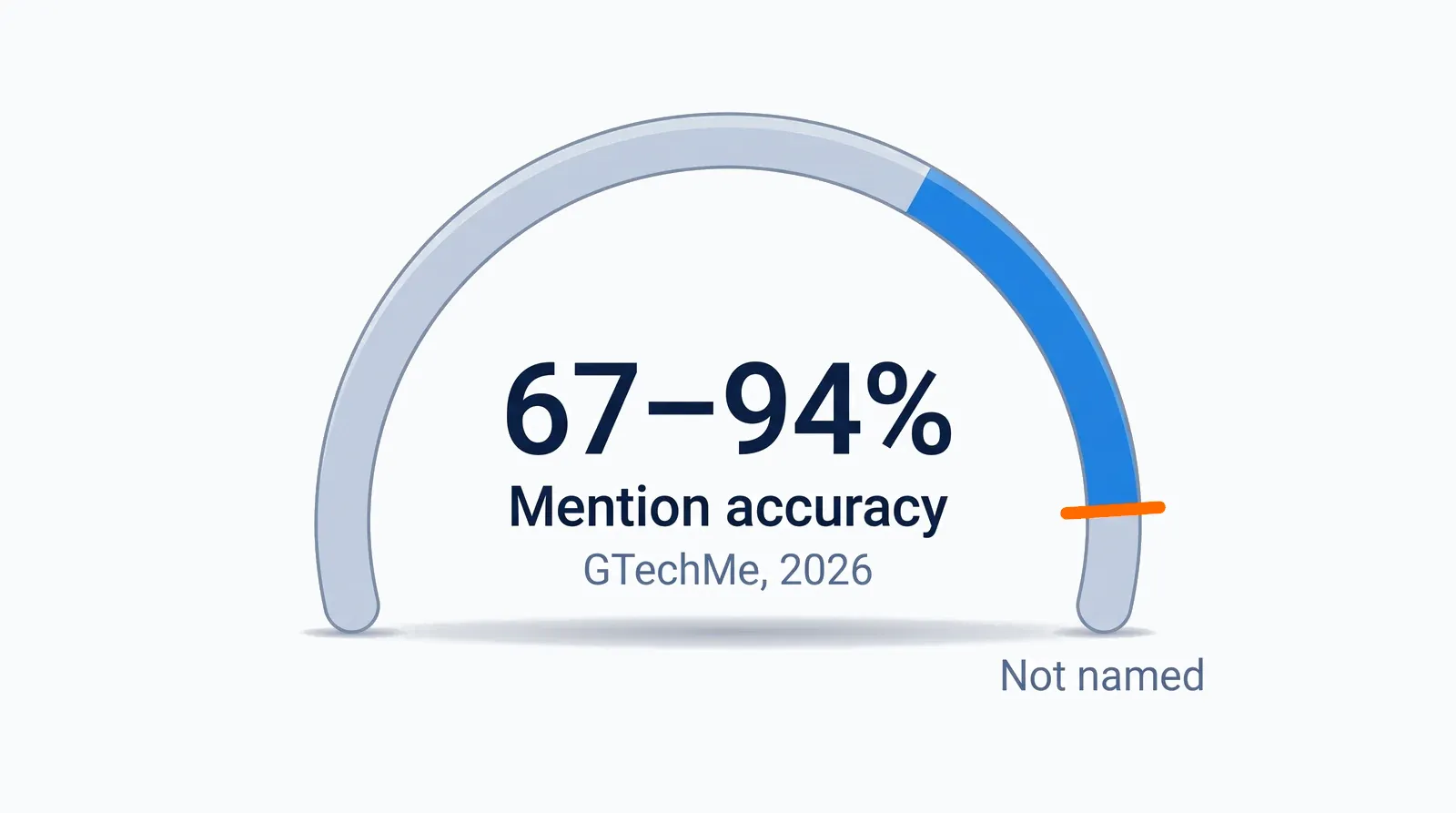
No independent audit we know of ranks these platforms on accuracy by name — but one has now measured it. An independent test of twelve AI visibility trackers, graded against 600 manually verified prompt-answer pairs across five AI surfaces over four weeks in May and June 2026, found mention-detection accuracy running from 67% to 94%. The twelve platforms are anonymised, so the spread is public and the league table is not. At the bottom of that range, roughly a third of a brand's mentions never reach the dashboard at all.
That spread is the most useful fact in this category right now, and it is the reason this guide exists: accuracy varies enormously between products, and it is checkable. This year we checked one — a direct competitor's citation data against our own independent measurement — and their numbers held up. We build a platform in this category too, so read this guide knowing that, and use the same standard on us that we use on everyone else.
Here is one reason data accuracy belongs in your AI search optimization strategy: in early August 2026, our own tracking of this exact query found two sources being cited — arxiv.org and techradar.com — and no platform's own pages. The question of whose numbers are accurate is mostly being answered by people who do not measure AI search for a living.
What does "accurate data" mean for AI search optimization?
A platform has accurate data when its numbers come from the AI engines themselves — sampled repeatedly, per surface, on clean inputs — and arrive with the method, the sample and the limits printed next to them. What it does not mean is a single true score, because there is no single true score to find.
What follows in this section is what we have measured ourselves, across a 33-keyword citation harvest collected mostly from ChatGPT, with Gemini and Perplexity sampled thinly — a small, early sample, and the scope for every claim below it. Ask the same assistant the same question twice and the generative answer, and its citations, can change. Engines differ too — some, like Perplexity, cite far more freely than others — and each engine's retrieval threshold, the gate that decides whether a generative AI consults the web at all, sits inside the engine and can change without notice.
So every number in an AI visibility dashboard is an estimate from a sample. That is not a flaw; it is what measuring a non-deterministic system honestly looks like. The real question is whether the sampling is honest: how many prompts, which persona each prompt simulates, how many runs, which engines, checked when. A vendor who shows you a figure without its sample is asking to be believed rather than checked — and checkable is the entire difference between measurement and marketing.
This is also where the discipline parts company with classic search engine optimization. SEO had a search engine results page you could look at, while generative engine optimization — GEO — deals in probabilistic answers assembled on the spot by a generative AI, and no two runs have to agree. An accurate GEO platform is a multi-engine, multi-run sampling operation, and its content recommendations are only as good as the measurements underneath them. Accuracy, in other words, is a measurement strategy rather than a feature checkbox — and a separate question from what these tools actually measure, which is mentions, citations and share of voice, and which we covered on its own.
Which AI search optimization platforms can you verify today?
Four products are the ones we verify in this guide — Surfer, Semrush AI Visibility, Profound, and LiamVi — and the first three you can check on their own pages in five minutes. That is our scope, not a census of the market. What each product's page actually claims:
- Surfer — AI Tracker. An SEO platform whose AI Tracker follows how your brand appears in AI tools like ChatGPT; its page lists Google AI Overviews, Gemini, ChatGPT, Claude and Perplexity, framed as one workflow to rank on Google and get cited in AI answers. Surfer is also the only platform whose AI numbers we have cross-checked ourselves; the result is the next section.
- Semrush — AI Visibility. One of the biggest names in SEO tools, moving "from traditional SEO to AI discovery", with a published AI Visibility Index. We have not cross-checked its data — a limit of our testing, not a doubt about theirs.
- Profound. A dedicated AI search product; its page lists coverage across ChatGPT, Perplexity, Claude, Gemini, Grok, Microsoft Copilot, DeepSeek and Google AI Overviews, with source citations included in a free AEO report. Also not yet cross-checked by us.
- LiamVi. Ours — which is why this guide exists, and why this is the entry to read most sceptically. It tracks which sources hold the citations for your keywords, scores draft content on the properties cited pages share, and flags topics where measured retrieval is zero. Judge it with the same questions this guide ends on — we publish our methods, samples and limits so that you can.
The category is young and turning over; our weekly tracking keeps surfacing new entrants, and "best" changes as the engines and the products move. Three more you can check the same way, each read on its own page — the dates are on every line in Sources at the end:
- Peec AI — AI search analytics for marketing teams, reporting visibility, position and sentiment across ChatGPT, Perplexity and Gemini, with competitor benchmarking.
- Otterly.AI — AI search monitoring that tracks both brand mentions and citations, across ChatGPT, Google's AI Overviews and Perplexity among others.
- Ahrefs' Brand Radar — brand visibility tracking across AI answers from another classic-SEO vendor, pitched as turning "SEO into AEO".
We have not cross-checked any of the three, and naming them is not ranking them. Treat any list — this included — as a snapshot with a date on it, and confirm a product exists before you compare it: a vendor's engine coverage can change between the day they publish it and the day you buy. Which tool is best for you depends on the AI surfaces your buyers actually use — Google's generative results included — on whether you want classic search engine tracking alongside, and on how the tool fits the rest of your AI search optimization strategy. Whatever you shortlist, the accuracy questions below apply before you make a buying decision.
What happened when we cross-checked a platform's data?
The platform whose AI citation data we have independently cross-checked is Surfer, and its numbers held up. Method first: we took the ChatGPT source lists Surfer exported in March and May 2026 — 6,095 rows — and compared them against our own citation measurement, collected with different prompts and a different method, so agreement could not be an artefact of copying. Two sets went into that comparison: the domains ChatGPT actually cited in our own measurement, and a control set of domains that merely ranked on Google. Surfer's exported sources tracked our measurement at roughly twice the rate they tracked the control.
We have not published the domain counts behind that comparison, and a reader is right to want them. Until we do, treat the direction as the finding and the magnitude as unpublished — which is exactly the demand question two below tells you to make of any vendor, us included.
What the check establishes, and what it does not, in the same breath: it shows that Surfer's exported source lists move with an independent measurement collected another way, which is the whole reason the agreement means anything. It does not show that their tracker caught every citation generated for its own prompts. That is a different and better test — build ground truth prompt by prompt, then score the tracker against it — and we did not run it. On what we did compare, Surfer's citation data is genuinely measured rather than asserted, and we say that as a company building a competing product.
The limits, in the same breath: our sample is small and early, and it is mostly a single engine. We keep measuring weekly, the dataset grows, and we will publish what changes. The narrower claim that survives all of that is still worth stating: the only cross-check we know of on Surfer's citation data specifically is ours, and it came back positive.
The wider lesson of this guide is that such a check is available to anyone. Nothing in it needed inside access — one exported source list, one independent sample, one comparison. None of this is a trust exercise; it is checkable with real prompts of your own, and later in this guide is the smaller version you can run on any vendor, ours included.
What does inaccurate data look like in practice?
Bad data in this category is almost never a fabricated number: it is contamination or miscalibration, and neither one is visible in a polished dashboard. Three failure modes we have met in our own engineering:
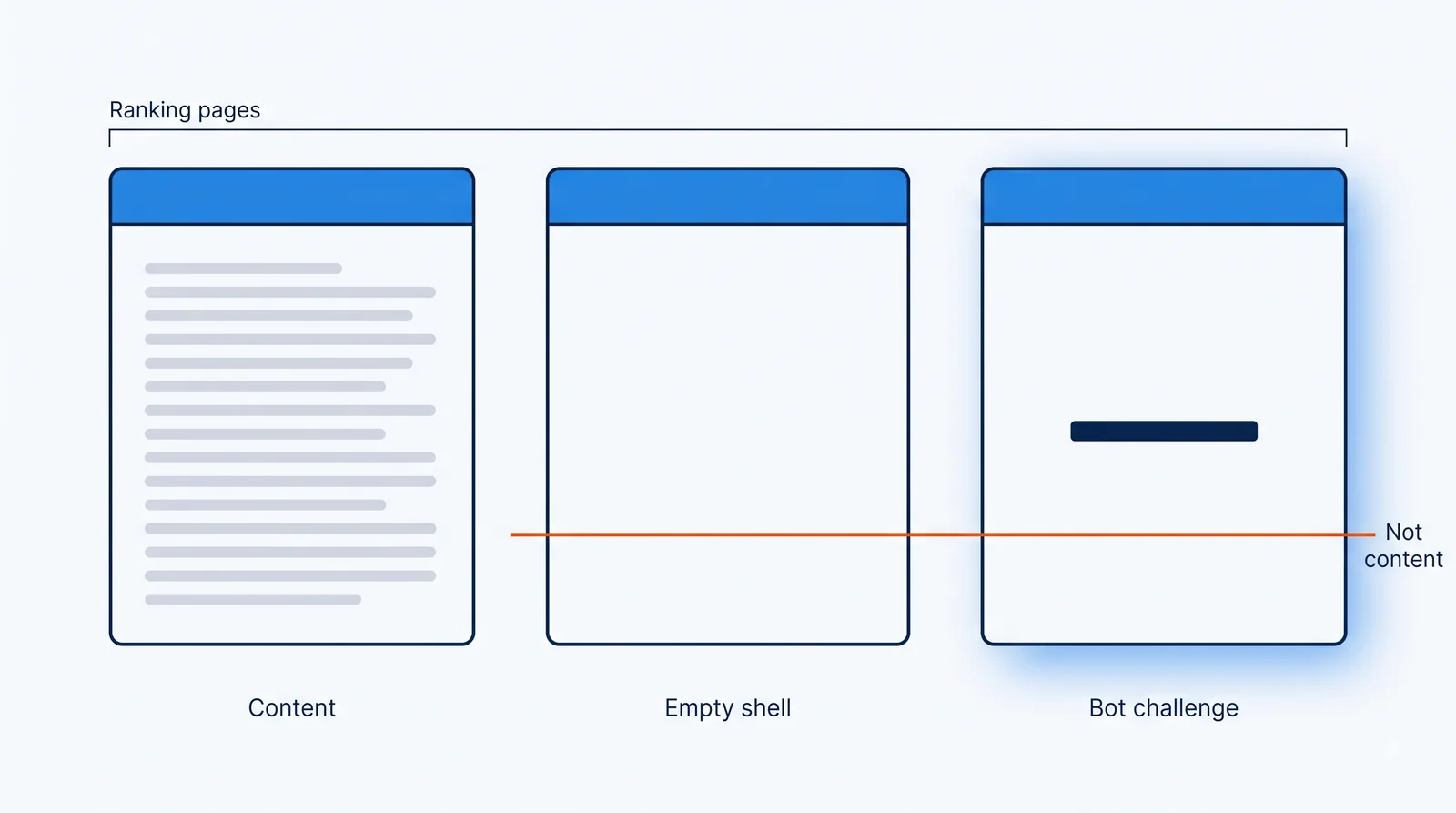
Dirty inputs. When a tool pulls the pages ranking on Google for your keyword — to build term recommendations or content coverage analysis — some of what comes back is not content at all: empty page shells, bot-challenge and verification pages. Left unfiltered, they leak nonsense into the content recommendations, because the tool counts whatever came back rather than checking that a human ever wrote it. We found this in our own pipeline and now filter for it; it is the kind of accuracy work no marketing page mentions, and it is exactly what question four below is for.
Calibration to the wrong target. Our first scoring meter rewarded matching the vocabulary and coverage of the content already ranking — the standard content optimization playbook across SEO tools. A meter can be computed precisely and still point at the wrong target. We recalibrated ours against independent blind reviews — articles scored without any meter in view — and we now state plainly what each score does and does not predict.
Measuring the page when the decision is per-passage. In our testing, some citation links point at a single sentence inside a page: the unit of citation is the passage, not the page. We think that is why the SEO industry's favourite page-level signals came back null in our measurements — higher-authority domains won and lost in almost equal measure in our matched pairs, and pages answering more searcher questions were cited at nearly the same rate as pages answering fewer (58.8% against 58.2%, across the same 33-keyword harvest). We have not shown causation and our research page says so; what we have shown is that the page-level signals do not move with citation, and that the citation itself lands on a passage. A platform reporting only page-level properties — authority, content coverage, question counts — is measuring pages rather than passages: real figures about the wrong unit.
How do you check a platform's data accuracy yourself?
You check a platform's data accuracy by sampling the engines yourself and comparing what they actually say with what the dashboard reports — the method is the same whether the product calls itself SEO software, a GEO tool or an answer engine optimization suite. The check needs no paid tools, because the assistants themselves are the free AI tools for the job. We built LiamVi around what we chose to measure, so read these five questions as our view of what matters, not a neutral standard — then use them on every vendor, including us:
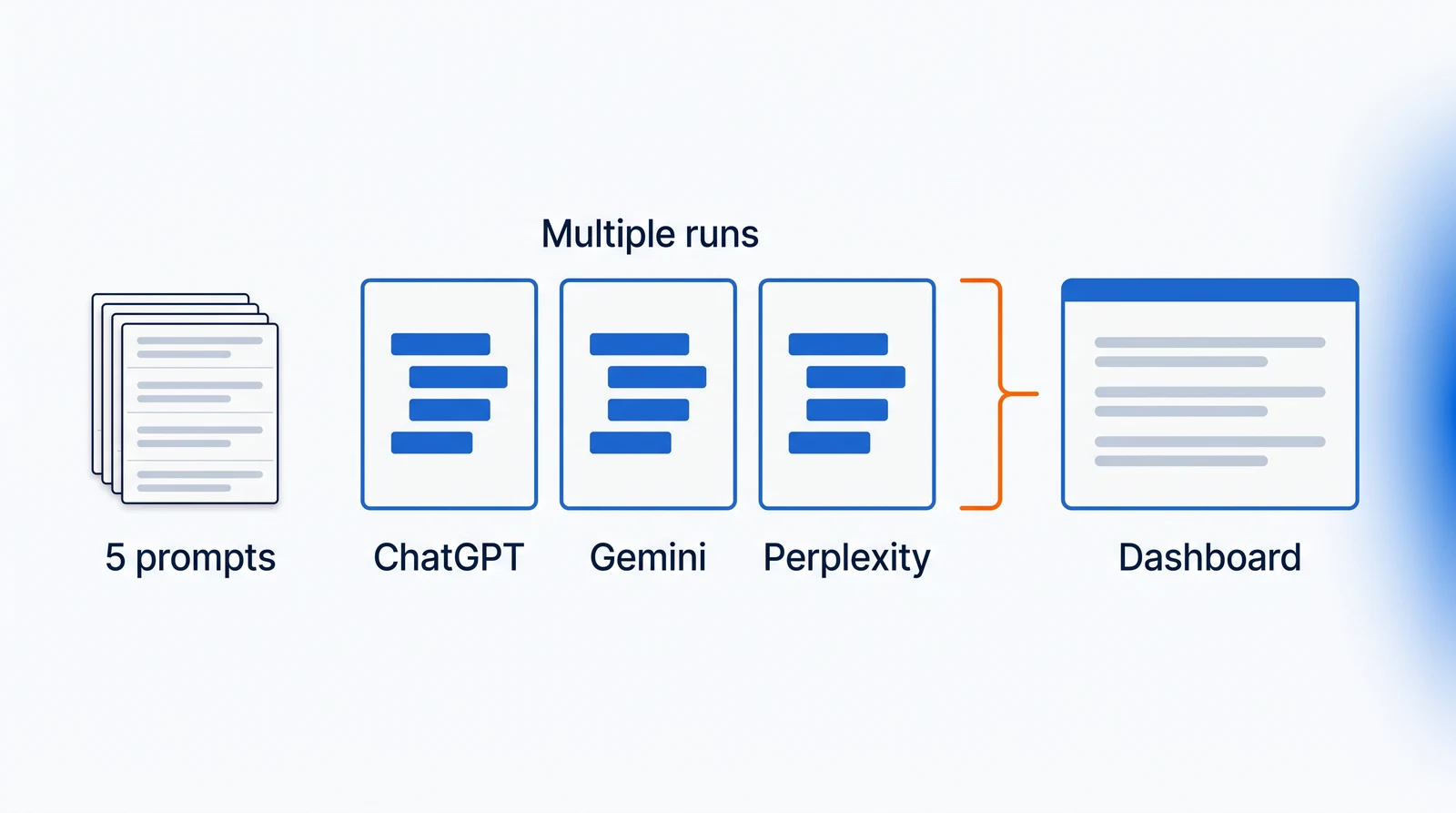
- Run your own real prompts. Put five of your tracked prompts to ChatGPT, Gemini and Perplexity directly, multiple times each — phrased the way your buyer personas actually ask — and compare the mentions and citations you see with what the platform reports. Expect run-to-run variance: a dashboard whose numbers never move should worry you more than a dashboard that wobbles.
- Ask for the sample behind any number. How many prompts, which personas, how many runs, which engines, checked when. A figure with no sample and no date is an opinion with decimals.
- Ask for per-surface, multi-engine numbers. The engines do not move together — Gemini, Perplexity and Google's generative AI features each behave differently — so one blended visibility score hides which AI search surface you are actually losing.
- Ask what happens to junk in the input data. The ranking pages a tool uses as input include empty shells and bot-challenge pages; a vendor who has never thought about filtering them is recommending content terms from pages nobody wrote for a reader.
- Ask what they publish. Methods, samples, limits — and results that flattered nobody. Our own research page includes null results on purpose: a vendor whose every measurement supports their pitch is not measuring, they are marketing.
A vendor with accurate numbers survives all five questions without flinching; the spot-check costs them nothing if the measurement is real. Use it before you sign, not after.
The short version
There is no crowned best accurate data platform for AI search optimization in 2026, and no published audit names Surfer, Semrush, Profound, LiamVi or anyone else and ranks them on accuracy. The category has been measured — the twelve-tracker test above put the spread at 67% to 94% — but a spread is not a league table, and any guide that declares a winner without a method is demonstrating the problem. What exists instead is verifiable practice: multi-run, per-engine measurement, published methods, stated limits, and input data clean enough to trust. Surfer's citation numbers passed the only cross-check we know of on their data — ours — and we have said above what that check does and does not prove. The rest, our own product included, you should test with real prompts before you pay, because any strategy built on unmeasured numbers inherits their errors, and so does every decision you take from it. Your content earns citations by adding evidence, not by echoing the consensus — and your platform earns trust the same way. Tomorrow's version: run five prompts through two engines, compare against whatever visibility tool you use, and use the five questions. Measurement beats confidence in SEO and in generative engine optimization alike, and you can tell them apart yourself — no audit, and no vendor's word, required.
Sources
- GTechMe — We Tested 12 AI Visibility Tracking Tools: Accuracy Compared — 12 platforms graded against 600 manually verified prompt-answer pairs, five AI surfaces, four weeks in May–June 2026; platforms anonymised. Checked 27 August 2026.
- Surfer — AI Tracker — the product page and its claimed surfaces, checked 27 August 2026.
- Semrush — AI Visibility — the product page, checked 27 August 2026.
- Profound — the product site and its claimed surfaces, checked 27 August 2026.
- Peec AI — the product site and its claimed surfaces, checked 27 August 2026.
- Otterly.AI — the product site and its claimed surfaces, checked 11 August 2026; the page would not open to us on 27 August 2026, so that earlier reading is the one we stand behind.
- Ahrefs — Brand Radar — the product page and its claimed surfaces, checked 27 August 2026.
- Our research — methods, samples and limits — the 33-keyword citation harvest, the pre-registered framing tests, the 21 matched authority pairs and the blind calibration this article draws on, null results included, checked 27 August 2026.