Does ChatGPT have its own search index? What OpenAI documents, and what others have observed
Yes, by OpenAI's own account. Its head of product for ChatGPT told a US court in 2025 that the company was building its own search index, and one of its help pages describes an index ChatGPT can search in one workspace setting. Its page on everyday use says the product sometimes works with other companies' engines. No public document we found says how ordinary questions are divided between the two today.
We build software that tracks which pages AI assistants have cited, so where ChatGPT's results come from bears on our own work. We have not measured its index ourselves. What follows is the company's wording, from its help pages and from the court record, each dated, and then what two other companies saw in the data the assistant streams to users' browsers, credited to them.
Does ChatGPT have a search engine of its own?
ChatGPT has a search index of its own in at least one setting: offline web search, which OpenAI offers to eligible workspaces, serves results from what the company calls "the OpenAI index or cache". Eligible workspaces include certain Enterprise, Edu, Healthcare, Teachers, regulated and federal ones. With it switched on, users may notice that "results come from OpenAI's indexed and cached web content instead of a live external search provider at request time." We read the page as the Internet Archive stored it on 15 August 2026. Our page about Wikipedia quotes another line from the same help page, and the earliest outside report of the setting we found is Search Engine Roundtable's, from 19 May 2026.
The same page keeps its limits in view. Offline web search "does not guarantee coverage of the entire public web", a page missing from the store cannot be retrieved through it, and it "is not a full substitute for live web search." Our reading, and it is only a reading: a store of crawled pages that answers queries is what a traditional search engine calls its index. The page describes it for one workspace setting and says nothing about the queries most users run.
A partner's announcement points the same way. Cloudflare's release of 8 July 2026 announced a research pilot with OpenAI that, in Cloudflare's words, aims to draw on its real-time network insights to improve "AI systems' indexing and crawling of the web". OpenAI's words in the release come from its VP of Research, Nick Ryder, who says the pilot "will allow us to explore whether network-level insights can help us discover content more efficiently." That is work on how the company finds pages, not a description of how today's results are built.
What has OpenAI said about its index in court?
Under oath in 2025, an OpenAI executive described an index meant to handle most ChatGPT queries, and said the company was not yet on track to get there. Nick Turley, whom the court lists as OpenAI's Head of Product for ChatGPT, testified at the remedies hearing, held from 22 April to 9 May 2025, in the US government's antitrust case against Google. Judge Amit Mehta's remedies opinion of 2 September 2025 records, in the court's words, that quality issues with outside services "compelled OpenAI to build its own search index", and quotes him saying access to the data behind Google's index "would accelerate the development of [OpenAI's] own index." The goal he described was to answer 80% of queries from OpenAI's own index, with the long-tail remainder the hard part.
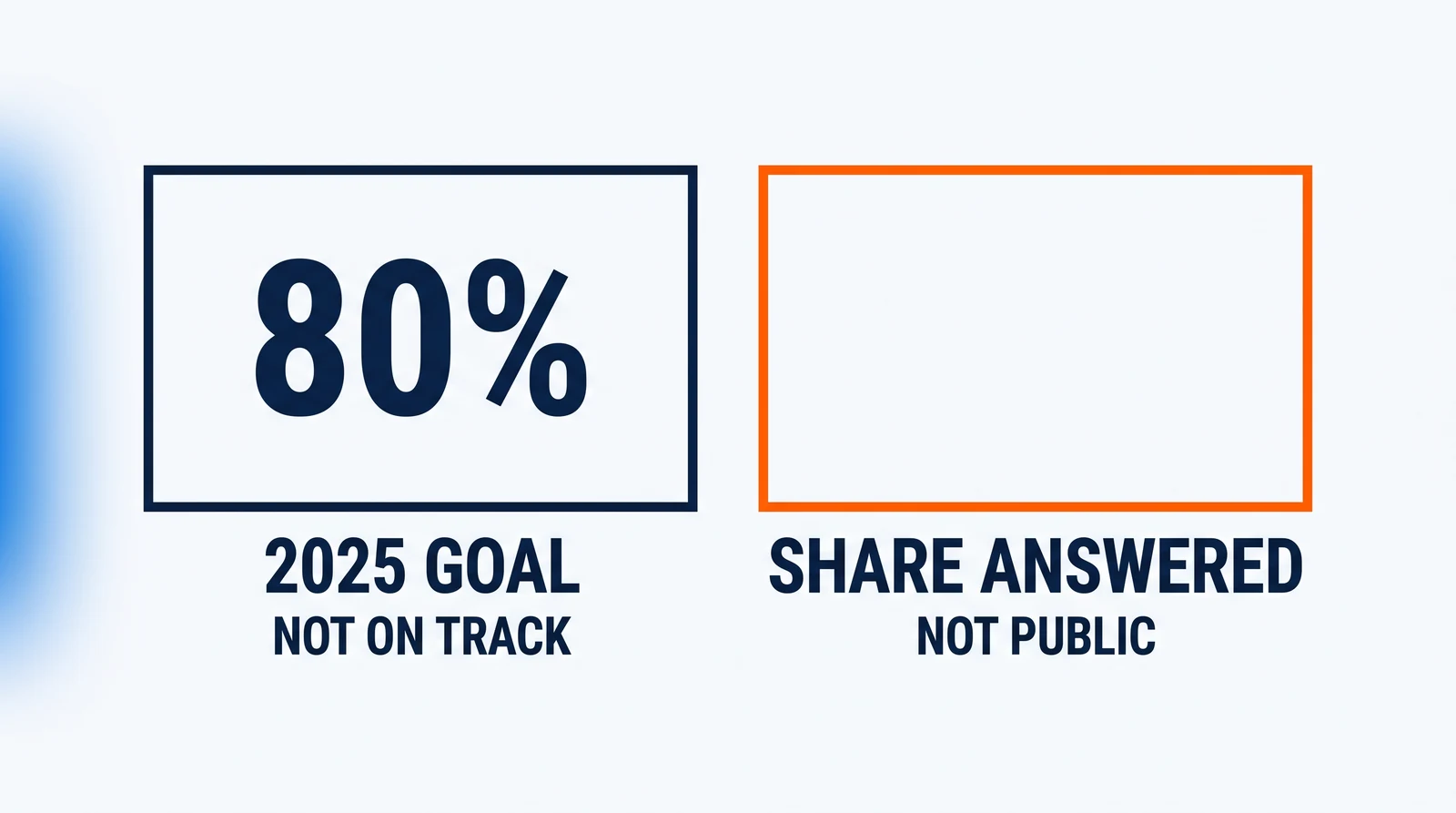
The US and state plaintiffs' responsive proposed findings of 29 May 2025 add the limit: they cite Turley saying the company was "not on track currently" to use its own "index technology" for even 80% of queries by the end of that year. By "index technology", the same filing says, he meant an "entire system" that ranks and retrieves results. The plaintiffs' main proposed findings, filed the same day, cite an exhibit on how many queries used the company's own index, and the public version gives no number. The court record shows an index being built in 2025 with most queries as its target, not how much ordinary questions relied on it then or do today.
Where do ChatGPT's ordinary search results come from?
ChatGPT's everyday web search sends at least some questions to other companies' engines, according to OpenAI's own help text. OpenAI's help page on the subject was updated in August 2026 and is now titled Searching the web with ChatGPT. It says "ChatGPT search sometimes partners with other search providers", and that when it does, it "typically rewrites your query into one or more targeted queries that it sends those providers." In plain terms, your question may reach another company's engine as a rewritten, more targeted query. The copy archived on 23 September 2026 still carries the line, and our piece on AI and SEO also cites it. The page names the outside services only through two privacy links, Microsoft's privacy statement and Shopify's privacy policy. It does not use the word Bing.
The 2024 launch post said much the same at the start. The product launched on 31 October 2024 drawing on third-party search providers and on content supplied directly by OpenAI's partners. The current help text adds that results are ranked "using multiple factors intended to help users find relevant, reliable information" and that "Placement is not guaranteed."
What none of these pages says matters as much. They do not say if an ordinary query touches that index, how often an outside service is called, what the index is named, or which factors do the ranking. A claim that ChatGPT has stopped using Google or Bing, or a share of queries answered from its own index, goes beyond anything on the company's pages we read or in the court record above.
What have outside researchers seen in ChatGPT's traffic?
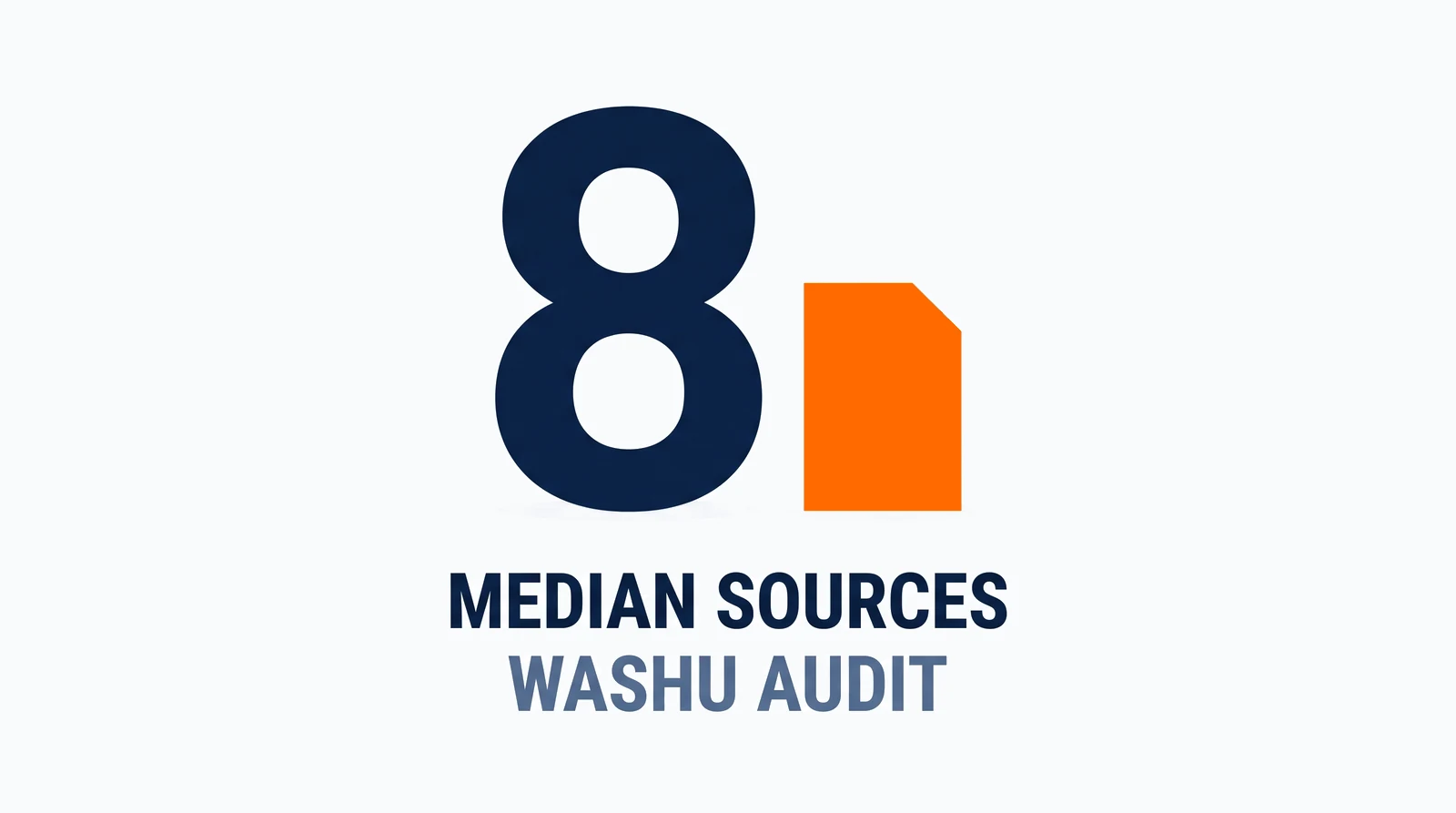
Peec AI and Resoneo, two companies that read the data ChatGPT's servers stream to a user's browser while a reply is written, each recorded a field in that stream that labelled each result with one of four sources, until 21 July 2026. Peec AI, which sells AI-visibility tracking, published a study of this on 4 September 2026 under Tomek Rudzki's byline. Between 21 May and 21 July 2026 a field called result_source carried only four values in the server events: Labrador, Bright, Oxylabs and SERP. Peec opens on the assumption, common in SEO circles, that ChatGPT retrieves "only through Bing and Google", and it reads Labrador as "its own retrieval index", a family of indexes by content type that includes web, PDF, news, Wikipedia, local and shopping. Its methods include reading the assistant's server-side events and testing its lockdown mode, which Peec says "can't browse live pages but can still return offline or cached results". Peec gives no count of the responses behind that data.
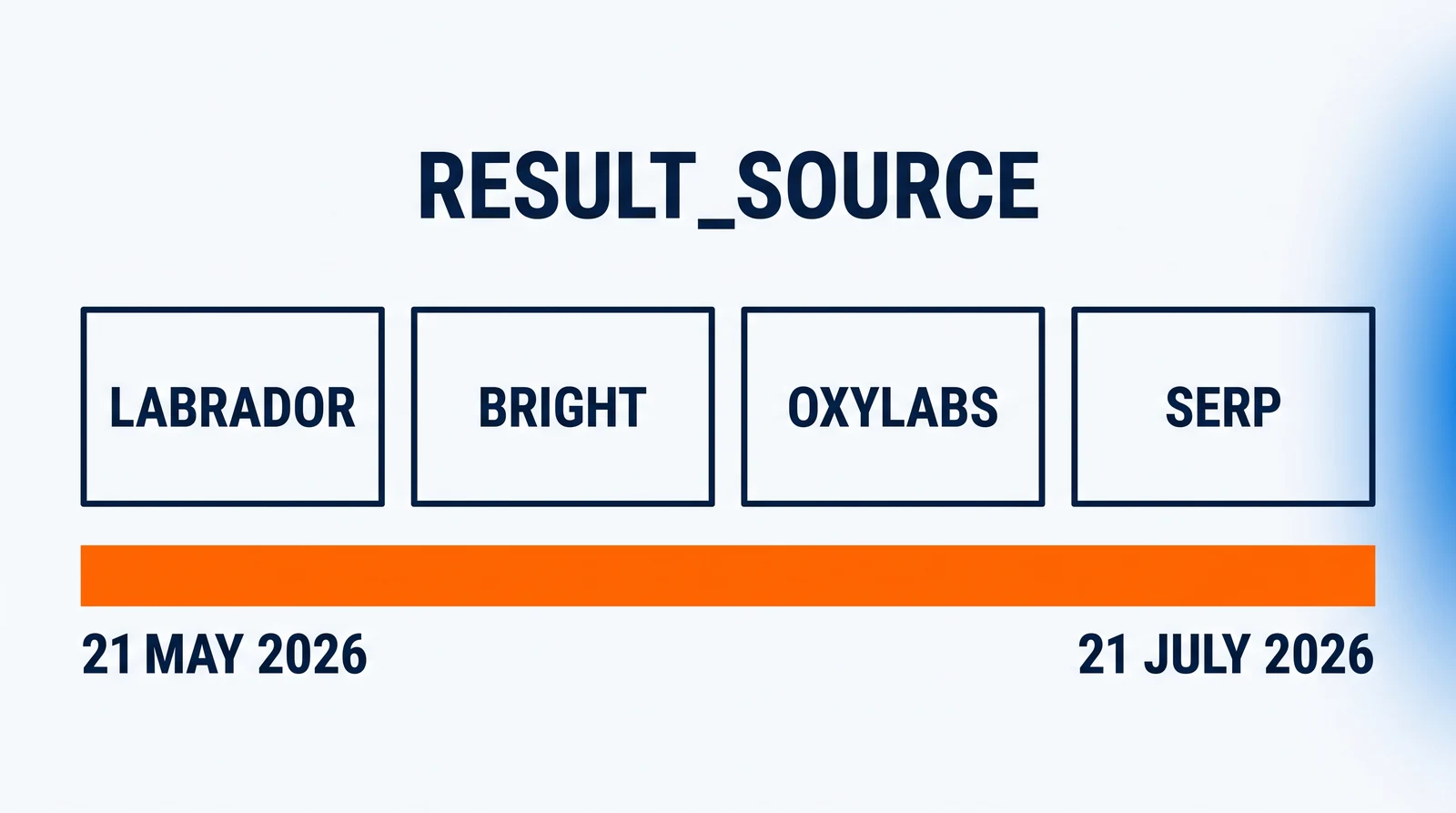
Resoneo, an SEO consultancy, published its own capture in July 2026 and updated it in August. The field appeared on 760 of the 1,249 ChatGPT answers in that capture, and the last labelled stream was on 21 July. Resoneo describes its corpus as "real conversations on real accounts", free, paid and logged out. It credits Suganthan Mohanadasan with putting the field and its four values into the public domain, and it describes what the model usually works from: a title, an address and "roughly two hundred characters". Where the two companies' work overlaps, it agrees: separate captures report the same four labels and the same end date.
Peec goes further and lists what it sees beside its own index: "at least eight other providers", including Bright, which it calls "very likely Bright Data", and Oxylabs, both scraping Google, a third channel labelled serp, Yelp, TripAdvisor and two anonymous internal feeds, with Bing showing up mainly in Deep Research sessions. Malte Landwehr, Peec's CPO, picked a site with zero organic traffic, asked only ChatGPT about it on chosen days, and saw Google Search Console show a traffic spike on those days. Peec states its limits plainly: of Bright it says "I don't imply it's the main provider, this is the provider we see in Server Side Events", and it warns that "Some of what's documented here may already look different by the time you read it."
Hold all of this at the weight it can bear. None of the OpenAI pages we read mentions the result_source field, and we found no OpenAI statement on what Labrador, Bright, Oxylabs or SERP refer to. The labelled field has disappeared, so that window cannot be re-run; since then, Resoneo says, "you recognise an engine by the shape of what it delivers", which is inference rather than a label. Each set of data belongs to the company that collected it, and Resoneo states its own limit: "We do not know what gets a page in there."
What is the difference between ChatGPT and SearchGPT?
SearchGPT was OpenAI's 2024 prototype of AI search, and its features were folded into ChatGPT search when that launched on 31 October 2024. The launch post says the company "brought the best of the SearchGPT experience into ChatGPT", so the prototype's features now sit inside the main product. That history makes no difference to where a given result came from.
What can a site owner actually control?
OpenAI documents two conditions in your hands: its OAI-SearchBot crawler is allowed to visit your site, and your host lets its requests through. OpenAI's crawler documentation says OAI-SearchBot "is used to surface websites in search results in ChatGPT's search features", and that sites opted out of it "will not be shown in ChatGPT search answers, though can still appear as navigational links." The setting is independent of GPTBot, the training crawler, although the page adds that where both are allowed "we may use the results from just one crawl for both use cases".
The help text on searching sets out the same two conditions for eligibility: allow the crawler, and make sure your host or content delivery network lets through traffic from OpenAI's published IP addresses. The offline page lists a robots.txt block among the reasons a page may be missing from the company's index or cache. In our own harvest, only 1 of the 230 domains we looked at blocked OAI-SearchBot, too few to test if blocking it changes anything.
The practical checks are small, and you can run them today:
- Your website's robots.txt does not disallow the crawler; a site opted out of it is kept out of its search answers, though it can still appear as a navigational link.
- Your firewall or CDN lets through requests from the IP ranges OpenAI publishes for OAI-SearchBot.
- A robots.txt change takes about 24 hours to take effect, so check again a day later.
None of this tells you whether your pages will be cited or appear in an answer, or which source sat behind a given result; the company's own page says placement is not guaranteed. Which matters more for your pages, OpenAI's own index or a partner's results, is a question the documents leave open, and so do we.
Sources
- OpenAI — Offline web search for ChatGPT workspaces — "the OpenAI index or cache", eligible workspaces, coverage and limits. Read through the Internet Archive copy of 15 August 2026; the live page answered 403 on 6 October 2026.
- OpenAI — Searching the web with ChatGPT — partner search providers, query rewriting, the Microsoft and Shopify privacy links, ranking factors, eligibility. Read through the Internet Archive copy of 23 September 2026; the live page answered 403 on 6 October 2026.
- OpenAI — Introducing ChatGPT search (31 October 2024) — third-party search providers and partner content; the SearchGPT prototype. Read through the Internet Archive copy of 2 October 2026.
- OpenAI — Overview of OpenAI Crawlers — OAI-SearchBot, GPTBot, the ~24-hour robots.txt lag. Checked 6 October 2026.
- Cloudflare — Cloudflare Announces Research Pilot with OpenAI (8 July 2026). Checked 6 October 2026.
- Peec AI — ChatGPT built its own search index (Tomek Rudzki, 4 September 2026). Checked 6 October 2026.
- Resoneo — What ChatGPT pulls, what it shows, what it cites (July 2026, updated August 2026). Checked 6 October 2026.
- Search Engine Roundtable — report on OpenAI's offline web search page (Barry Schwartz, 19 May 2026). Checked 6 October 2026.
- US District Court for the District of Columbia — Memorandum Opinion on remedies, United States v. Google LLC, No. 20-cv-3010 (APM) (Judge Amit P. Mehta, 2 September 2025) — Nick Turley's testimony on OpenAI's own search index, as the court summarises it; the witness list naming him Head of Product, ChatGPT. Checked 6 October 2026.
- US Department of Justice — Plaintiffs' Remedies Responsive Proposed Findings of Fact (filed 29 May 2025, redacted public version) — "not on track currently"; "index technology" as an "entire system". Checked 6 October 2026.
- US Department of Justice — Plaintiffs' Remedies Proposed Findings of Fact (filed 29 May 2025, redacted public version) — the exhibit on ChatGPT queries answered from OpenAI's own index, described without its figure. Checked 6 October 2026.