Do AI assistants cite paywalled content: what the paywall-penalty test measured, and what it left out
The figure you are most likely to meet, paywalled content drawing no AI citations at all, comes from a study the PR firm 5W released on 20 July 2026 with Everything-PR, a site under the same ownership. That study rests on a single test: 40 queries put to one assistant, Claude with web search. The zero is a result about that test, not a rule about paywalls. Set beside the licensing announcements some of those newsrooms signed, Google's own documentation and a larger measurement of Google's AI Overviews, the test reads as one data point on one assistant, with a good deal it could not see.
We build software that records which pages AI assistants cite, so any finding about who gets cited sits close to what we sell. We have measured nothing about paywalls. No figure below is ours, and each one travels with the organisation that produced it.
What we read: the ranking pages Google returned for this question from a United States location on 28 September 2026, the documents behind their figures, and two studies found by searching beyond them, each opened that day.
What did the paywall-penalty test measure?
5W's index measured the share of one assistant's citations, across 40 queries, that went to publishers in each of four access models. The study is The Paywall Penalty: The 2026 Everything-PR × 5W AI Communications Paywall Visibility Index, and the release describes 5W as a firm that offers generative engine optimization and "proprietary AI visibility research" alongside public relations. The 40 queries ran across six categories, from hard-news retrieval and biographies to definitions, recommendations, consumer and medical questions and industry forecasts. The release names the instrument as "Claude with real-time web search", with no model version or number of runs, and says each publisher was assigned in advance by its "primary access posture".
In the index 5W published with Everything-PR, which discloses that the two share common ownership, hard-paywall publishers such as The Wall Street Journal, the Financial Times, Bloomberg and Nikkei got 0% of the citations, and metered publishers such as The New York Times, The Washington Post and The Economist also got 0%. Freemium publishers took 8.7%, more than half of it Forbes alone, and open-web sources such as Reuters, Wikipedia and SEC.gov took 91.3% in the same co-owned index. The two paywalled groups held 14 titles, 7 behind a hard paywall and 7 behind a metered paywall. 5W calls that gap the "Paywall Penalty".
The four shares rest on a total the release never states. Neither the release nor the study page says how many citations the 40 answers returned, so the open-web share could stand for a few dozen links or a few hundred, and a share without a count cannot be checked.
The release's most vivid example is what it calls the scoop paradox: "The Wall Street Journal broke the News Corp–OpenAI licensing deal. When the study queried that story, AI returned Nieman Lab, Wikipedia, and TechCrunch — not WSJ." The WSJ case is one of four examples the release draws from the set, not a description of all 40 queries.
What does one test of one assistant leave out?
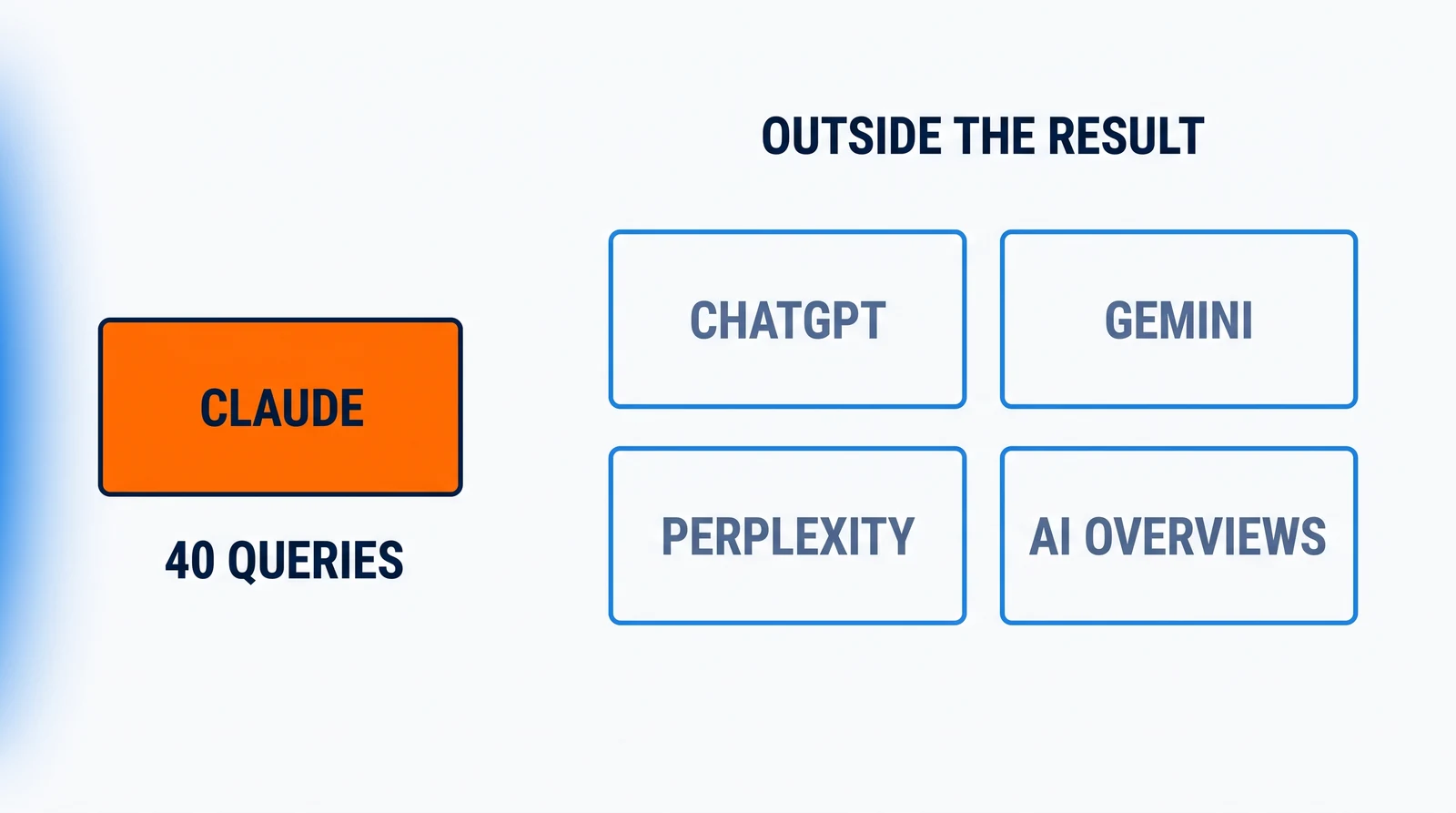
Claude is the only instrument the release names for the 40 queries, so ChatGPT, Gemini, Perplexity and Google's AI Overviews sit outside the result. The result says what Claude returned for those queries and cannot tell you how the others behave.
Shadow's guide, last updated on 24 July 2026, carries the result further than the release does: it says coverage in those outlets "generates zero AI citation value under current engine architectures" and that the study ran "across multiple AI engines"; 5W's release names one.
The study page explains the result as a crawler problem: "An engine can only cite what it can read", and a metered paywall "still blocks the crawler on the same terms it blocks a human reader". The 40 answers show which sources were cited, not what a crawler could reach, so the crawler explanation is the authors' view rather than something the test measured. A publisher can also set up its wall so that a search crawler reads behind it, as the section on Google below shows.
The published method is thinner than the release promises. The release says the full study, "including the 40-query set", is on Everything-PR; the study page we read on 28 September 2026 carries a two-sentence methodology and no query list, no engine, no count and no run dates beyond "covering 2025–2026 query data". The methodology guide it points to advises 50 to 100 prompts, run at least twice on each of five engines. 5W's release announces a second wave of 500 queries on five engines, still "under development", and that second wave is the test that would show whether the result travels.
Everything-PR is candid about the limit too. Its summary of the study, published on 11 September and updated on 17 September 2026, calls the finding "a strong open-web advantage in its tested set, not a universal rule for every query or engine." Without the queries or a citation count, we could not check what Claude returned; the open question is how far that result reaches.
What do the licensing deals say about showing paywalled articles?
The licensing deals show some paywalled titles gave OpenAI permission to display their journalism in ChatGPT's answers, which is a contract term rather than a measured result. The Financial Times announced on 29 April 2024 that "ChatGPT users will be able to see select attributed summaries, quotes and links to FT journalism in response to relevant queries." OpenAI's News Corp announcement of 22 May 2024 gives it "permission to display content from News Corp mastheads in response to user questions", naming The Wall Street Journal, Barron's and The Times.
At least 4 of the 14 paywalled titles in the test, the FT, The Wall Street Journal, Barron's and The Times, are covered by those two announcements. The FT and News Corp terms cover ChatGPT, though, and 5W's test ran Claude, so the licensing record and the test never meet on one assistant and neither contradicts the other.
A licence to display is also not proof that an assistant will cite a publisher correctly. The Tow Center for Digital Journalism put 1,600 queries to eight chatbots, asking each to identify a news article from an excerpt, and reported on 6 March 2025: "Content licensing deals with news sources provided no guarantee of accurate citation in chatbot responses." Which agreements exist, and what their public record shows, is set out in our read of the licensing deals.
Does AI have access to paywalled content?
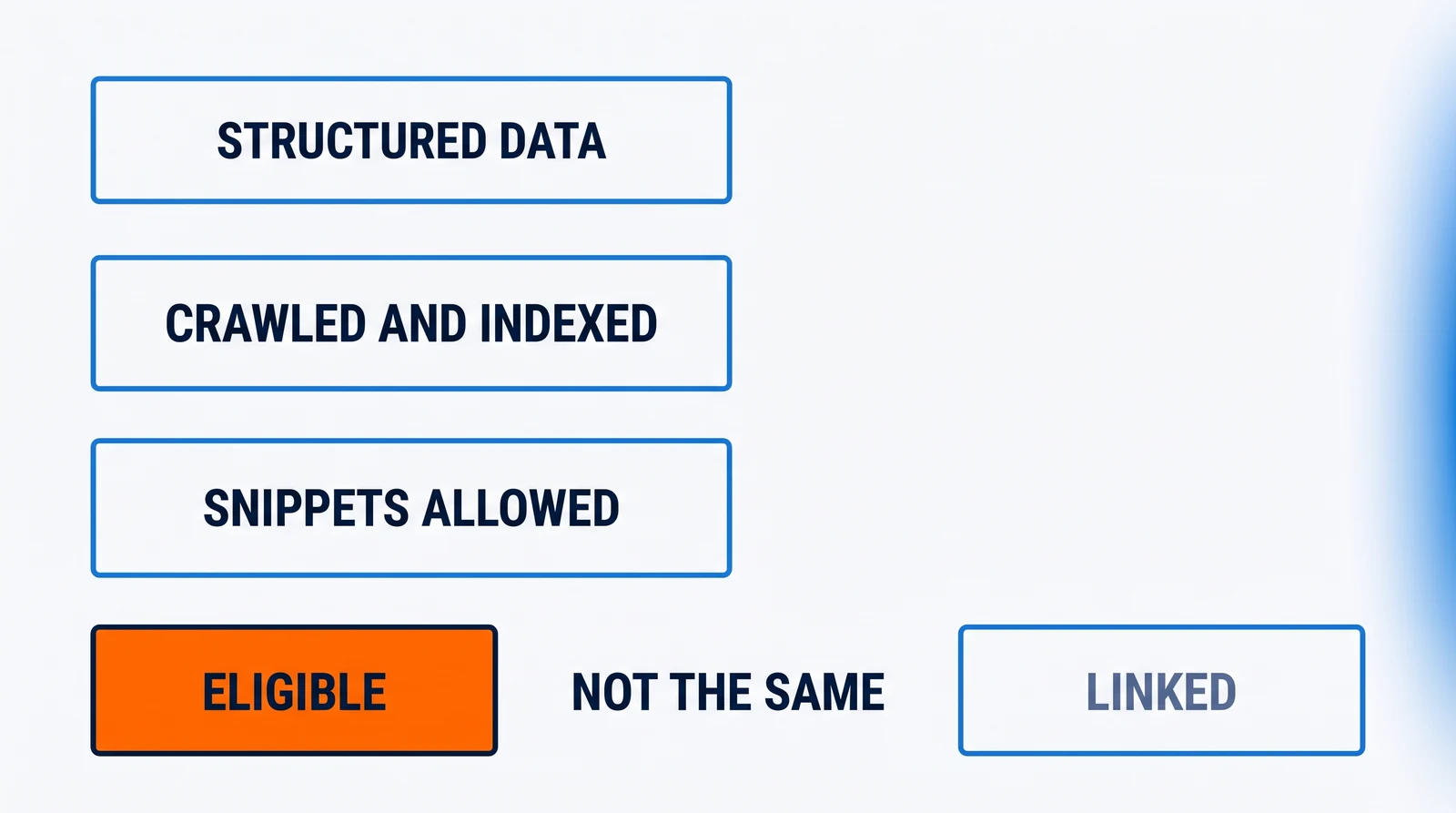
On Google's surfaces, a paywalled page can qualify for a link in AI answers when the publisher allows indexing, because Google's documentation shows publishers how to let Googlebot crawl and index text behind a paywall. Its structured data guide for paywalled content, last updated on 8 September 2026, exists to tell such content apart from cloaking and "only applies to content that you want crawled and indexed." The page on AI features, last updated on 10 December 2025, says a page "must be indexed and eligible to be shown in Google Search with a snippet" to appear as a linked source in AI Overviews or AI Mode, with "no additional technical requirements." On our reading, an article that the publisher marks with that structured data, lets Googlebot crawl and index, and does not block snippets meets the stated eligibility. Eligible is not the same as linked.
One published measurement did look at what AI Overviews link to. SE Ranking, which sells the AI Overview tracker it used, ran 100,000 US news queries on 28 April 2025 and got 75,550 AI Overviews. It says it tracked 30 news domains, and its methodology section lists 32. The New York Times drew 2,818 citations in 2,392 of those AI Overviews, 87% of them to full articles, and 96% of its article citations pointed to paywalled pages. The Washington Post drew 564 citations, 99.13% of its article citations to paywalled pages. The study, by Yulia Deda, published on 2 June 2025 and updated on 19 January 2026, does not say how it counted an article as paywalled.
SE Ranking's AI Overviews count from April 2025 and 5W's Claude test released in July 2026 point opposite ways, but they measured two assistants at two times, so neither is a rule for the other. Whether a page is crawled or indexed is also a separate event from whether it is cited, which is why we treat the citation, not the crawl, as the unit that matters.
Where should coverage go, if a paywall might hide it?
The right placement depends on which assistants your readers and buyers use, and no test in this article settles that for you. Before acting on any paywall figure, ask which assistant produced it, which queries it asked, on what dates, and how many citations stand behind the share; read those questions as our view, not as a neutral standard.
The check that matters is one you can run yourself. Take the questions your readers would actually type, run them on the assistants you care about more than once, and note whether the titles you follow show up as a cited source, a quote, or not at all. A placement that earns prestige with human readers and one that an assistant can cite may be different placements, and only you can weigh them for your business.
Subscription publishers face the same call from the other side. "Subscription revenue depends on restricting access", as Everything-PR's summary puts it, and the same summary argues that AI visibility benefits from leaving some material open. Google's flexible sampling guidance covers metering and lead-in previews for Search, and none of the pages we read measured what an open lead-in does for how often paywalled content is cited in AI answers.
Google has also begun a pilot that pays some sites when their content shapes an AI answer, which is a different unit again. The figures will keep moving; what you can check for yourself stays the same.
Sources
- https://www.prnewswire.com/news-releases/new-5w-ai-communications-study-the-paywall-penalty-wsj-ft-bloomberg-nyt-get-zero-ai-citations-302829644.html — 5W Public Relations, "New 5W AI Communications Study: The Paywall Penalty", PR Newswire, 20 July 2026; checked 28 September 2026.
- https://everything-pr.com/the-paywall-penalty-the-2026-everything-pr-paywall-visibility-index — Everything-PR, "The Paywall Penalty: The 2026 Everything-PR × 5W AI Communications Paywall Visibility Index", by Ronn Torossian, 16 July 2026, edited 9 August 2026; checked 28 September 2026.
- https://everything-pr.com/the-geo-citation-audit-six-step-methodology — Everything-PR, "The GEO Citation Audit: Six-Step Methodology", 11 June 2026, edited 15 September 2026; checked 28 September 2026.
- https://everything-pr.com/why-open-web-sources-win-ai-citations — Everything-PR, "Why Open-Web Sources Win More AI Citations Than Paywalled Content", 11 September 2026, updated 17 September 2026; checked 28 September 2026.
- https://www.shadow.inc/resources/paywalled-content-ai-citations — Shadow, "How Paywalled Content Performs in AI Citations", by Jessen Gibbs, last updated 24 July 2026; checked 28 September 2026.
- https://aboutus.ft.com/press_release/openai — Financial Times, "Financial Times announces strategic partnership with OpenAI", 29 April 2024; checked 28 September 2026.
- https://openai.com/index/news-corp-and-openai-sign-landmark-multi-year-global-partnership/ — OpenAI, News Corp partnership announcement, 22 May 2024; checked 28 September 2026.
- https://www.cjr.org/tow_center/we-compared-eight-ai-search-engines-theyre-all-bad-at-citing-news.php — Tow Center for Digital Journalism, Columbia Journalism Review, "AI Search Has a Citation Problem", by Klaudia Jaźwińska and Aisvarya Chandrasekar, 6 March 2025; checked 28 September 2026.
- https://developers.google.com/search/docs/appearance/structured-data/paywalled-content — Google Search Central, structured data for subscription and paywalled content, last updated 8 September 2026; checked 28 September 2026.
- https://developers.google.com/search/docs/appearance/ai-features — Google Search Central, AI features and your website, last updated 10 December 2025; checked 28 September 2026.
- https://developers.google.com/search/docs/appearance/flexible-sampling — Google Search Central, flexible sampling guidelines, last updated 10 December 2025; checked 28 September 2026.
- https://seranking.com/blog/media-presence-in-aios-research/ — SE Ranking, "AI Overviews research: Media presence and paywalled content analysis", by Yulia Deda, 2 June 2025, updated 19 January 2026; checked 28 September 2026.
- https://digiday.com/media/google-rolls-out-pay-value-ai-licensing-program-to-publishers/ — Digiday, "Google rolls out pay-per-value AI licensing program to publishers", by Jessica Davies and Sara Guaglione, 14 September 2026; checked 28 September 2026.
- https://liamvi.com/blog/ai-and-search-engine-optimization — our published position that the citation, not the crawl, is the unit of value; checked 28 September 2026.