How often do ChatGPT fan-out queries use the site: operator? Why the published counts disagree
Published counts of how often ChatGPT's fan-out queries use the `site:` operator run from 0.14% of one company's API capture to 76% of another's small tracked subset, and not one of them is ChatGPT's overall rate. Each counts a different set of searches, collected through OpenAI's developer API or from the app, on different models, prompt sets and months, and none of them is OpenAI's.
A fan-out query, or sub-query, is a search query an AI system writes for itself while it answers a prompt. Google AI Mode and AI Overviews may use a "query fan-out" technique, issuing multiple related searches, Google's documentation says, as we noted when reading Google's own description. A `site:` operator inside one of these searches limits it to a single site: `site:apple.com iphone price`, for instance, asks only for pages on apple.com.
Our business is software that records the sources cited in AI answers, and we have not measured `site:` searches ourselves. Everything below is other people's measurement, each read on its own page on 27 October 2026. We set out what each count measured, where the counts agree, and one check you can run on your own site that does not depend on which number is right.
What does OpenAI say about site: searches in ChatGPT?
OpenAI does not document `site:` searches in the ChatGPT app on the pages we read: not whether, when or how often the app limits a search to a single website.
OpenAI does describe the rewriting behind the scenes. Its help page, Searching the web with ChatGPT, says ChatGPT search "typically rewrites your query into one or more targeted queries", and that after reviewing the first results it "may send additional, more specific queries". The page describes what other publishers call query fan-out without using the term, and it says nothing about scoping any of those queries to a domain.
The developer product has a documented setting for this. OpenAI's web search guide for developers has a section on domain filtering, which "lets you limit results to a specific set of domains", with up to 100 allowed domains, and it notes that "domain filtering is only available in the Responses API with the web_search tool." A developer chooses that setting when building on the API. The guide does not describe what the consumer app does on its own, and it should not be read that way.
The closest thing to a mechanism for the app is Simon Willison's inference. Willison wrote on 20 August 2026 that, "from poking at ChatGPT", he believes its search tool has a shape like `search(query, recency, domains)` rather than encouraging a `site:` operator directly. His post is a reading of the product's behaviour, not OpenAI's documentation.
The search engine that answers any of these searches is not documented per query either; OpenAI's help page says "ChatGPT search sometimes partners with other search providers", without saying which one answers a given search, a question we looked at in more detail.
What did each published count measure?
Every figure below is a share of fan-out queries that contain `site:`, but the searches were collected in different places: through OpenAI's developer API, from the consumer app, or from a source the publishing page does not name. The collection decides what a number can mean, so it comes first in each line.
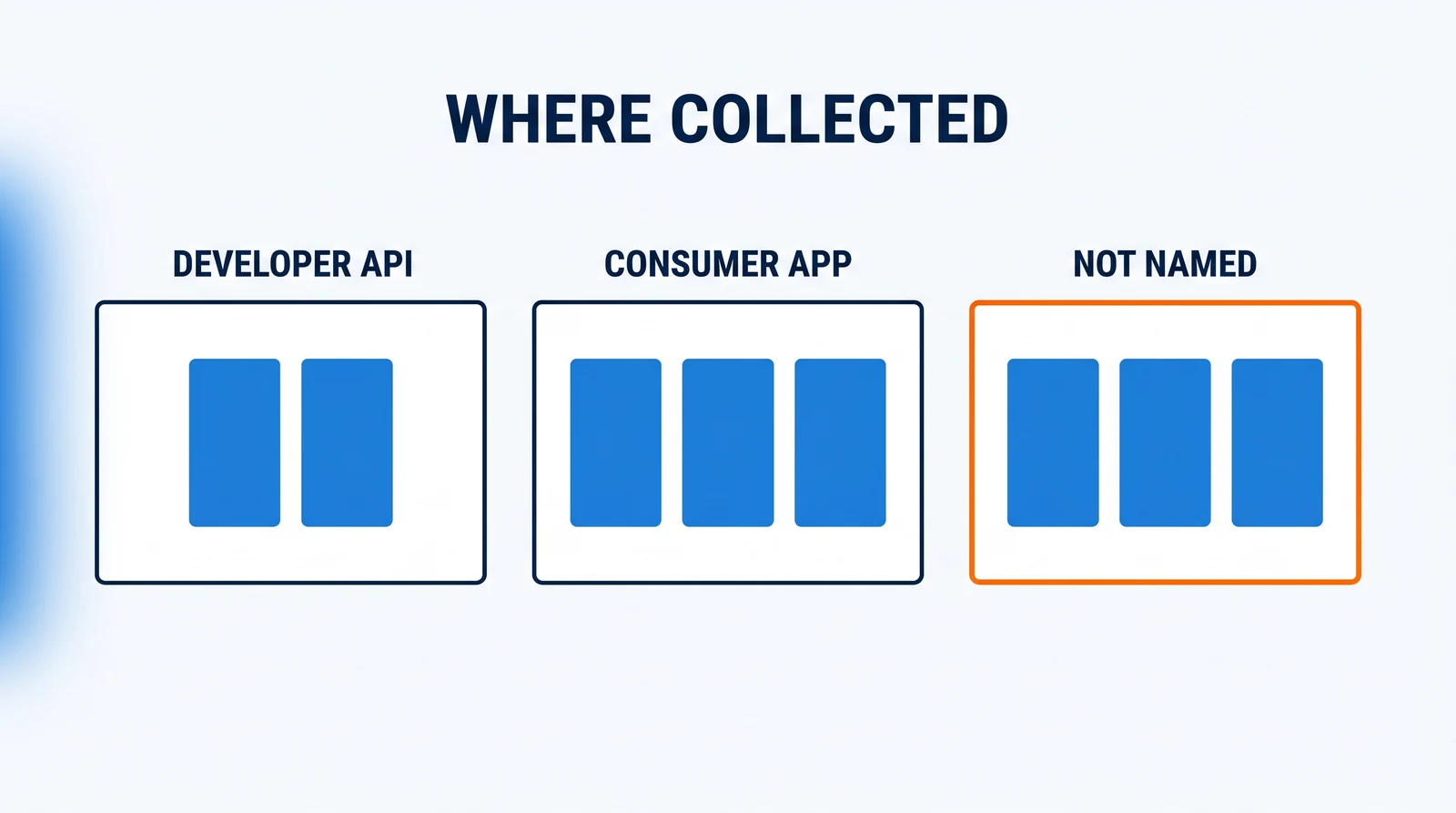
Two counts were read through OpenAI's API.
Dejan, 25 August 2026. Dan Petrovic's capture found `site:` in 0.14% of OpenAI fan-out queries in August 2026: 20 of 14,460. Each search query in it is "the search string the model issues", the exact strings the API returned, taken from three GPT-5 versions called through the Responses API with web search on: 196,692 OpenAI fan-out queries between 1 March and 25 August. Two kinds of Dejan's own prompts drove them, and both are inside every figure: short fixed brand and category prompts repeated daily for visibility tracking, from 21 April, and longer ad-hoc prompts for citation mining, which issued 106,323 of the 196,692. The same capture read 6.43% in March, a month of citation-mining prompts only, and split by model it read 5.88% on gpt-5.2 and 0.15% on gpt-5.5. On 8 August, 0 of 371 contained `site:`, and Dejan's blog post says its capture "records a different pattern" from Promptwatch's.
Dejan applied the same method to two other AI systems' APIs and found `site:` in 198 of 321,131 fan-out queries from Google's models (0.062%) and in none of 33,872 from Anthropic's, in the same capture. Dejan states its own limit: surface, prompt wording and prompt mix are all candidate causes of the gap between its figures and the app's, "and our data does not separate them."
Nectiv, 13 August 2026. Chris Long's study found the model "performs a "site:" search in 64% of all fan-out queries", from about 4,000 prompts spread across industries, with the searches extracted through OpenAI's API on GPT-5.6 Sol. The same study counted 7.61 fan-out queries per prompt on average, all of them, not only the `site:` ones. The period of collection is not stated beyond the publication date.
Three counts were read from the consumer app itself.
Promptwatch, 10 August 2026. Klaas Foppen's report shows the share of all fan-out queries containing `site:` jumping from 0.37% to 16.8% on 8 August: "about 1 in every 280" before, "roughly 1 in 6" after. The series covers the prompts Promptwatch tracks through the app's own interface, and the page does not state how many queries it holds. Willison's caveat belongs beside it: "these figures only reflect the prompts for which they have automated tracking enabled."
Searchable, 19 August 2026. Searchable's study reads 0.2% of the app's internal sub-queries before 8 August and 18% after, across the prompts of more than 5,000 tracked brands, read from the app's research disclosure panel; its daily graph counts only the sub-queries the model generated itself on unbranded prompts. It carries its own caveat with the figure: the `site:` share depends on whether OpenAI began doing more research or only began showing more of it, and if the earlier period disclosed a single sub-query, "those denominators are weak. That's why the headline reads "0.2% → 18%" and not a single dramatic multiple."
Ahrefs, 12 October 2026, updated 22 October. Louise Linehan's study found 6.8% of about 15 million fan-out queries used `site:` to search a single website. The queries came from 66.6 million free, logged-out GPT-5.6 Luna responses in August and September, across all countries, on prompts that stem "from real search demand across every topic and country", in Ahrefs' words. Only 14.4% of those responses contained fan-out queries at all, about 1.6 each, so the 6.8% is a share of those queries, not a share of answers. Ahrefs limits its own figure: a snapshot of one model, and "OpenAI changes how ChatGPT retrieves information constantly."
Three more name no collection method on the page we read.
Graphite, 16 October 2026. Graphite's write-up found 22.7% of about 957,000 fan-out searches contained `site:`. The queries came from 22,953 non-branded entity-comparison prompts, which ask the assistant to compare products or companies, collected from August to early October 2026. The paragraph names neither the surface nor the model.
Peec AI (David Konitzny), July and August 2026. Two figures for the same model, three weeks apart. On 22 July, the operator "appeared in Luna's Query Fan-outs with a share of approximately 43%", Konitzny wrote, against 0.004% of tracked queries on GPT-5.5. On 10 August, he put it at 23% of fan-outs, against 0.3% before, in an article that opened by telling readers watching their "AI Visibility metrics" that the swings during the rollout were "neither an error nor a bug". Neither article states its sample, and Peec's research docs carry both figures.
Wil Reynolds, 26 September 2026. In a LinkedIn post, the Seer Interactive founder reported `site:` in 76% of the searches on GPT-5.6 Luna, up from 22% on GPT-5.5, for "a small subset we track". The size of the subset is not stated.
That is eight shares and a small-subset reading, from seven publishers and an individual.
Most of these figures come from companies that sell AI visibility tracking, such as Promptwatch, which calls itself "The AI visibility platform to monitor, rank, and grow your brand in AI search", Searchable, Peec AI and Ahrefs, or from firms selling SEO and growth services, such as Dejan, Nectiv and Graphite, which Search Engine Journal describes as a growth agency that sells AEO services. Willison places Promptwatch in "the emerging "GEO" space, for Generative Engine Optimization". That is no reason to set a count aside, and it is the reason each one is read here with its own limit beside it.
Why do the counts disagree?
The published `site:` counts cannot be compared directly, because each counts a different set of searches, so the distance between any two of them is no evidence that either is wrong. Which difference drives a given gap is not settled on the pages we read, so each difference below is a possible cause, not a measured one. Through the API, the counts run from 0.14% to 64%; from the app, they read 0.2% and 0.37% before 8 August, 16.8% and 18% after it, and 6.8% across August and September.
The first difference is the surface. Lily Ray, writing in Search Engine Journal on 18 August 2026, set Konitzny's August figure beside Nectiv's 64% and said the gap "could be explained by the fan-out query collection method": Nectiv pulls its queries from OpenAI's API, while several other tools extract them from the consumer interface. Ray treats the whole subject as search work: the assistant is using search engines to gather what it answers from, "which means this is fundamentally an SEO problem." Dejan names the surface among the candidate causes of its own gap with Promptwatch. We read an API call and an app session as two different products, even on the same version.
The second is the prompts. Ahrefs says its prompts are broad, "while many other studies used commercial "best X" prompts that naturally trigger brand lookups." Graphite's prompts are all comparison prompts. Dejan's data shows the effect inside one data set: across its whole window, its longer, ad-hoc prompts produced `site:` in 6.29% of 106,323 searches, against 0.44% of 90,369 for its short daily tracking prompts. Prompt intent moves the searching too. Searchable, sorting its prompts by intent, found the pages consulted per answer rose 2.12 times for commercial "best X" and "X vs Y" prompts, 1.75 times for informational ones and 1.60 times for transactional ones. That is pages consulted rather than the `site:` share, but it points the same way: on the same assistant, we would expect a comparison-heavy prompt set to read higher.
The third is the model, and here the counts disagree even on the older one. GPT-5.5 reads 0.004% and 0.3% in Konitzny's two articles, 0.15% in Dejan's API data and 22% in Reynolds' small subset. Same model, four collections, four numbers.
The fourth is the denominator. Every figure here divides by fan-out queries, not by answers or prompts, and the number of searches per answer moves on its own. Promptwatch saw the average rise from about 1.08 to about 1.83 searches per response on 8 August, and reads the new domain searches as "additional searches layered on top of the generic ones, not a replacement for them". Nectiv counted 7.61 per prompt through the API, and Ahrefs about 1.6 per response that contained any. In Ahrefs' data, 14.4% of responses contained fan-out queries; its October update corrects an earlier wording that called this the share of responses that searched the web. And where the app is the source, a count can only include the searches the app shows, the caveat Searchable attaches to its own figure.
So these shares cannot be averaged, and they cannot be lined up as a trend. A rise from a publisher's March to another publisher's October is two collections, not a single change in the product.
Two pages have set some of these figures side by side before. Ray compared Konitzny's and Nectiv's counts, and Ahrefs' own study page places its 6.8% beside four other studies, each with its setup. Neither carries Dejan's, Promptwatch's, Searchable's or Graphite's count, and among the top-ranking pages we reviewed, none sets the published counts side by side, which is why we set them all out here.
What do the counts agree on?
A `site:` search in these counts is usually aimed at a company's own website, and that is the point the counts agree on.
Ahrefs found that 75.9% of the most common `site:` searches pointed at a brand site, among roughly the 160 most-searched sites, rankings Ahrefs says are "based on our own dataset and prompts". By a brand site it means "a company website like apple.com or ikea.com", as opposed to a retailer, government site, forum or review site. Konitzny found 84% of the domains used with the operator were branded, and adds his own caveat that branded domains "are heavily influenced by the prompt setup". Searchable counted something narrower, the tracked brand's own domain: it was the single largest target, 12.2% of `site:` queries, 113,122 of 927,875 over nine days, while review and community sites were named for many brands each, Reddit for 1,657 brands and Trustpilot for 1,166.
Read together, "a brand site", meaning any company's site, and "the tracked brand's own domain" are different counts that agree on direction, not on size.
Most of these searches name a whole website, one at a time. Konitzny found the root domain used "significantly more often than specific URL paths", which suggested to him that "the search process is generally more broad and exploratory than initially expected": root domains went with broader intents such as review, official, service and comparison, while a search with a URL path was much more strongly tied to product-specific and pricing queries. Only 9% of his cases carried two or three `site:` commands, and in Dejan's data each `site:` search named 1.13 domains on average.
They also agree on when the domain search happens: after a broad one. Dejan found the median `site:` search was the 9th search of a response that issued 17.6 in total, and 6.8% of them were the first one run. Searchable found that 91% of answers with a `site:` query ran a broad query first and then searched named domains; 8.9% opened with one.
What these searches look for is plain enough to act on. Konitzny asked which terms and search intents appear alongside the operator, and found product specifications the most common, at 12% of occurrences. In Ahrefs' data the word "official" appeared in 13.1% of English fan-out queries in September, up from 10.1% in August, and "price" went from 6.04% to 8.88% of fan-outs in a month.
What none of them shows is a citation. Ahrefs says it plainly: the `site:` searches "show what ChatGPT looks up during query fan-out, but not what it ends up citing." A search of your domain is a direct lookup, and a lookup is not a citation: none of these counts measured whether being looked up led to being cited in the final answer.
What can you check on your own site?
The check is whether a page on your own site answers, in plain words, each question a buyer asks about you. That is the kind of lookup these counts describe, and it needs no tool beyond a search box and no view on which count is right. The steps are our suggestion, not a standard:
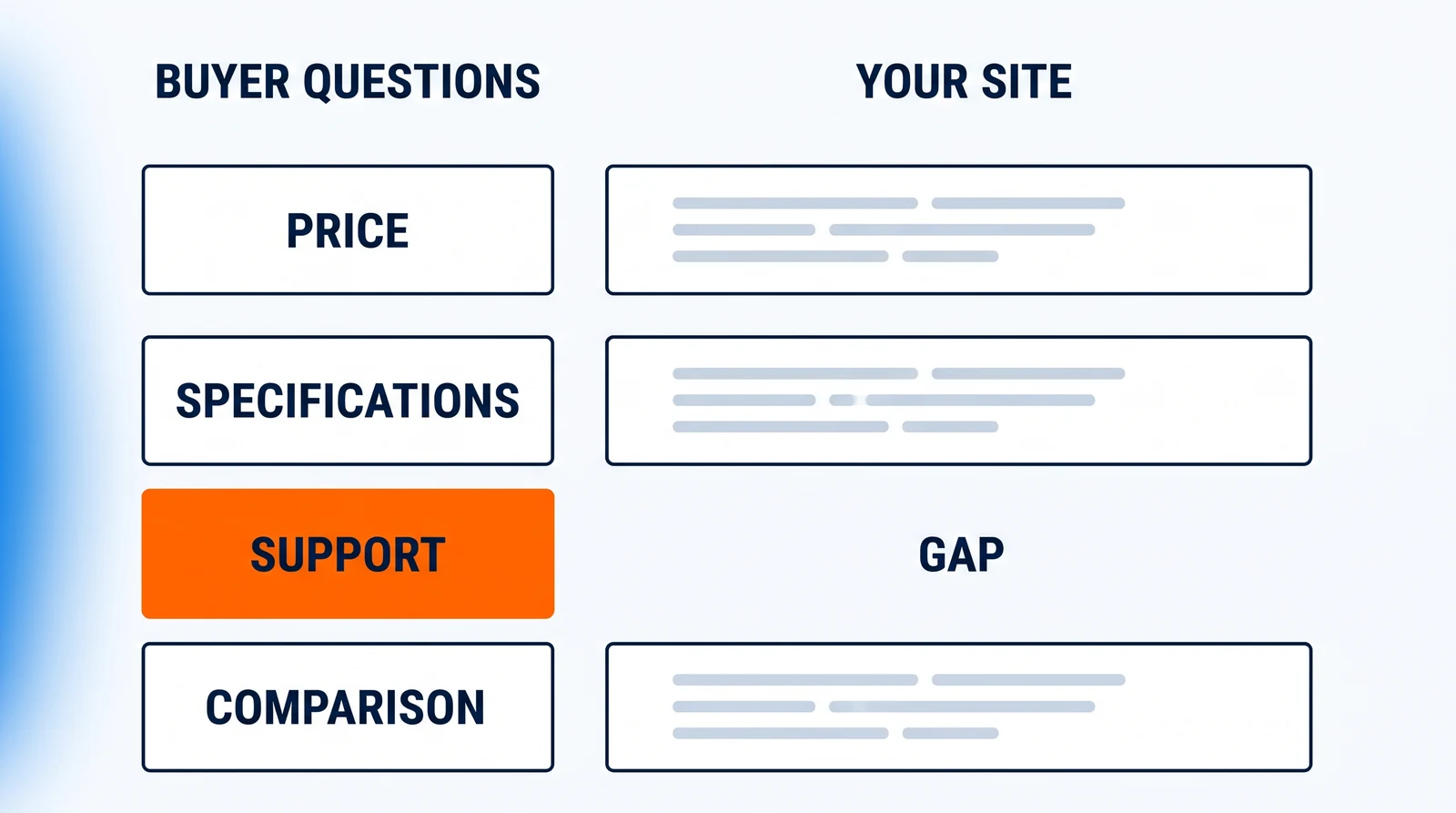
- List the questions a buyer asks about your product or service, in their exact words: the price, the specifications, how support works, and a comparison with a named alternative.
- For each question, find the page on your own domain with the answer, in text on the page, not only inside an image, a PDF or a chat widget. Ahrefs gives the same advice in its own words: those facts need to be on your site "in plain text, on a page it can find."
- As a rough proxy, search your own domain in a public search engine with the question's key words, `site:yourdomain.com price` for instance, and see which pages appear. It is not the search the assistant runs, and which engine answers its searches is not documented. Google's own page on the operator says an indexed URL can show up for a related `site:` query, "however it's not guaranteed", and that the operator "doesn't necessarily return all the URLs that are indexed". A `site:` search with no words after it "doesn't rank the results", so add the question's words.
- Write down each gap with the date. A question with no page that gives a plain answer is a gap worth closing for your readers, whatever any assistant does.
None of this guarantees that an assistant looks your site up, or cites it if it does. Which questions matter most is your call; you know your buyers.
What would change this picture?
Two things would change these counts: OpenAI documenting how the app runs query fan-out and when it limits a search with `site:`, or the next model. On the pages we read, the counts have already moved twice in three months: Promptwatch's step on 8 August, and Dejan's change at the boundary between model versions. Promptwatch's own advice is to "Watch for behavior shifts like this one before rewriting content strategy."
We have not run any of these collections ourselves, and nothing on this page is our measurement. If we do measure `site:` searches, we will publish the method, the sample and the dates with the result, including where it disagrees with the counts above. When the counts move, we will re-read these pages and update this one. Until then, these are the questions we ask of any new `site:` figure before its number; they reflect our own judgement, and nothing more official:
- Was it collected through the API or from the app?
- Which model, and which version of it?
- Which prompts, and with what intent: broad, branded, or comparisons?
- Divided by what: fan-out queries, answers or prompts?
- Which months, and how many queries?
Sources
- Dejan (Dan Petrovic), "Our OpenAI fanout data shows no rise in site: operator use", 25 August 2026 — checked 27 October 2026
- Nectiv (Chris Long), "New Research: ChatGPT Tripled It's Fan-Out Queries + Looks For Authoritative Sources", 13 August 2026 — checked 27 October 2026
- Promptwatch (Klaas Foppen), "ChatGPT Now Uses the site:operator at Scale", 10 August 2026 — checked 27 October 2026
- Simon Willison, "ChatGPT search now uses the site:operator at scale", 20 August 2026 — checked 27 October 2026
- Searchable, "ChatGPT's research depth doubled: What it means for brands", 19 August 2026 — checked 27 October 2026
- Ahrefs (Louise Linehan), "How ChatGPT Does Query Fan-Out (15 Million Queries Studied)", published 12 October 2026, updated 22 October 2026 — checked 27 October 2026
- Graphite, "Parametric Knowledge Optimization", 16 October 2026 — checked 27 October 2026
- David Konitzny, "Understanding site operator usage in ChatGPT 5.6 Fan-outs", LinkedIn, 22 July 2026 — checked 27 October 2026
- David Konitzny, "ChatGPT's New Default Model GPT-5.6: More Retrieval, More Fan-Outs, More First-Party Content", LinkedIn, 10 August 2026 — checked 27 October 2026
- Wil Reynolds, LinkedIn post, 26 September 2026 — checked 27 October 2026
- Search Engine Journal (Matt G. Southern), report on Graphite's analysis, 26 October 2026 — checked 27 October 2026
- Lily Ray, "What We Can Learn From Evolving ChatGPT Fan-Out Queries", Search Engine Journal, 18 August 2026 — checked 27 October 2026
- OpenAI Help Center, "Searching the web with ChatGPT" — checked 27 October 2026
- OpenAI, "Web search" guide for developers — checked 27 October 2026
- Google Search Central, "site: search operator", last updated 10 December 2025 — checked 27 October 2026
- Google Search Central, "AI features and your website", last updated 10 December 2025 — checked 27 October 2026
- The Google results for "chatgpt fan out queries site operator" read on 27 October 2026: theseocentral.com, thruuu.com, flowhunt.io, a LinkedIn post by Hive Creatives, projectquadrant.com, quolity.ai and querymint.com (a Reddit thread could not be read).