Best rated competitor analysis tools for AI search optimization: who actually holds the citations
We measure which domains AI assistants cite, keyword by keyword. For the keyword "best rated competitor analysis tools for AI search optimization", the citation slots were held by two household software platforms, a dedicated AEO scanner, a technology reviews publication and an open-access research archive. Not a ratings aggregator among them. Not us either.
One honesty note before the list, because the keyword contains a claim: we do not aggregate third-party ratings, and no star score appears in this article. "Best rated" is something review sites measure; what we measure, every week, is which domains hold the citations AI assistants hand out, keyword by keyword and check by check. This piece reads the phrase that way. It tells you who held the slots on two dated checks of this very keyword, which competitor analysis tools stand up when you open their own pages, and how to judge the best of them with questions a rating cannot answer.
What does competitor analysis mean in AI search optimization?
In AI search, competitor analysis means finding out which domains hold the citations assistants give for your keywords, on each surface — not tracking positions on a Google results page. Classic competitor reports are an SEO practice: ranking reports, backlink profiles, traffic estimates, keyword gaps, social listening. An AI answer has none of that surface area, and none of the analytics built on it. ChatGPT, Gemini, Perplexity and Google's AI Overviews and AI Mode either cite your content or cite someone else's, and the someone else is the competitor that matters — whoever it turns out to be. In classic SEO, a competitor analysis tool asks who outranks you; in AI search it asks who out-cites you. A Google ranking is a position; an AI citation is a source relationship, and it lives inside a generated answer — where no backlink index looks.
AI search optimization is also not SEO wearing a new label. Our cited-page sample is 33 keywords across three related industries, measured mostly on ChatGPT. Most of the pages assistants cited in it were not in Google's top results for the same keyword, and the two funnels barely overlapped. Winning Google is one contest; earning the citation is another, and a competitor analysis tool that only re-reads Google ranking data is analysing the wrong one.
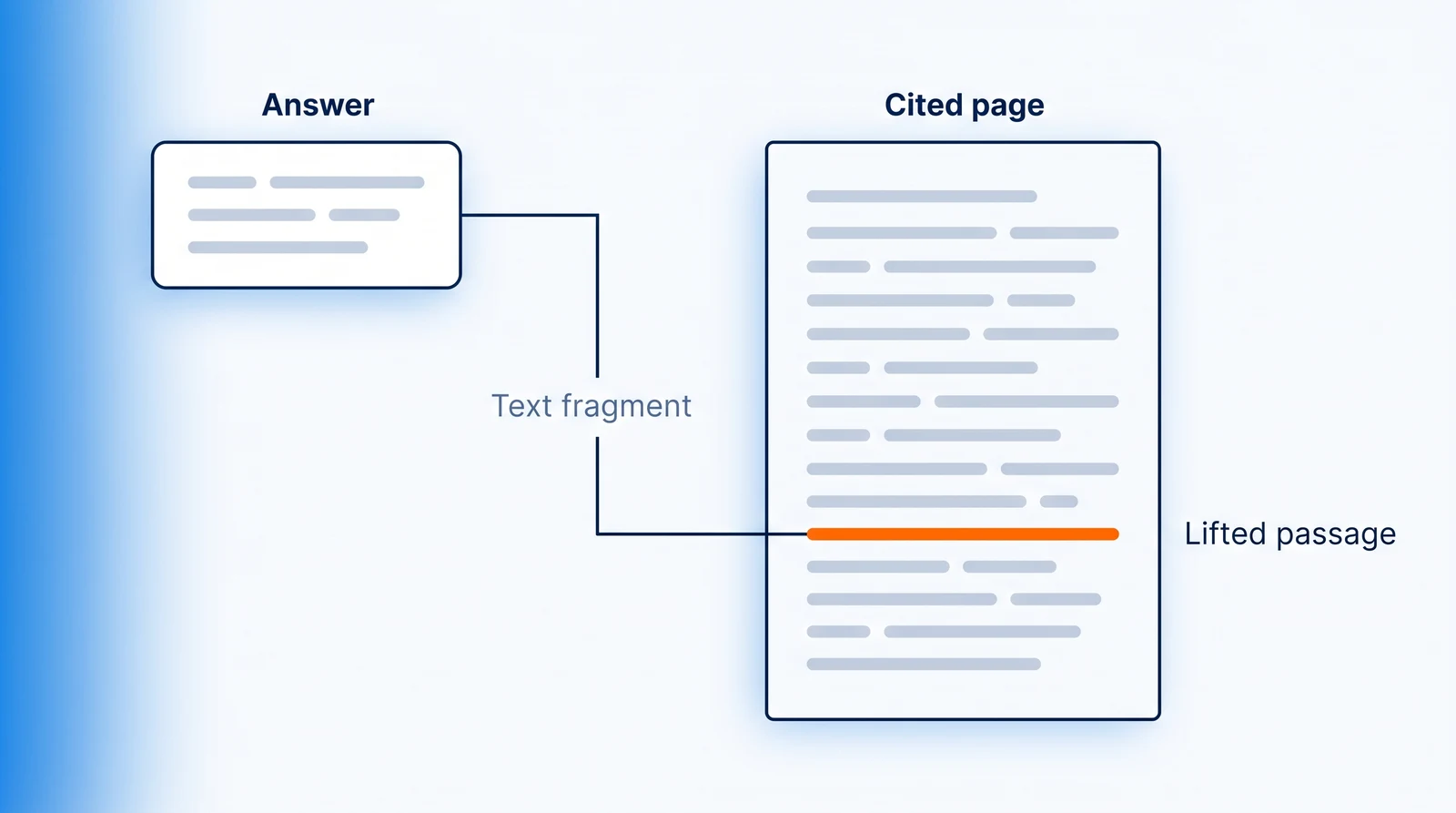
The vocabulary worth separating is the vocabulary of competitive intelligence, carried to a new surface: a mention is your brand named in the answer text; a citation is your content linked as a source; share of voice is how often you appear across a tracked set of prompts compared with each competitor — continuous monitoring rather than a one-off audit. In our research, some citation links point at a single sentence inside a page — the link itself carries a text fragment — so the slot you are competing for is closer to a sentence than a page. That changes the job: the useful question is not "what does this domain rank for" but "which passage of their content got lifted, for which keyword, on which surface". Citation analytics, not rank tracking, is the layer that answers it.
Who holds the citations for a keyword like this one?
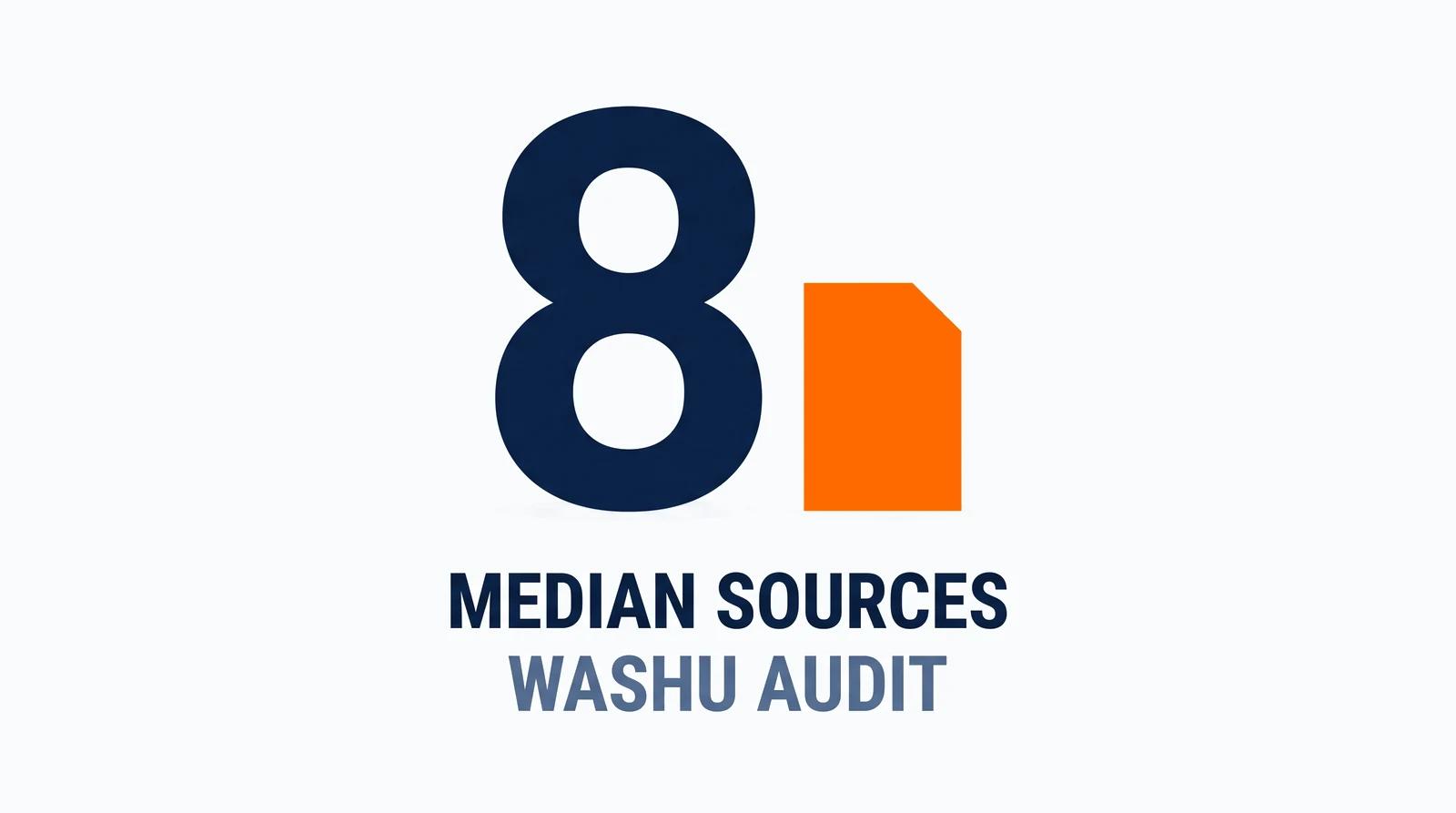
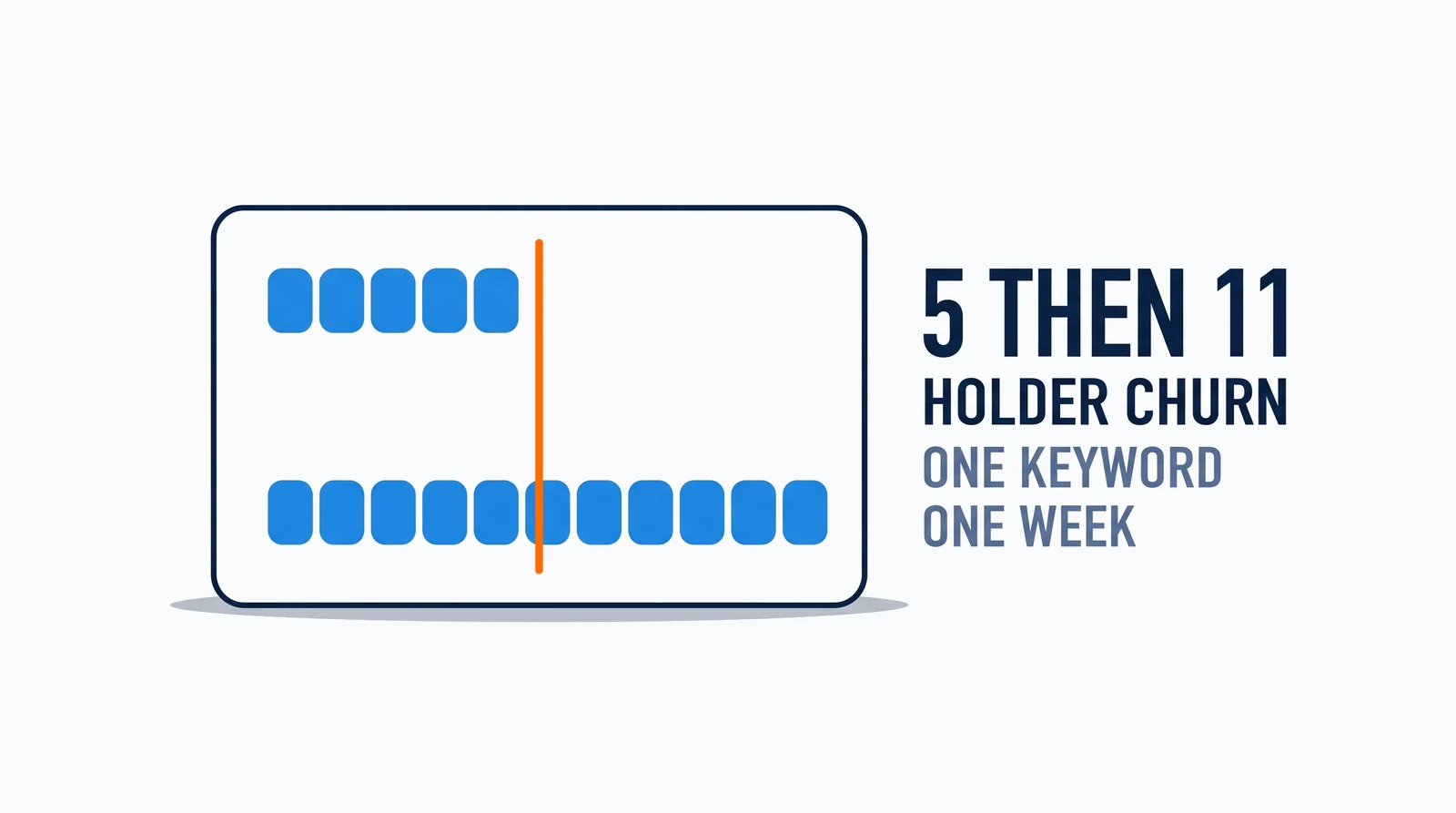
At our tracking check on 3 August 2026, five sources held the citation slots for this exact keyword: Similarweb, HubSpot, CiteFlow, TechRadar and arXiv — and we were not one of them. What those five actually are is the interesting part:
- Similarweb — a competitive-intelligence platform that tracks competitors across display, search and social channels, and now sells this newer kind of monitoring too: its AI Search Intelligence line lists AI Citation Analysis as a feature, alongside per-assistant traffic trackers.
- HubSpot — the marketing, sales and customer service software platform. Its answer engine optimization features, listed as AEO in beta, track "your brand's visibility in AI results".
- CiteFlow — a dedicated analysis tool offering a free AEO/GEO scan of "how AI search sees your site". Its page describes scanning your own site, not comparing competitors. Disclosure: we only looked it up because it holds a slot for this keyword in our tracking data.
- TechRadar — a technology news and reviews publication.
- arXiv — an open-access archive of scholarly articles. A research repository holding a slot on a shopping-shaped keyword — we think that says more about how unsettled this market's sources are than about anything arXiv did.
Read as competitive intelligence, the list breaks the classic model twice. Three of the five are in or near the market the keyword names; a reviews publication and a research archive hold the rest; and no ratings site holds any. On this keyword, at this check, "best rated" was answered without a single rating — and the best-known holders are not the most instructive ones.
The sharper case came from the same tracking week, one keyword over. For "generative engine optimization companies", one of the observed citation holders was Miniloop — a company whose own website describes custom CRM development and says nothing about GEO, AI search or SEO at all. A citation holder that is not in the market it holds a slot in. The lesson we took: verify a holder before you copy its content playbook or count it a competitor, because some of the domains beating you for a slot are not competing with you anywhere else.
Then we re-checked the same keyword a week later. On 10 August 2026, eleven sources held citation slots for it rather than five, and the holders our monitoring recorded include Profound, Semrush and Ahrefs — three of the tools named below. We were not cited on either date. Our record names six of those eleven, so we cannot tell you what the other five were, and we cannot tell you the first five had gone: two dated checks a week apart show turnover, not a trend line. It is also the reason to distrust any single number, ours included: we have watched the same question return different sources at different moments, so the useful thing to ask a vendor is not "are you accurate" but "what do you sample, how often, and how much does it move".
The limits, stated plainly: these are dated checks on one keyword, from a small tracking set that grows weekly, and our measurements are mostly ChatGPT — the other surfaces we sample far more thinly, and they behave differently. Our record of a check holds the date, the keyword and the domains, not which surface each holder came from, so the per-surface breakdown is not something this article can give you. A holder list is also only as good as the data underneath it, which is the subject of our own piece on the best AI visibility tools and what they actually measure. Google currently shows no People-Also-Ask box for this keyword at all. Holder lists churn — our monitoring keeps surfacing domains we had not seen before — so treat everything above as a snapshot, not a league table. We keep measuring, and we will publish what changes.
Which competitor analysis tools can actually do this work?
Seven tools work as an AI-search competitor analysis tool or supply the visibility monitoring and analytics underneath one: Ahrefs Brand Radar, Similarweb, Profound, Semrush AI Visibility, HubSpot's AEO tools, CiteFlow, and LiamVi, which we build — some a full platform, some a single-purpose scan. We build one of these products ourselves, so every entry below sticks to what the vendor's own pages claim, feature by feature, on the dates in the Sources section. One correction we owe you before the list: our first pass read home pages, and on the home pages three of these looked like visibility monitors with that capability riding along. Their own feature pages say more than that, and the sorting follows the feature pages.
Tools whose own pages describe comparing you against competitors in AI search:
- Ahrefs Brand Radar — "Benchmark your brand against competitors in AI search and spot the big players", across Google's AI Overviews, AI Mode, ChatGPT, Copilot, Gemini, Perplexity and Grok, plus social platforms: YouTube, TikTok and Reddit.
- Similarweb — the competitive-intelligence platform above: competitor benchmarking is its core trade, and its AI Search Intelligence features bring that trade to AI surfaces, with AI Citation Analysis and per-assistant traffic trackers.
- Profound — an Answer Engine Insights feature set whose page offers to "Outrank Competitors in AI Search" and to "monitor your citation share relative to all competitors across topics and platforms", showing your competitive position "as a rank among all cited brands". The wider platform covers ChatGPT, Perplexity, Claude, Gemini, Grok, Copilot, DeepSeek and Google AI Overviews.
- Semrush AI Visibility — the largest SEO platform's move "from traditional SEO to AI discovery", with a Competitor Research report that "lets you compare your brand's presence in AI-generated search results against competitors" — up to four competitor domains, plus the topics and prompts where they appear and you do not.
- HubSpot's AEO tools — a feature set still in beta, inside its marketing platform: share of voice as "how often your brand is mentioned compared to competitors across the same prompts", and how often each tracked brand appears in AI answers over time, across ChatGPT, Gemini and Perplexity.
Site scanners, adjacent to the job:
- CiteFlow — the free AEO/GEO scan above; its feature set audits your own site's citability rather than comparing you to anyone.
And ours. LiamVi tracks which domains hold the citations for your keywords — the holder lists in this article are its output. Full disclosure, by this article's own standard: the platform is early and self-hosted, it is opening to early-access teams rather than selling to anyone who signs up today, and we are not among the holders for this very keyword — not on 3 August, not on 10 August. We publish our research — methods, samples and limits so you can judge us with the same questions we put to everyone else, and we have run no measurement of our own against the tools above, so we do not ask to be weighed as an equal of them.
The market note our research keeps confirming: this market turns over. Weekly monitoring keeps finding trackers and holders we had not seen before, so treat any tools list — this one included — as dated the day it is published, and open a vendor's site before you rely on any comparison, including ours. Which analysis tool is best for you depends on the questions below.
How do you judge which tool is best rated for this job?
The best rated competitor analysis tool, in the only sense we can measure, is the one with good answers to six questions — we did not measure star ratings, so measurable answers are the rating this article can offer. We built LiamVi around what we chose to measure, so read the six as our view of what matters, not a neutral standard:
- Does it show per-keyword holder lists, or one blended score? A single visibility number is not analytics: it cannot tell you who took the slot you wanted — the per-keyword holder list is the first feature to demand, because it is the actionable half of a competitor analysis tool's job.
- Does it break results out per surface? ChatGPT, Gemini, Perplexity, Google's AI Overviews and AI Mode behave differently — in our tests, retrieval itself varies by engine — and a blended view hides which surface your content is losing. Ahrefs Brand Radar names seven AI surfaces; per-surface separation is the feature to check on any tool, ours included.
- Does it show you the holder domains themselves, so you can verify them? This is the feature that separates a real holder list from decoration, and the Miniloop case is the argument: a holder list you cannot inspect will happily count a CRM agency as your AI search competitor. Competitive intelligence you cannot check is not intelligence.
- Does it keep history? Holder lists churn, and history is the feature that turns a stack of snapshots into analytics and makes market turnover visible. A competitor analysis tool that only shows this week's snapshot cannot show you where openings appear.
- Does it publish its method and its limits? Analytics without a stated method is an opinion in a dashboard, and a published method is the best answer a vendor can give. That test applies to us, and to every SEO tool extending into AI search — our research page exists so it can.
- What does it cost to monitor weekly — and what does the free tier actually show? Citations move week to week. A free feature that blends everything into one monthly score cannot show you the movement you came to see, whatever it costs.
We have run no measurement of our own against these seven products, so this article gives you the six questions rather than a scoreboard. Other people's scoreboards are the thing we said at the top we would not borrow, and a scoreboard built out of vendor pages would be an opinion in a dashboard with our name on it. Put the questions to any vendor in this market, including us, and to any SEO tool arriving here from the ranking side.
Can you do AI competitor analysis free?
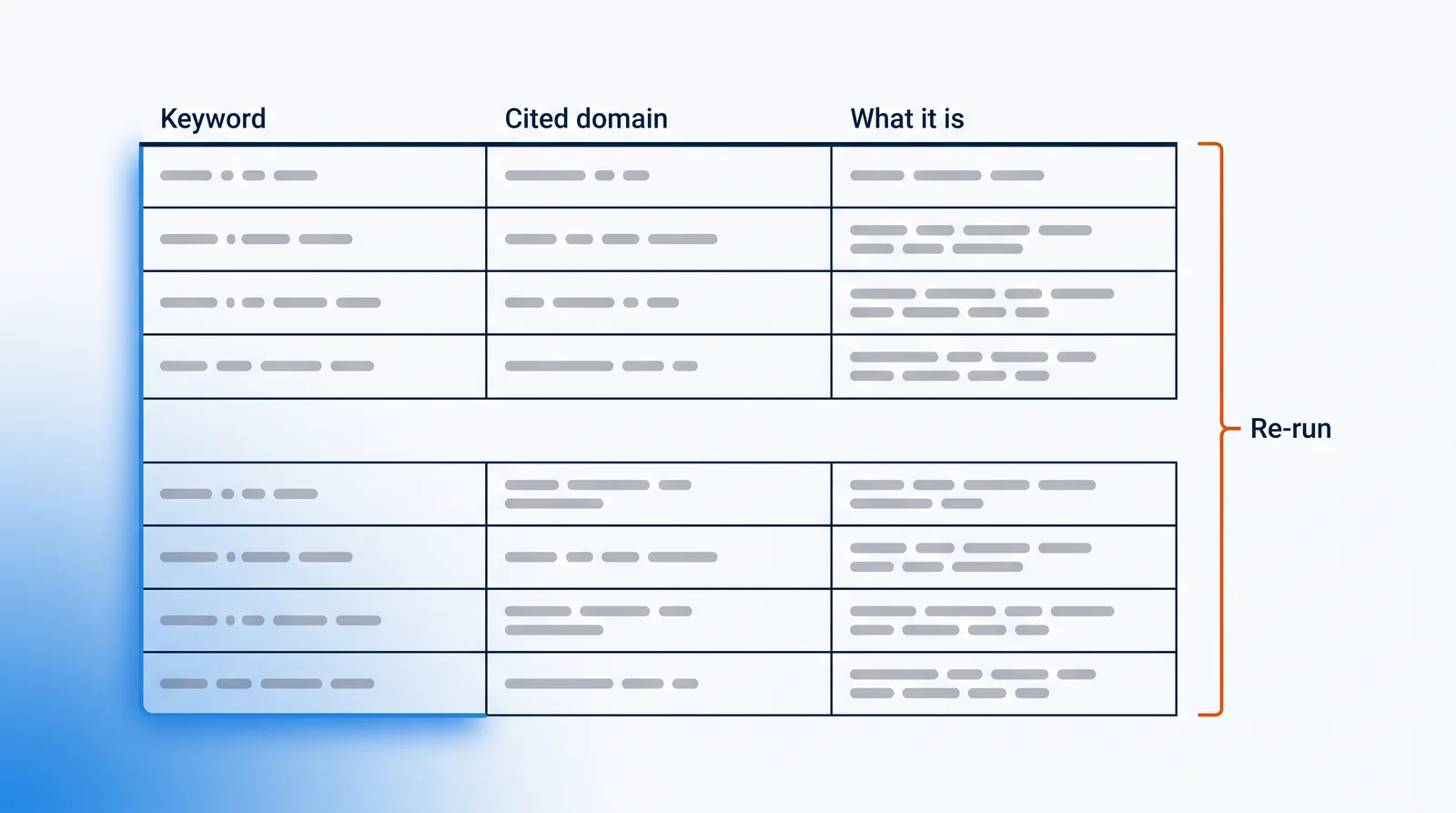
Yes — you can do AI competitor analysis free, manually, at the cost of your time, and the best free competitor analysis tool is a spreadsheet and a schedule. Competitive intelligence is a habit before it is a product. Ask each assistant the questions your buyers actually ask, and write down which domains it names and whose content it cites. That is citation analytics at its most manual, and it is the monitoring loop every paid platform automates; what a tool sells is scale, cadence, per-surface coverage and history, not access to a secret. Most of the related searches sitting around this one are after a free version, so here is the honest one, and it starts like SEO keyword research: pick a handful of buying-shaped keywords in your market, run them across ChatGPT, Gemini, Perplexity and Google's AI surfaces, record the cited domains, and verify what each one is before treating it as a competitor. Then read the content that won the slot, not just the domain that owns it. Re-run the same keywords on a monitoring schedule, because a one-off check cannot show churn — and churn is half the finding. Free tiers of paid tools vary; on any platform, the feature to check is whether the free view shows actual holder domains per surface or a single blended score.
What do you do with a holder list once you have it?
Use a holder list to make four content decisions, in this order: check that retrieval fires for your framing, study the passages that got holders cited, state facts in your own voice, and add what the holding content lacks. Each move ties to something we measured; none of it is a promise.
- Check that retrieval fires for your framing at all — framing meaning how the question is phrased, not what it is about. In a small pre-registered test, none of the conceptual "what is X" framings we ran triggered source retrieval on the engine we measured, while every dated, comparison-shaped framing did. Engines differ — some, like Perplexity, cite far more freely — but if the assistant answers your target keyword from memory, no amount of content optimization, SEO included, competes for a citation that never happens.
- Read the competitor content that actually got cited. The unit of citation is the passage, not the page an SEO audit grades, so the competitor analysis that matters is sentence-level: what specific, self-contained claim did their content state that yours does not? Write sentences that survive being lifted alone, each carrying a figure or a named thing.
- State facts in your own voice. We tested eight page-level readiness signals against our cited-page sample; seven came back null and the eighth pointed the other way — content that attributed its claims onward was cited less often, not more. That is one signal in one small sample, we have not published the write-up yet, and it is an association rather than a cause. Keep the links; carry the claims.
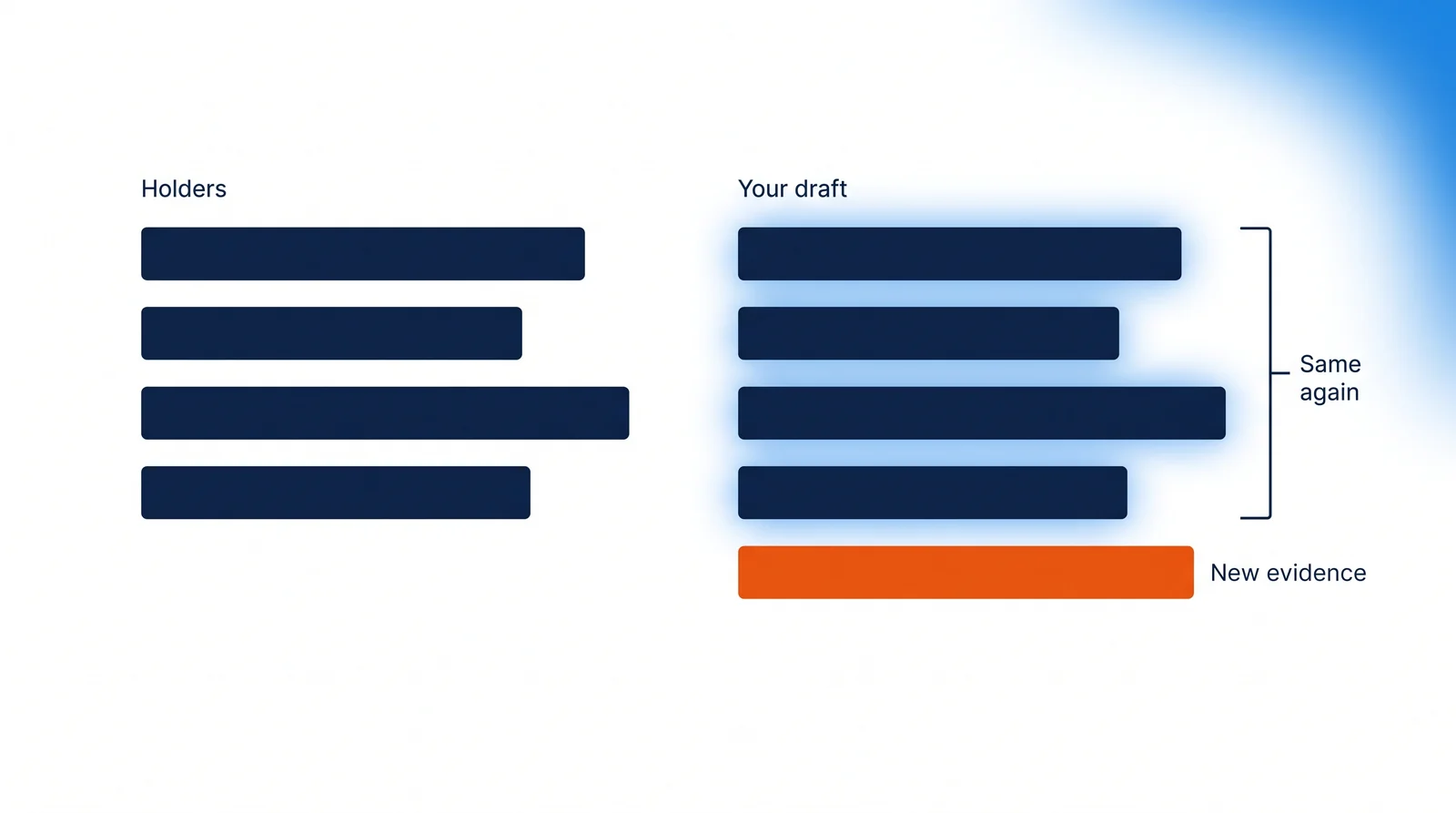
- Add something the holders do not have. What we actually measured is the overlap, and the two funnels barely met. Content assembled from the consensus of everything already ranking is competing in the wrong set — it is built for the contest you are not in. Asked to describe its own selection, ChatGPT said it ignores pages that add no new evidence: a self-description, not a measurement, and our research page says in its own words that we cannot yet prove any of these properties causes a citation.
The hopeful measured fact sits underneath all four. Across 21 matched pairs in our sample, the higher-authority domain won 11 and lost 10 — authority decided almost nothing. Our monitoring keeps finding small, recently created sites holding slots beside household names. The slots are contestable. No tool — ours included — can promise you one; what weekly monitoring gives you is the feedback loop: the analytics that show whether this week's content change moved anything, on which surface, against which holder.
Tomorrow's version of this article may name different holders. In a market that turns over, that is not a flaw — it is the finding, and it is why the best competitor analysis tool for AI search optimization is the one whose check you re-run weekly, not a ratings list you read once.
Sources
- Similarweb — company site and AI Search Intelligence wording, checked 27 August 2026.
- HubSpot — company site, AEO (Beta) listing, checked 27 August 2026.
- HubSpot AEO — product page, still badged Beta; share-of-voice and competitor-visibility wording, checked 27 August 2026.
- CiteFlow — product site, checked 27 August 2026.
- TechRadar — publication site, checked 27 August 2026.
- arXiv — site self-description, checked 27 August 2026.
- Ahrefs Brand Radar — product page, checked 27 August 2026.
- Profound — competitive benchmarking — feature page, checked 27 August 2026. Platform coverage from the product site, checked 27 August 2026.
- Semrush AI Visibility — Competitor Research report — product documentation, checked 27 August 2026. Positioning wording from the product page, checked 27 August 2026.
- Miniloop — company site, checked 27 August 2026. Named here as a citation holder our tracking observed, not as a vendor in this market — its website describes custom CRM work.
- LiamVi — our own site: an early, self-hosted platform now open to early-access teams, checked 27 August 2026.
- Our research — methods, samples and limits — the tracking sweeps, framing tests, authority result and passage-level findings this article draws on, null results included, checked 27 August 2026.
- Holder checks of 3 August 2026 and 10 August 2026 — our own tracking, on this keyword. The domains, dates and counts are ours; the per-surface breakdown behind each check is not published.